Adrian Runhof
Artistic & Managing Director of Talbot Runhof
Germany
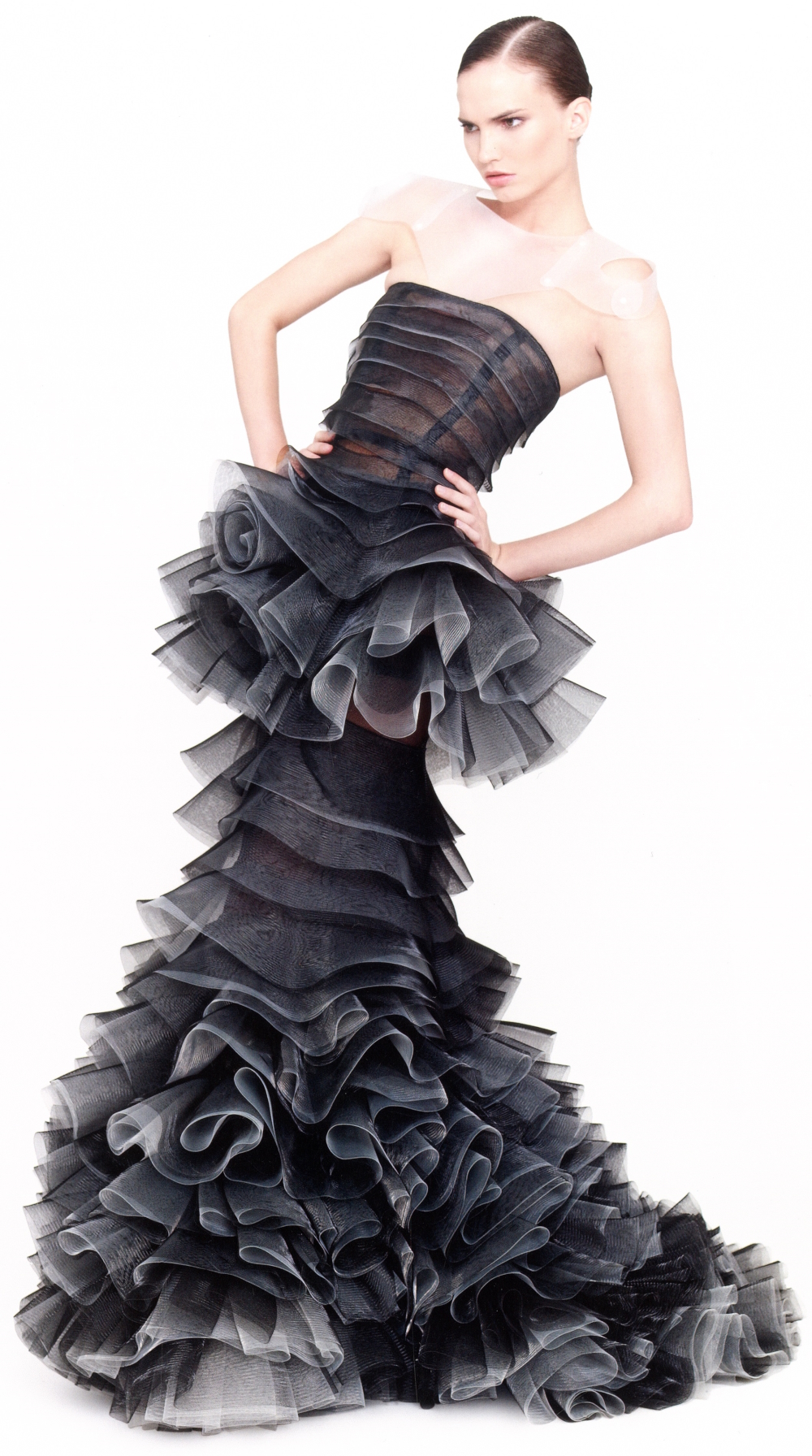
World famous ladies like Mariah Carey, Lady Gaga, Helen Mirren, Julia Roberts, Kristen Stewart, Selena Gomez or Princess Kate wear this haute couture house’s unique pieces. The two founders have had 25 runaway shows during 13 years at the Paris Fashion Week. Over 200 stores in Germany, Switzerland, the US, Great Britain (including Harrods/London) and the United Arab Emirates sell their fashion collections. But the creative couple behind this brand who designs outfits for stage plays and cooperates with visual artists too, hasn’t learned the couturier‘s job in form of the traditional training route. Both come from completely different professions originally – beyond the Talbot Runhof craftmanship world of high quality gala gowns, elegant daywear, costumes, trouser suits and coats as well as bridal wear plus perfumes and accessories!
Adrian Runhof
Artistic & Managing Director of Talbot Runhof
Germany
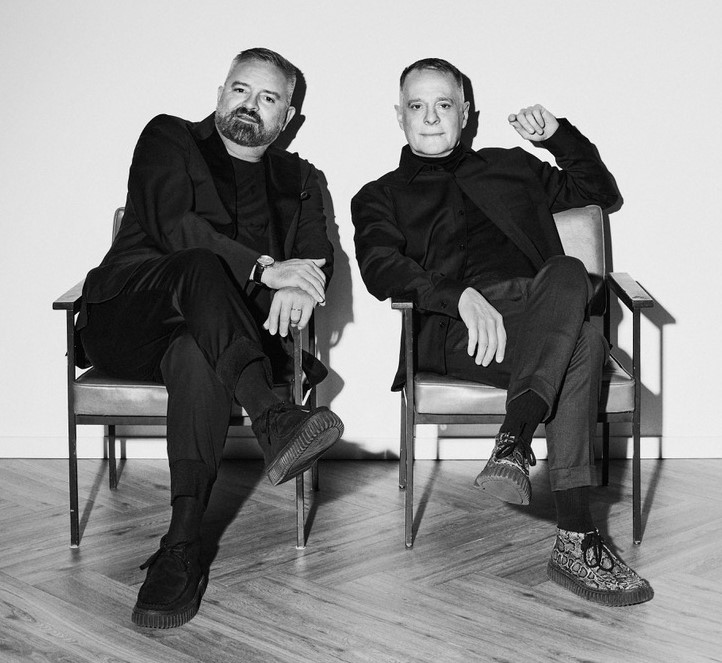
Johnny Talbot (born July 23, 1964 in Nashville, Tennessee, USA) visited Hendersonville High School first and then studied Electrical Engineering at the Vanderbilt University starting in 1982. After receiving his Bachelor of Engineering in Electrical and Electronics Engineering in 1987 the son of a seamstress producing stage outfits for country stars like Dolly Parton or June Carter Cash was employed by the US government. In Washington D.C. he developed software programmes for the Pentagon and the US Naval Research Centre. Later on Johnny Talbot moved to Munich/Germany, working for Radio Free Europe.
Adrian Runhof (born May 15, 1963, in Mainz, Germany) studied business administration at the Johannes Gutenberg University in his hometown for one year and from 1983 onwards at the Ludwig-Maximilian-University in Munich. After graduation in 1989 the twen went after his family roots, which are fashion production, design and retail. Already as a kid he had accompanied his mother (owner of fashion brand Amarotico and co-managing director of fashion house Regina Moden in Wiesbaden) into the showrooms of Chanel and Dior. Now the adult founded his own fashion brand and in addition worked as a consultant for various fashion companies – in Germany and abroad.
The American and the German got to know each other1991 in an icon of German nightlife, the P1. The site of the legendary, highly exclusive nightclub in Bavaria’s capital was a location of almost prophetic character for the future career of the two career changers. It is located in the east wing of the Haus der Kunst art museum. At first, the two designed their fashion collections separately, but then decided to join forces by pooling their creative energies. In 1992 they founded (in tune with an additional partner) their own brand. The claim of All About Eve was: “Fashion that goes beyond the ordinary.“ To fullfill that aspiration three key points were given priority: first class quality fabrics (imported from Italy, Switzerland, Japan), everything handmade in Germany (mostly by family-run artisanal workshops), elegant and wearable designs. The couture house made his mark for evening and cocktail dresses. In 1999 the team was reduced to its core and rebranded Talbot Runhof. Receiving the Petra GermanFashion Award in 2005 was further proof that the creators were on the right track.
“From 2006 to 2018, Talbot Runhof presented their collections (consisting of 32 pieces each time,) twice a year, at runway shows during Paris Fashion Week. It was one of two German labels on the official calendar to which the Chambre Syndicale de la Couture Parisienne granted this privilege“ (Wikipedia). The couple could have taken the easy option and simply carried on along their path to success, but they utilize fashion as a tool for political discourse to address "truth and truthfulness" in the political sphere.
In 2014, as part of the prêt-à-porter shows, the designers presented a collection entitled Corduroy Skirts Are A Sin, inspired by a photograph by the American Chris Pesto that had gone viral. In it he denounced discrimination against gay people. When Russia unlawfully annexed the Ukrainian peninsula of Crimea that same year, Talbot Runhof incorporated their criticism of Vladimir Putin into their spring/summer collection in the form of striking caricatures. Another campaign followed in 2017, when Donald Trump was elected US President for the first time. That year, to round off their autumn/winter collection, they created a highly publicized, politically charged collection and T-shirts criticizing The Donald (nickname given by Ivanka Trump). The garments featured bold, embroidered slogans such as "Lie to me" (lettering in orange sequins), "Sad!", and "Persist".
To speak out on political issues, take a stand and slam is one thing, to walk the talk another. Creative engagement, for example, is a good way to do this. In 2022 Talbot and Runhof decided to support refugee seamstresses from Afganisthan and the Democratic Republic of the Congo. For them, an upcycling studio was founded. At Bellevue Couture women make patchwork gowns from fabric offcuts, which were incorporated into the collection.
Besides all these personal commitments fashion design is still their main focus – in a very wide artistic range. Talbot Runhof designed the outfits for the ballet production Carmen (2009), the opera The Makropulos Affair by highly celebrated Czech composer Leoš Janáček in 2010, and another ballet production (Giselle) in 2022.
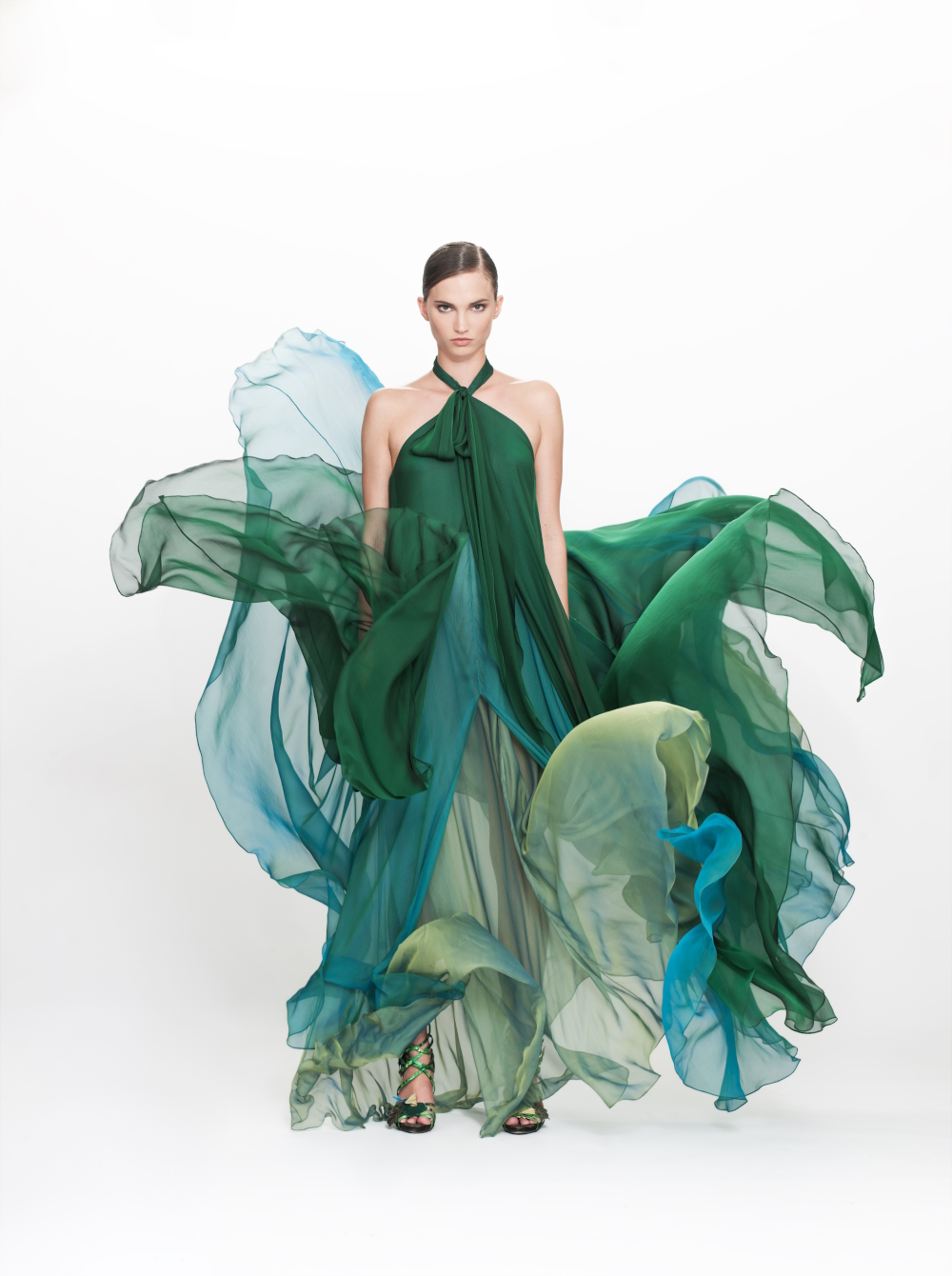
To this day, Talbot Runhof’s focus remains on the materials. The design process always begins with the fabric. It is pinned, draped and experimented with until the shape and concept emerge intuitively. Particular attention is paid to artistic, often technically sophisticated pattern developments: with finesse and precision, designs are created that are constructed with minimal seams and, in some cases, just a few pattern pieces – sometimes even just a single one.
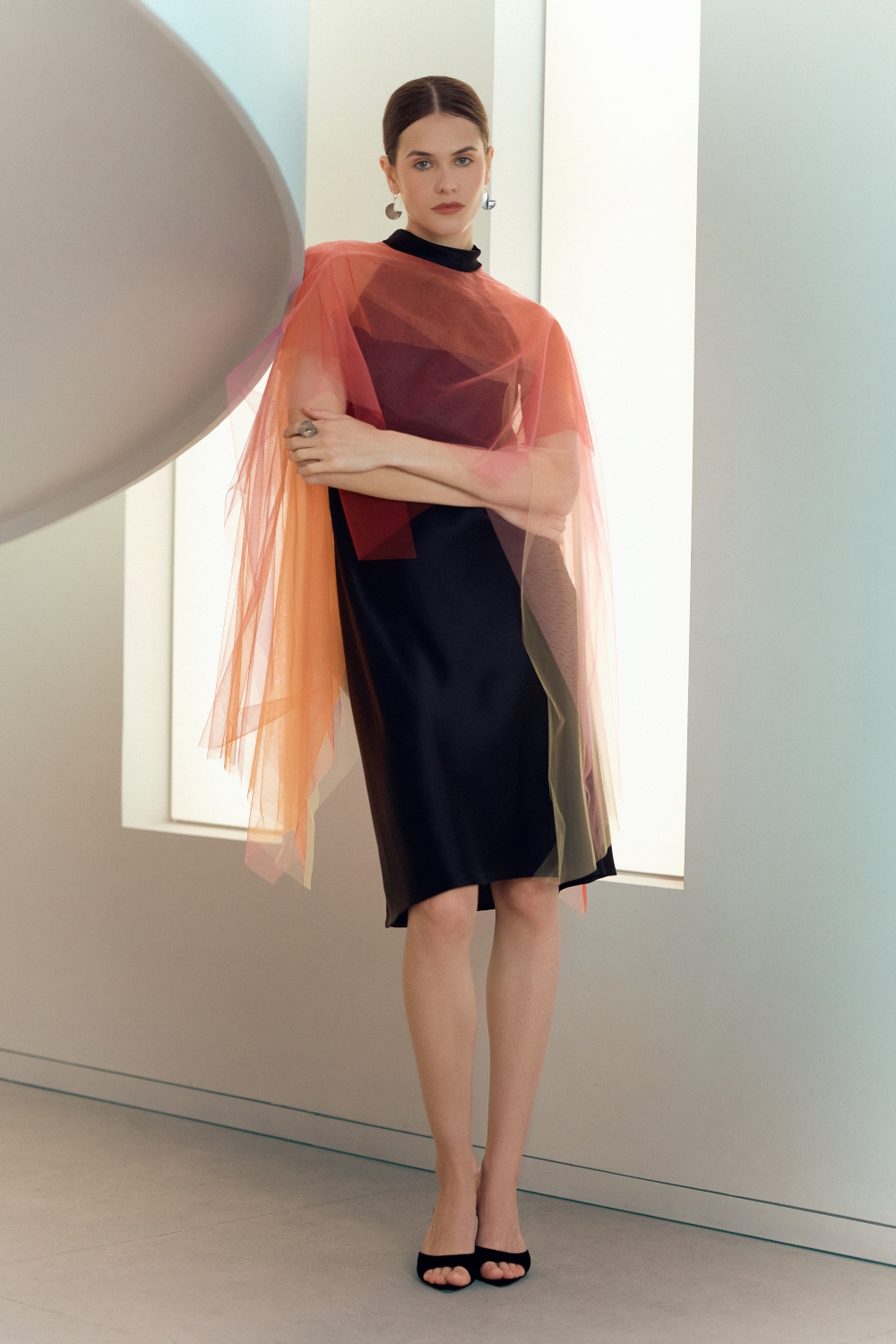
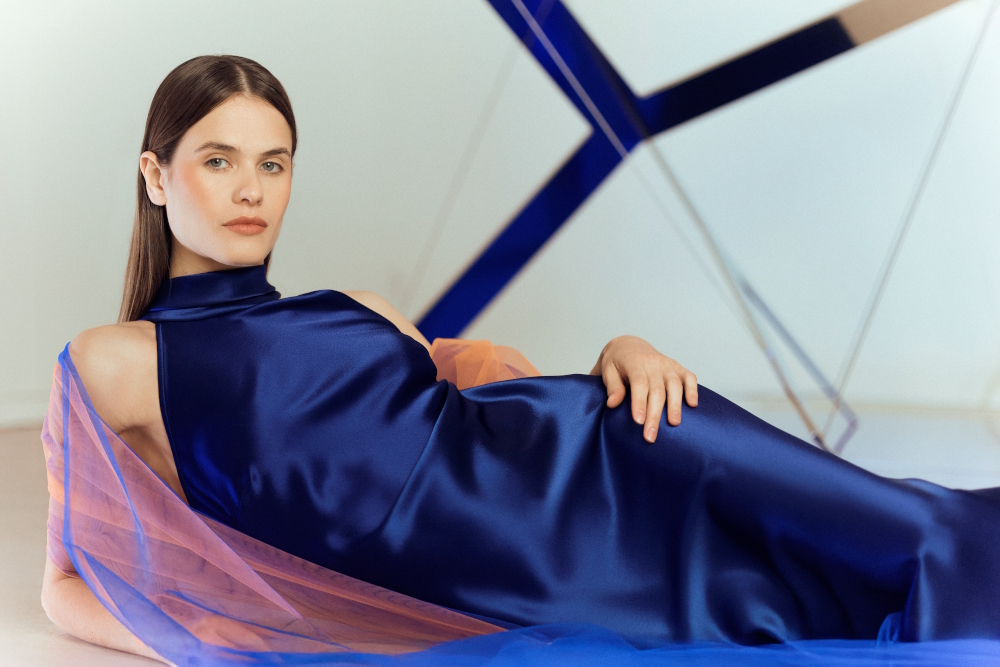
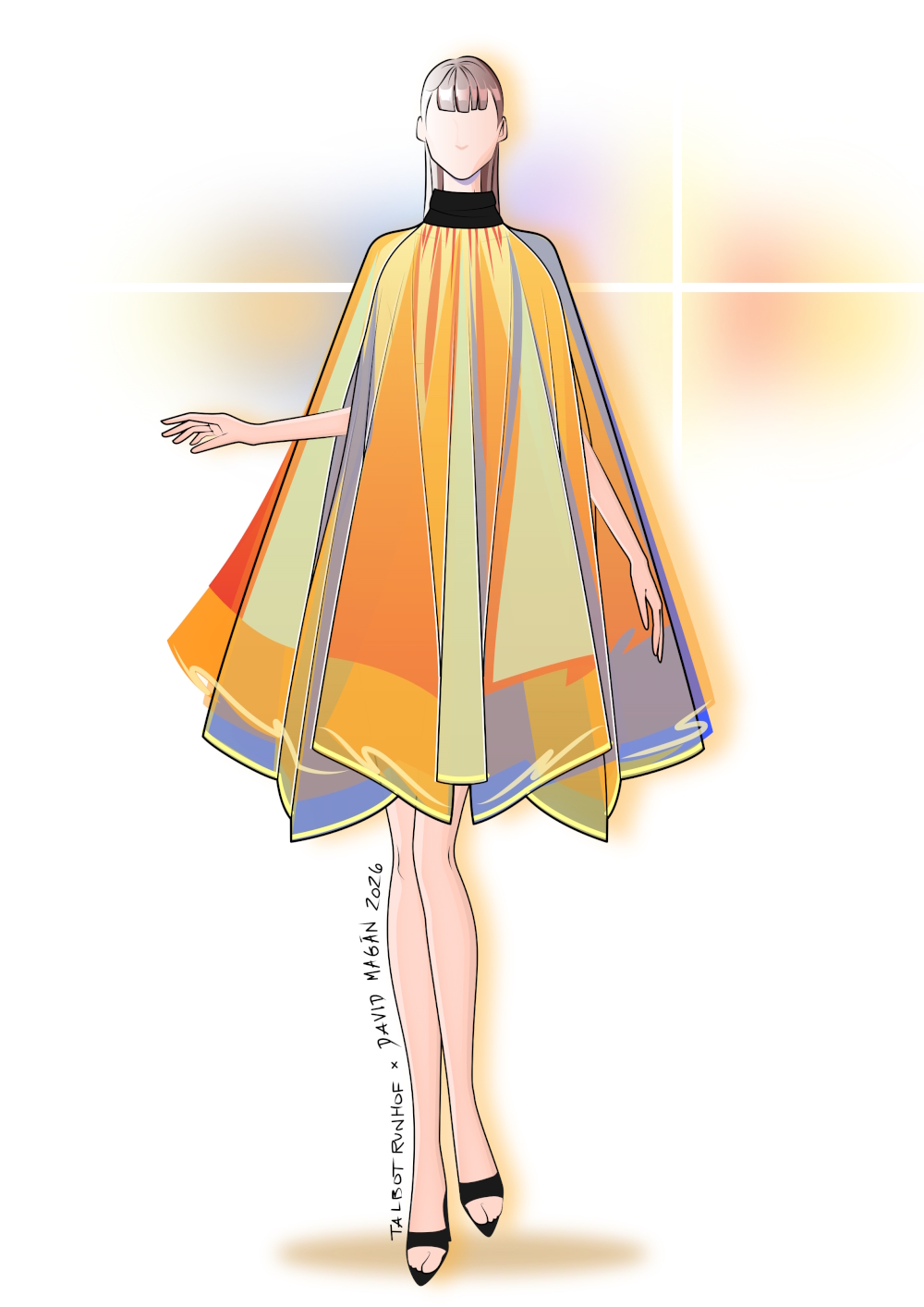
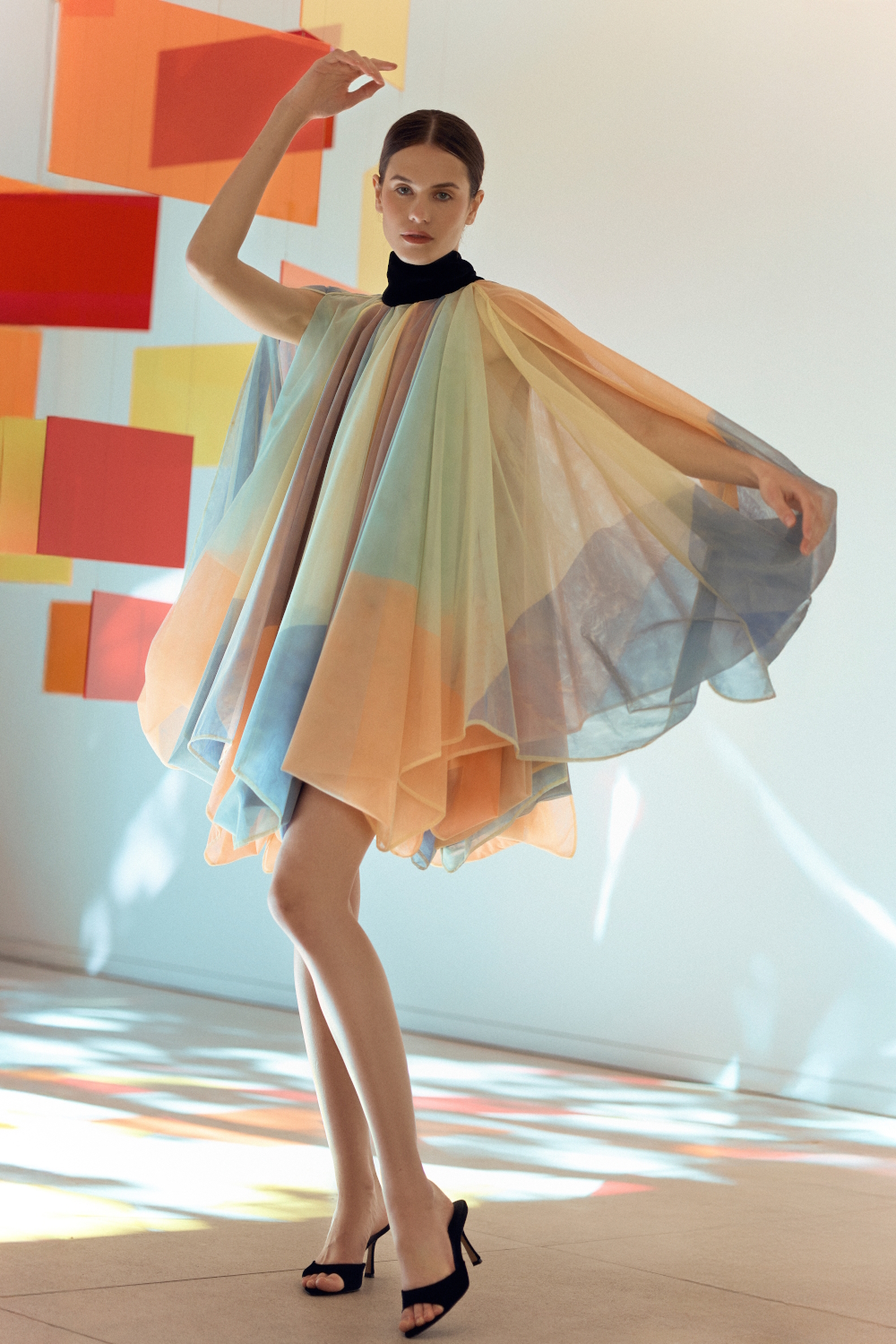
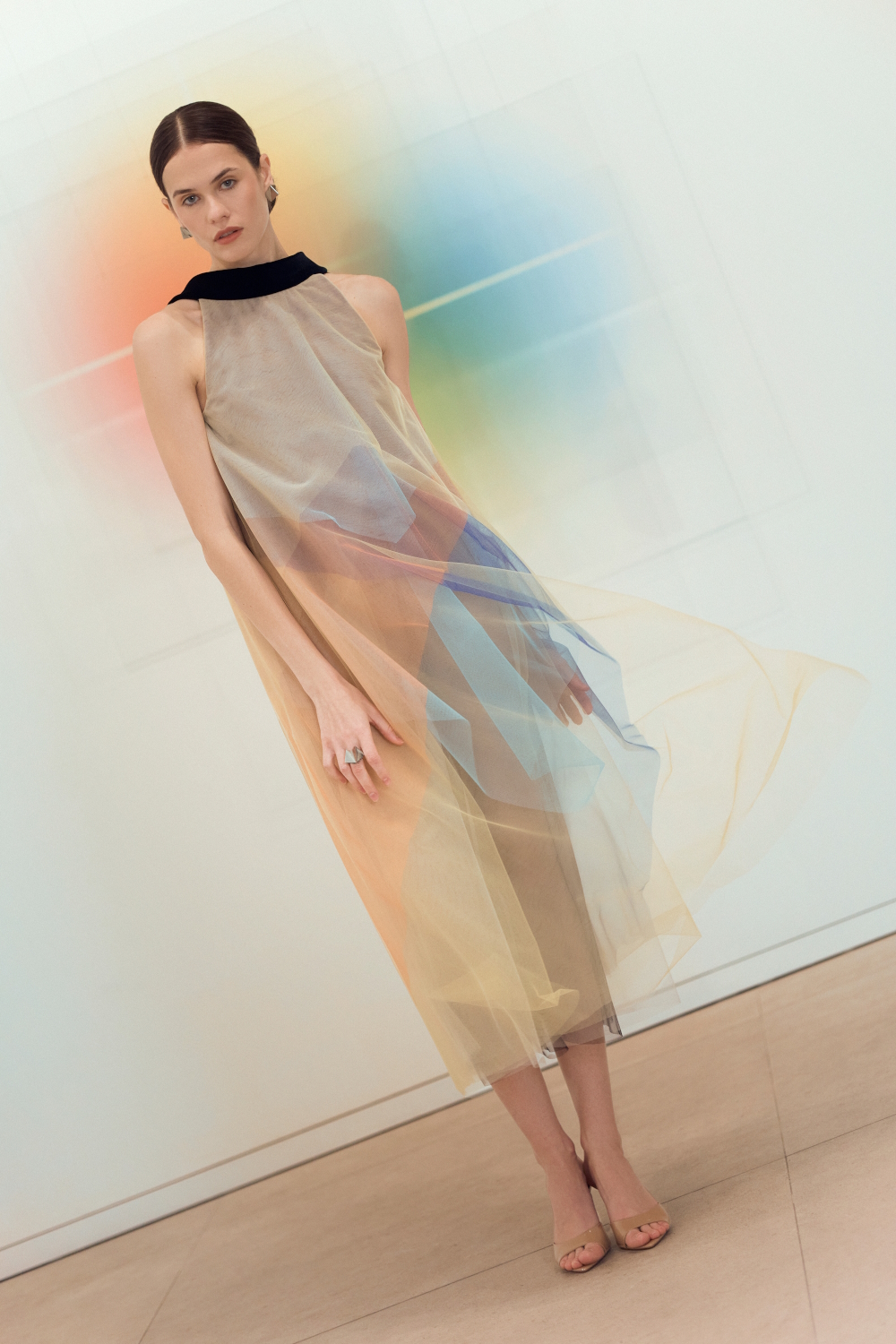
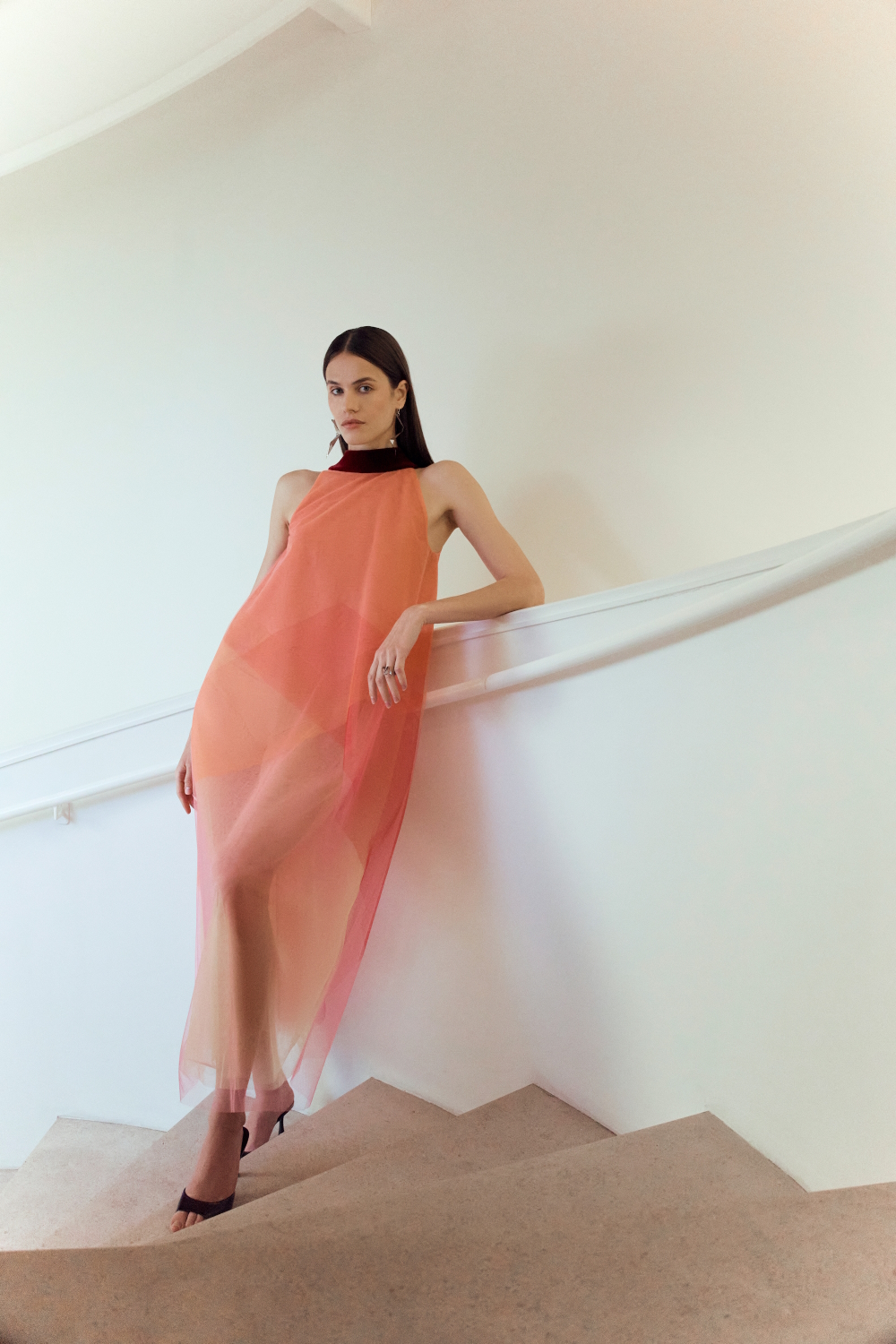
For their 2026 fashion collection entitled Capsule, Talbot Runhof have collaborated with the Spanish artist David Magán. “In doing so“, Adrian Runhof states on fashion-council-german.org, “we asked ourselves how we could translate his artistic practice – a play on glass, light and the layering of different-coloured, transparent materials – into a textile language.“ That presented a new creative challenge for this team, which has designed more than 1,500 pieces within a qarter of a century. The way the two cooperate remains the same as in the beginning: “We still work in a symbiotic way today, passing the ball back and forth, inspiring one another. In the end, even we ourselves can’t tell who did what.“
In an interview with the non-governmental organization authorized to represent the European Union in fashion and fashion design worldwide Adrian Runhof emphasised that, in his view, fashion designers today are not solely concerned with designing clothes: “I believe fashion designers have a great responsibility: they are prophets and ambassadors who can recognise trends and play their part in steering the world in a better direction. We all bear a very great responsibility. We would like to encourage people to think about these issues. Our aim is not to polarise opinion, but to engage in constructive dialogue.“
Johnny Talbot and Adrian Runhof live and work in Munich, Germany.
Interview June 2026
Fashion that goes beyond the ordinary: more than just a pretty façade!
INTUITION/IMAGINATION
?: How does intuition present itself to you – in form of a suspicious impression, a spontaneous visualisation or whatever - maybe in dreams?
For me, intuition is something very physical. It usually comes in the morning. I get up, have a shower, and then suddenly it’s there. I get my best ideas in the shower and afterwards. That sounds trivial, but it’s true. My mind isn’t yet cluttered with the day ahead, with emails and appointments. In that brief window, ideas emerge that really stick with me.
?: Will any ideas be written down immediately and archived?
I don’t really keep a record of things, no. I trust that the really good stuff will stick in my mind. Anything I’ve already forgotten after two hours probably wasn’t good enough. That sounds risky, I know. But I believe the brain is a better archive than any notebook.
?: How do you come up with good or extraordinary ideas?
By living life. By really listening when a woman talks about her evening, about the dress she wanted to wear and whether she found it or not. Our inspiration always comes from the here and now: the women we meet, the stories they tell us and the wishes they express. It might be a street style, an exhibition, a trip to the theatre or the cinema – inspiration can be found everywhere.
?: Do you feel that new creative ideas come as a whole or do you get like a little seed of inspiration that evolves into something else and has to be realized by endless trials and errors in form of constant developments until the final result?
A seed. Always a seed. You rarely start with a finished image. You start with an idea, a feeling, sometimes just a colour or a texture. And then the real work begins: the shaping, the forming, the discarding. This is particularly evident right now in our Capsule Collection with David Magan, the Spanish artist and sculptor. His sculptural forms give us something, but what we make of them, what we translate into fabric, develops slowly and from many small steps.
?: What if there is a deadline, but no intuition? Does the first fuel the latter maybe?
Yes, definitely. Pressure is a wonderful driving force. I know the feeling of approaching a collection and thinking: ‘Nothing’s happening at all.’ And then, all of a sudden, a lot happens. The deadline is our best ally – even if it doesn’t feel that way at the time.
INSPIRATION
?: What inspires you and how do you stimulate this special form of imaginativeness?
Life. We can never separate our lives from our work. They merge into one another and are interdependent. It’s striking that we always feel particularly energised after visiting galleries, attending exhibitions or meeting artists. Why exactly? To be honest, I don’t know. It just happens. The retrospective at the TIM Museum in Augsburg/Germany was another such moment. Paradoxically, when you look back on thirty years of work, you immediately feel the urge to look ahead. The past provides a direction for what lies ahead.
?: How do you filter between ideas that are worthwhile pursuing and bad ones that you just let go of?
That gut feeling. And the client. We always have a woman in mind who knows how to make an impression without ever going too far. That’s our motto: It’s all about knowing where to stop – never go too far, but always far enough. If an idea goes against this credo, if it’s too loud or too subtle, then the decision has, in fact, already been made.
?: Does an idea need to appeal to you primarily or is its commercial potential an essential factor?
Both. I’d be dishonest if I said the commercial aspect didn’t play a part. Fashion has to be worn. It has to be bought. Fashion that nobody wears isn’t fashion – it’s sculpture. And for sculpture, we’ve got David Magan. :-) But seriously: we’ve had very reasonable prices right from the start, whilst never compromising on the product. That’s the right way to go about it.
?: Do you revisit old ideas or check what colleagues or competitors are up to at times?
We always look ahead. It’s almost a conviction of mine: always, and only, looking ahead.
Do I look at what my colleagues are doing? Of course – we’re not blind. But it has little influence on us. We have too many ideas of our own to have time to copy other people’s.
CREATIVITY
?: What time or environment best suits your creative work process — for example, a time and place of tranquility or of pressure?
The morning, without a doubt. And silence! Or at least a certain tranquillity. At the same time, I need people. Encounters. I’m no hermit waiting for enlightenment in an empty cell. I need conversation, meetings, lunch at the right restaurant – it all plays a part.
?: Which path do you take from theory or idea to creation?
Every collection begins with an idea: it might be a mood or an observation, or perhaps a particular garment or a customer. We gather these impressions and develop a clear concept from them. For us, however, the woman who will wear the dress is always the key factor. How does she move? How does she want to feel? Right from the initial sketches, we work very intensively on the cut and proportions. We experiment, discard ideas and continue to develop them. The creative process is rarely linear; often, it is only through working with the material that we arrive at the final form.
Theory and inspiration form the foundation, but the actual creation takes shape in the studio, through craftsmanship, experience and many small decisions. Ultimately, a design must not only look beautiful, but also be functional and instil confidence and elegance in the wearer.
?: What’s better in the realization process — for example, speed and forcing creativity by grasping the magic of the moment or a slow, ripening process for implementation and elaboration?
Both have their place. Sometimes the first sketch is the best. Sometimes it takes weeks for a fabric and a silhouette to really come together. In our collaboration with David Magan, we are realising just how fruitful this slow process of development can be. When a sculptor and a fashion designer come together, you have to take the time to understand each other’s language.
?: How important are self-doubt and criticism by others during such a process?
Self-doubt is part of the process; it sharpens your perspective. But you mustn’t lose yourself in it. I take external criticism seriously if it comes from someone I trust. I filter out everything else. You can’t design for everyone.
?: Is it better to be creative on your own, to trust only your own instincts, or to work in a team?
As a team. Always. Johnny and I have been a team for decades, and I can’t imagine how it would work on my own. We have different strengths and different perspectives. And it’s precisely this friction that creates something neither of us could achieve on our own. And when interesting people from outside join us, like David Magan has now, it broadens our perspective even further.
?: In case of a creative block or, worse, a real failure, how do you get out of such a hole?
Get out and about. Literally. Visit a gallery, a museum, a good restaurant. We’re in the fortunate position of never having experienced excessive hype – and therefore never having hit a real low from which we might have fallen. That protects you. But of course there are moments when nothing seems to be working. In those cases, the best advice is: stop, wait, and start afresh.
?: Should a creative person always stay true to him- or herself, including taking risks and going against the flow, or must the person, for reasons of commercial survival, make concessions to the demands of the market, the wishes of clients and the audience’s expectations?
This is not an either/or question. Fashion that bows entirely to the market loses its soul. Fashion that completely ignores the market disappears. The art lies in refining one’s own style so that it is both authentic and desirable. Our credo is also an answer to this question: we never go so far as to lose ourselves. But we always go far enough.
?: How are innovation and improvement possible if you’ve established a distinctive style? Is it good to be ahead of your time, even if you hazard not being understood?
There is an endless amount to discover within one’s own aesthetic. A new material, a different proportion, an unexpected collaboration – such as with a sculptor. The style remains recognisable, but it breathes; it evolves. I don’t believe you have to give up your style to be innovative. You have to question it.
?: When does the time come to end the creative process, to be content and set the final result free? Or is it always a work-in-progress, with an endless possibility of improvement?
That is perhaps the most difficult of all questions. And our motto is also the answer here: It’s all about knowing where to stop. There comes a moment when a dress is finished. When you know that adding any more would ruin it. Recognising that moment is the very essence of creativity. It’s not about adding, but about taking away.
?: How does artificial intelligence change human creativity? And do you? Would will you use it at all?
We’re keeping a very close eye on this. AI is a tool, just like the telephone or the computer. Anyone who claims they don’t use it or never want to use it is probably lying or mistaken. But I believe that AI cannot replace the human eye. It can generate images, but it cannot feel. It doesn’t know how a particular fabric feels against the skin; it doesn’t know what a woman feels when she walks into a room wearing a dress. We know that.
SUCCESS
“Success is the ability to go from one failure to another with no loss of enthusiasm.” Do you agree with Winston Churchill‘s quote?
In a nutshell: yes. Enthusiasm is the only truly indispensable asset. We opened our shop because we’d run out of money. That might sound like a failure, but it was the start of everything. You have to keep going. Always.
?: Should or can you resist the temptation to recycle a ‘formula’ you're successful with?
You have to give it a go. Of course, there are recurring elements in Talbot Runhof’s work: the draping, the silhouettes, the posture. But if you start simply repeating yourself without adding anything new, you become boring. And boredom is the worst thing that can happen to a designer.
?: Is it desirable to create an ultimate or timeless work? Doesn’t “top of the ladder” bring up the question, “What’s next?” — that is, isn’t such a personal peak “the end”?
To create the ultimate masterpiece – that would truly be the end. As long as you feel that the best dress has not yet been designed, you carry on. And that’s a good thing. We’re currently looking back on over three decades of work; the retrospective at the TIM in Augsburg really brings that home. And I realise: it’s not the end. It’s a moment to catch our breath. The next thing comes after that.
MY FAVOURITE WORK: