LADY AIKO
Asian-American artist
Japan / US
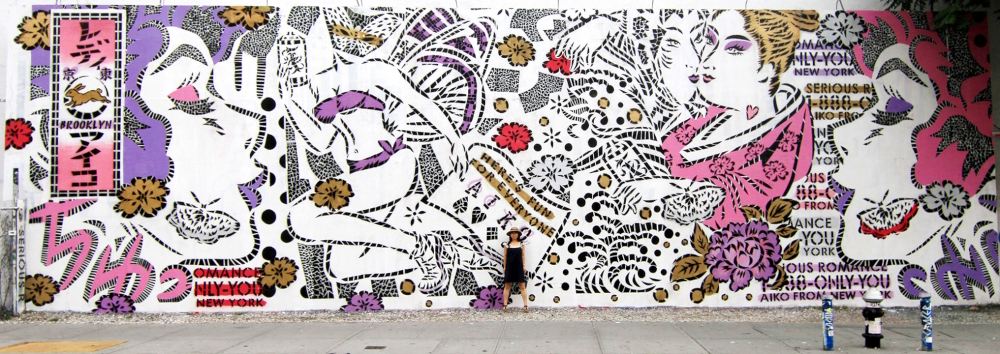
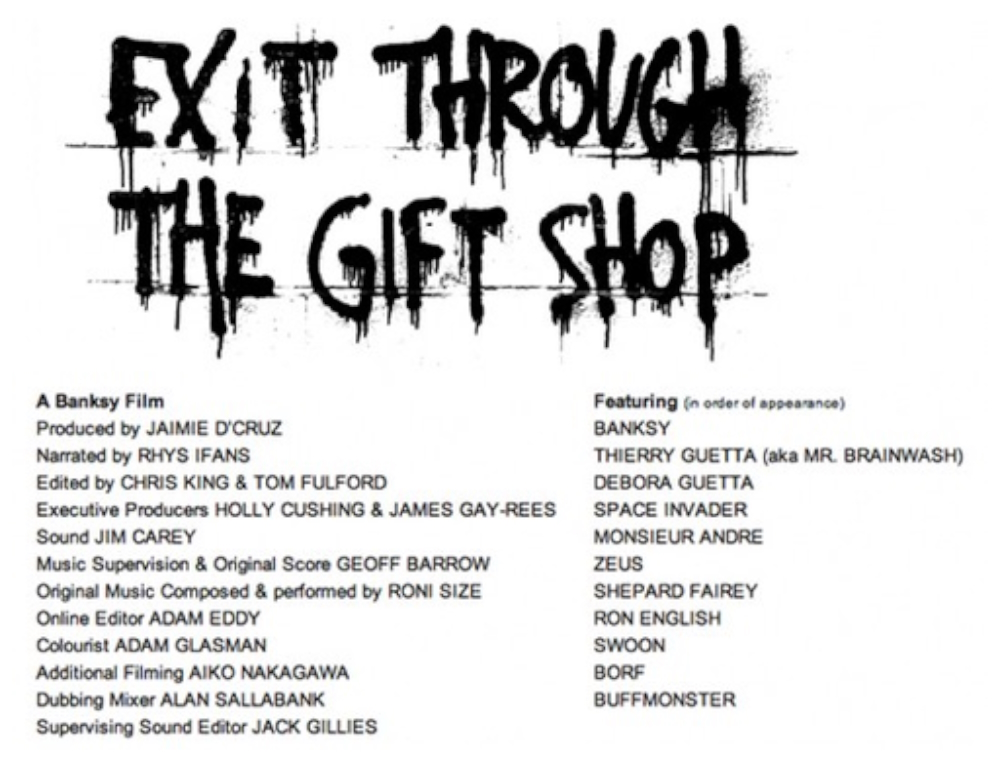
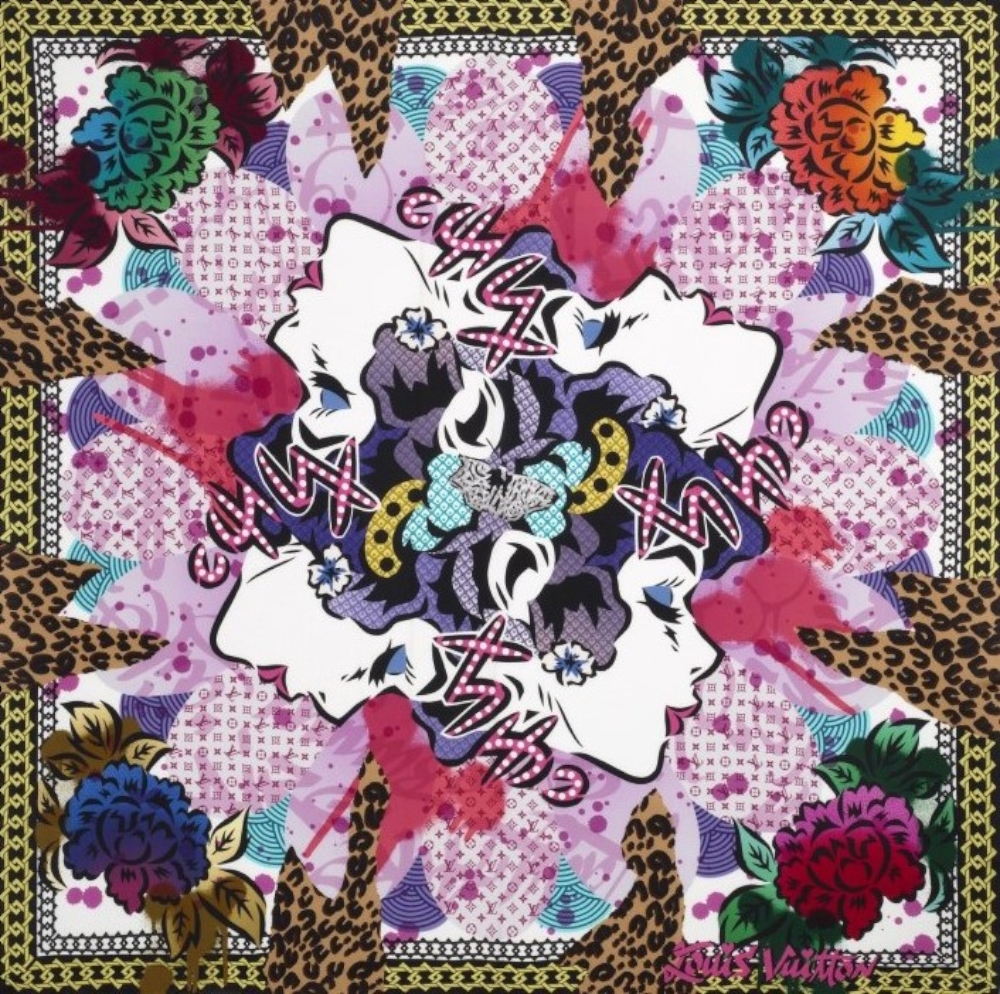
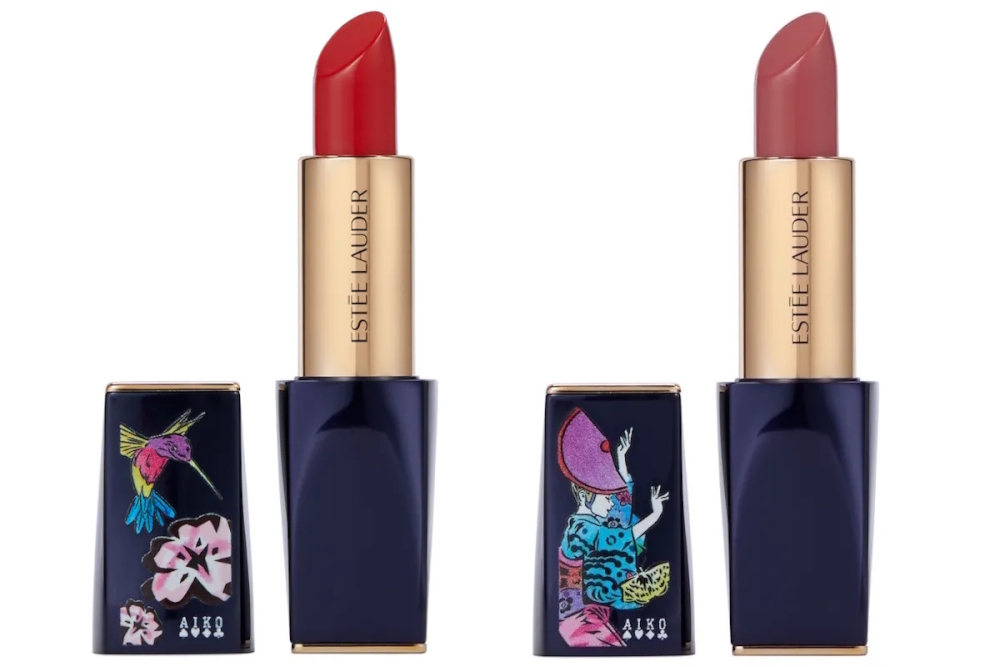
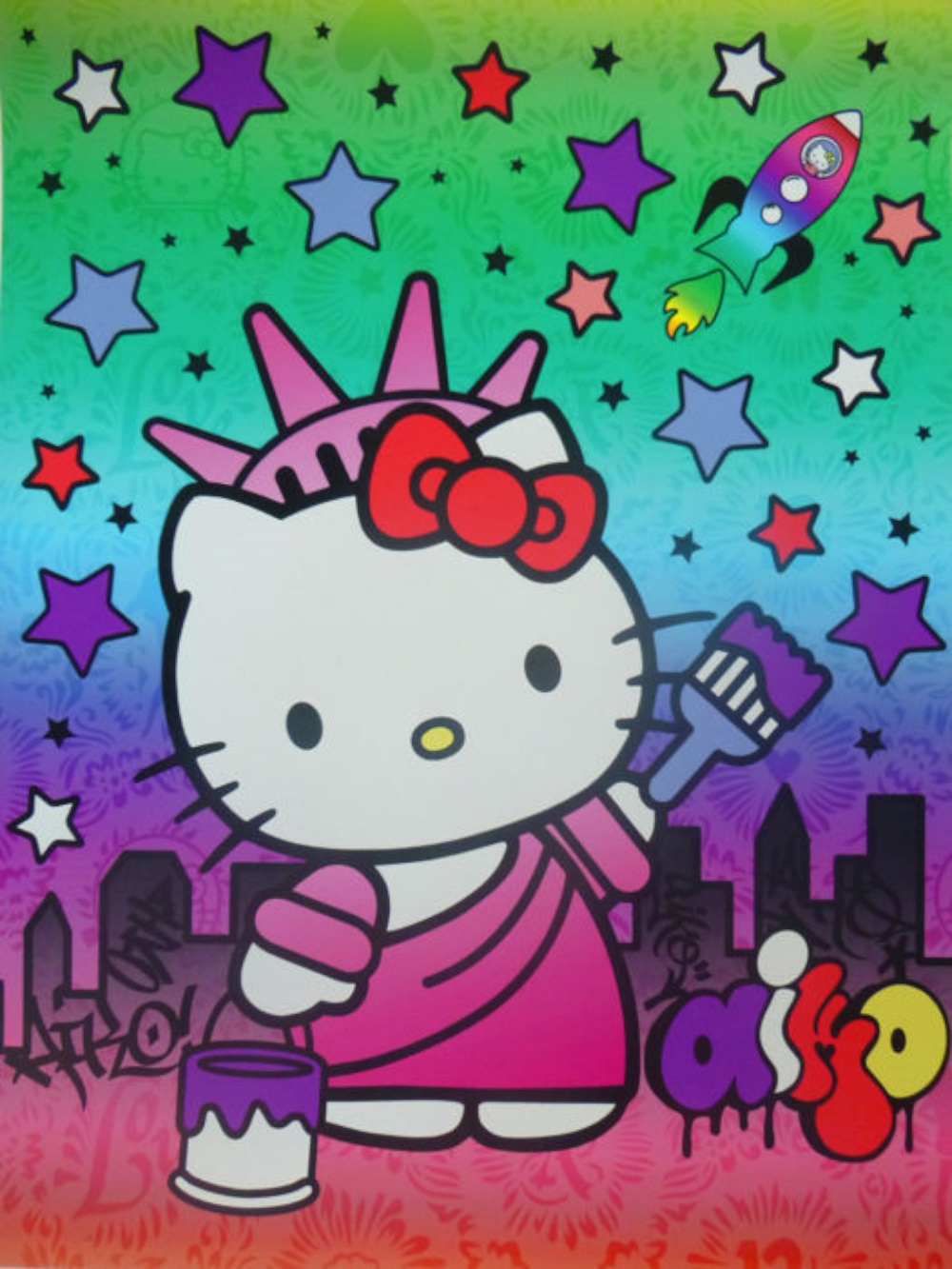
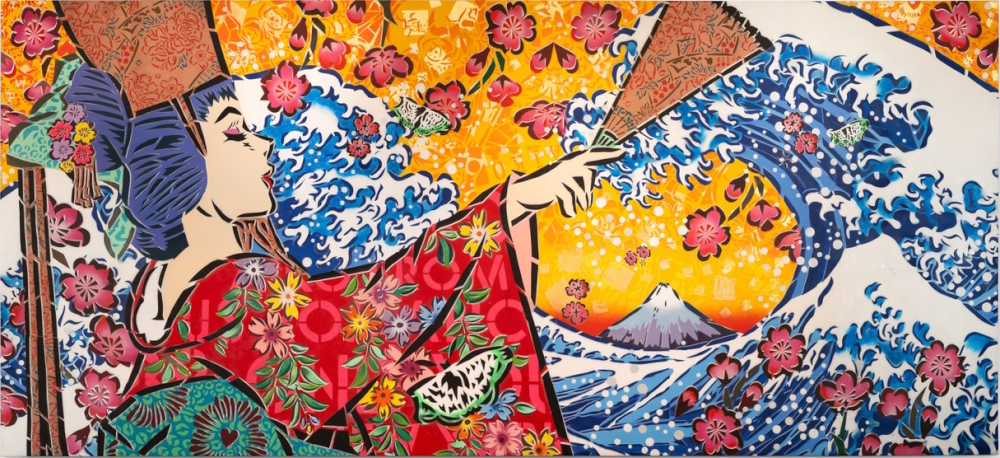
“One of today’s most important street artists“ (The World Atlas of Street Art and Graffiti). “A pioneer in the urban art movement for decades“ (urban-nation.com). This “influential figure in contemporary street art“ (encyclopedia.design) has the ability “to combine pop imagery with the traditional aesthetic of Japanese art“ (isupportstreetart.com) infused by a dose of metropolitan roughness. The body of work of this native Asian resident in the US is as diverse as it is extensive. In 2005 the lady spent time as a fellow artist with the mysterious, legendary stencil-master Banksy and later cooperated with him on the Oscar-nominated documentary film Exit Through the Gift Shop (2010). Come July 2012, she was the first female artist to be invited to create a mural on Big Apple’s Bowery Wall, “a symbolic milestone for the street art movement“ (street-artwork.com). Her iconic artworks served as visual backdrop in Madonna’s 2015 music video for “Bitch, I’m Madonna.“ Furthermore, commissioned work for brands like Apple, Estée Lauder, FENDI, Hello Kitty, Microsoft, Pepsi, Reebok, Louis Vuitton, and Warner Bros. was completed. It’s the impressive career of an artist who’s present with her large-scale stencil murals and canvases around the world nowadays in galleries and private spaces but once came to New York with speaking only very little English!
LADY AIKO
Asian-American artist
Japan / US
It was a jump into the deep end for AIKO (born 1975 in Tokyo, Japan) when she arrived in The Big Apple in 1997 with just one suitcase, an English dictionary and no cell phone. The twen was raised in a “super-middle-class family“ (scmp.com) in the traditional Japanese way and had attended an all-girl high school in Tokyo studying filmmaking and primarily “how to be a good wife for men“ (lifewtr, “Thirst Inspiration“). “I felt I don’t fit anywhere“ is her revelation on this YouTube link. Consequently, she left her prior comfort zone and entered uncharted territory. Having created art since an early age and „growing up surrounded by Japanese visual culture, especially its incredible graphic traditions, packaging, Manga, fashion, woodblock prints and the way images can be layered together“ (upmag.com), her goal was to pursue a Master of Fine Arts in Media Studies at New School University.
“I fell into a group of friends who were painting outside illegally,“ this Japanese lady tells on Chrome Industries‘ YouTube clip “Move your way.“ “Without words we could speak to each other. I was able to express myself as an artist. Graffiti and street art were the only option. As I spent more time with them, I realized this was a massive worldwide graffiti boys club. Their style was right up my alley. It was exciting, powerful, and naughty.“ Not forgetting the fact that the free expression fascinated her heavily.
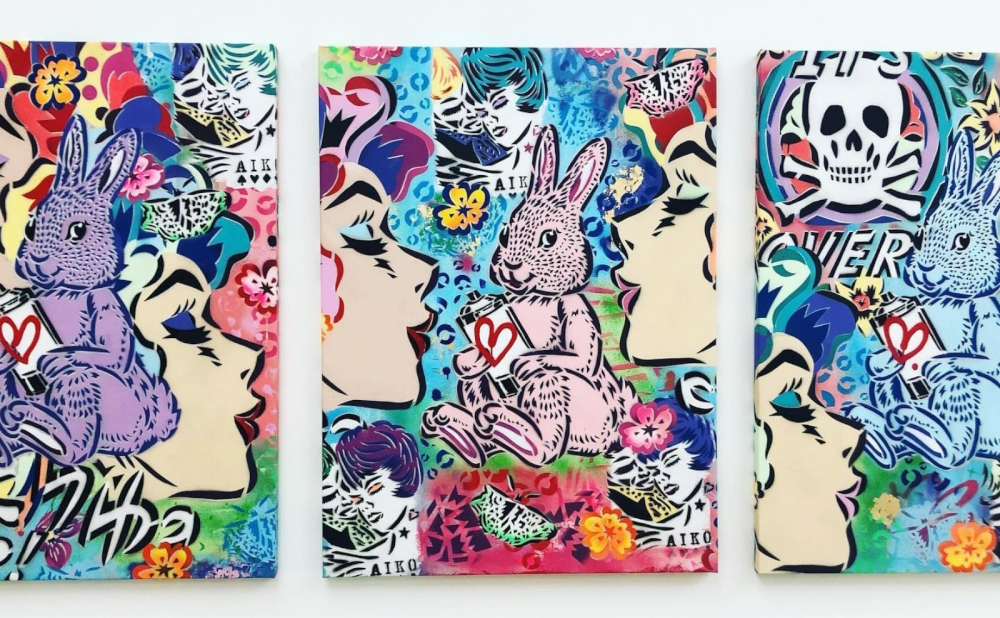
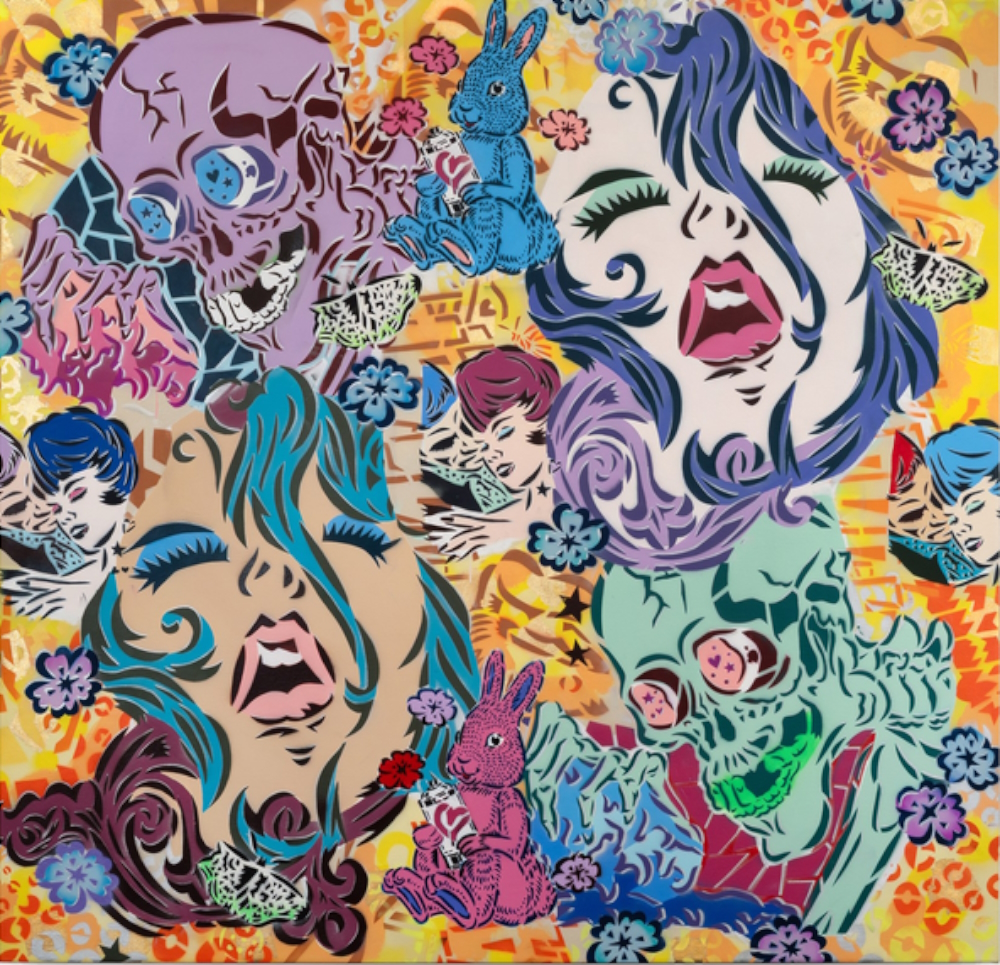
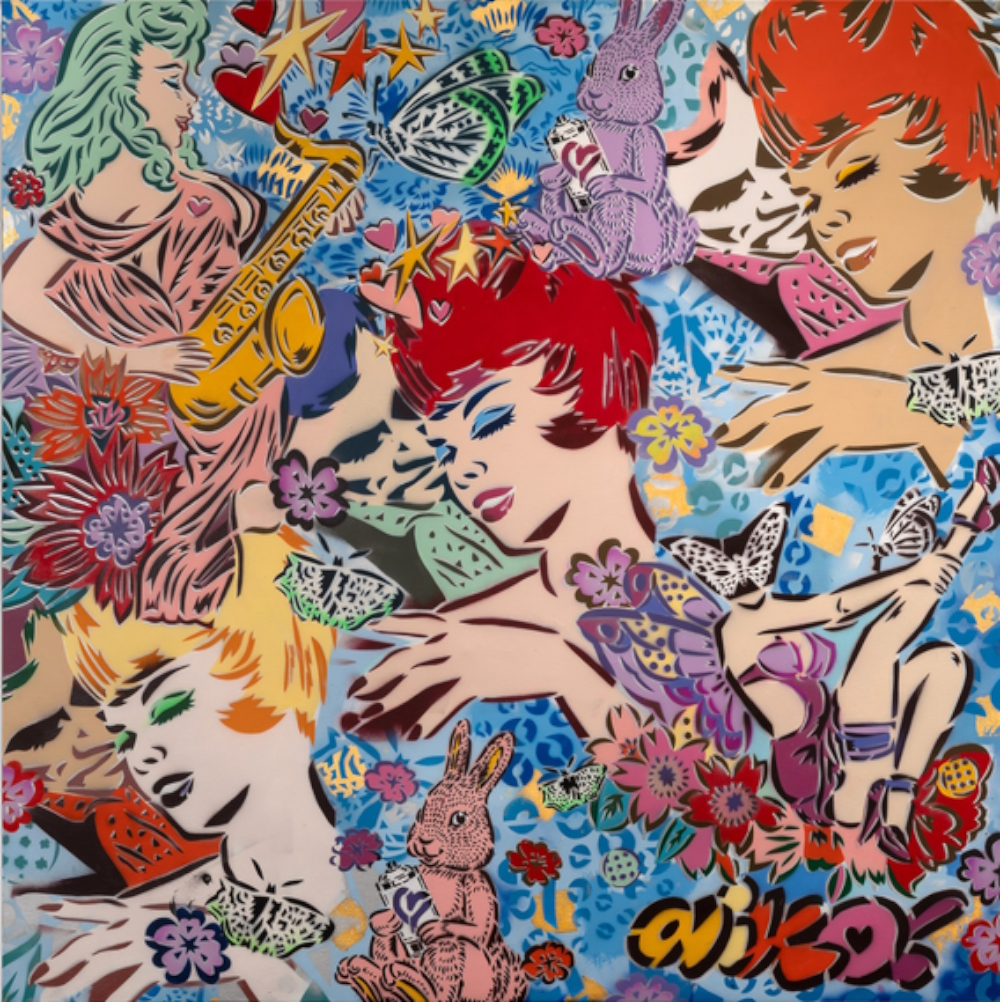
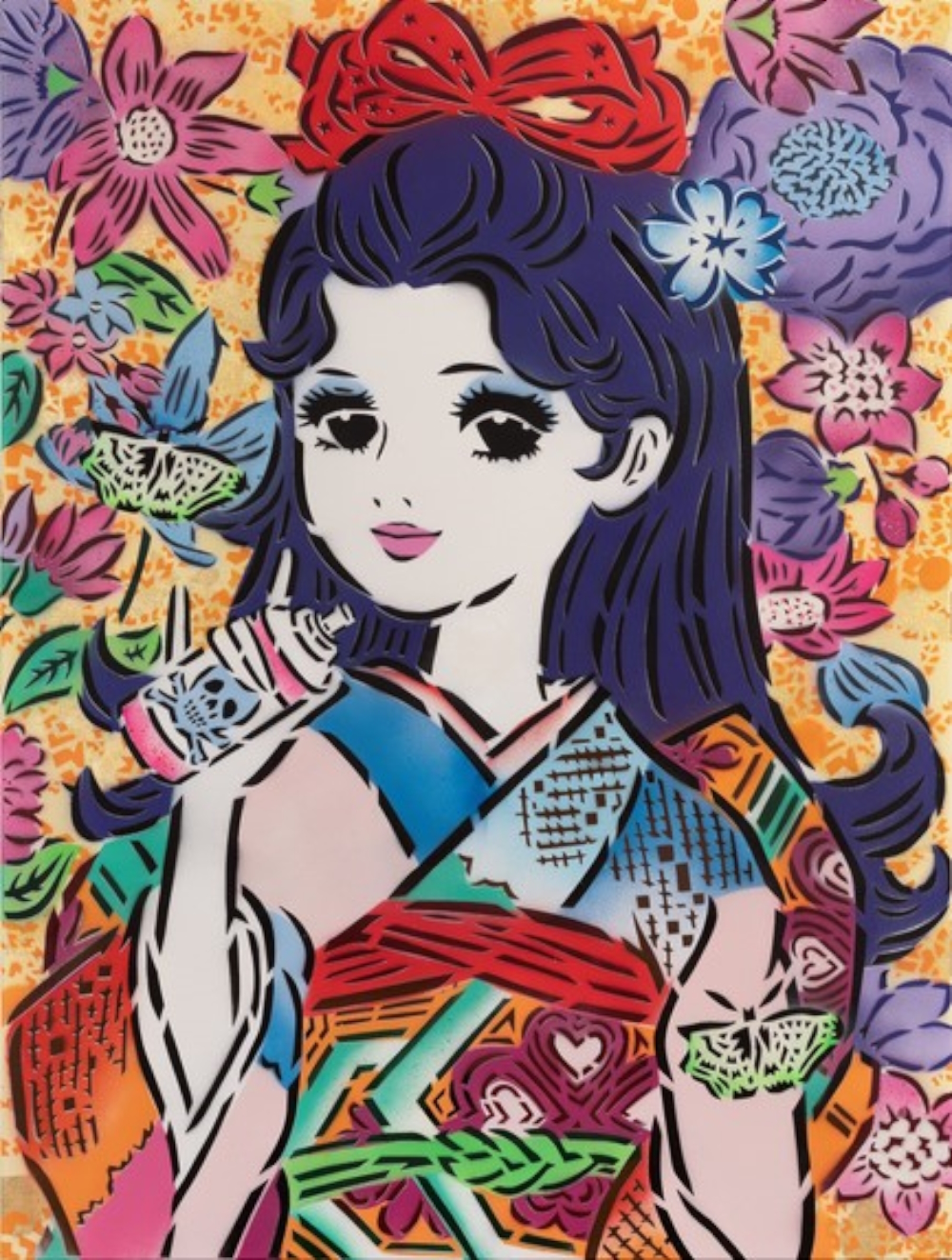
AIKO apprenticed at her fellow countryman Takashi Murakami, who had opened a small studio in Brooklyn. The contemporary artist told her “that I needed to work in a studio and with galleries if I wanted to become a professional artist“ (upmag.com). She worked for him until the late 1990s going on to direct a digital biography on this creative (“Superflat”, 1998). In the same year the newcomer met two American artists. The three formed the street-art collective FAILE. Together they created "large format, monochromatic, screen-printed female nudes" (The World Atlas of Street Art and Graffiti), besides other creations. Their cooperative became very popular through this style which functioned similarly across media, from posters to prints to gallery visual pieces on canvas. In 2006 the female fighter for artistic independence left the group and launched her solo career “with works on canvas that incorporate collage, (hand-cut with a knife) stencilling, brushwork, spray paint, and serigraphs. This bricolage technique perfectly suits her eclectic practice of voracious mash-up of Japanese and American pop culture, soft-corn porn and erotic art,“ analyzes Art Nouveau Magazine.
Her Japanese name means “lovely daughter.“ Although the acronym is still present in AIKO’s work somehow, in another way it’s a little different from what it suggests on first sight. “I simply enjoy being a woman, and I enjoy drawing sexy images, romantic stories, and 'kawaii' stuff (Japanese for 'cute' or 'adorable'),“ the artist is quoted on fromthegrapevine.com. “She says,“ writes the British online newspaper independent.co.uk, “she enjoys being able to make a statement about women in a way that her male contemporaries can’t.“
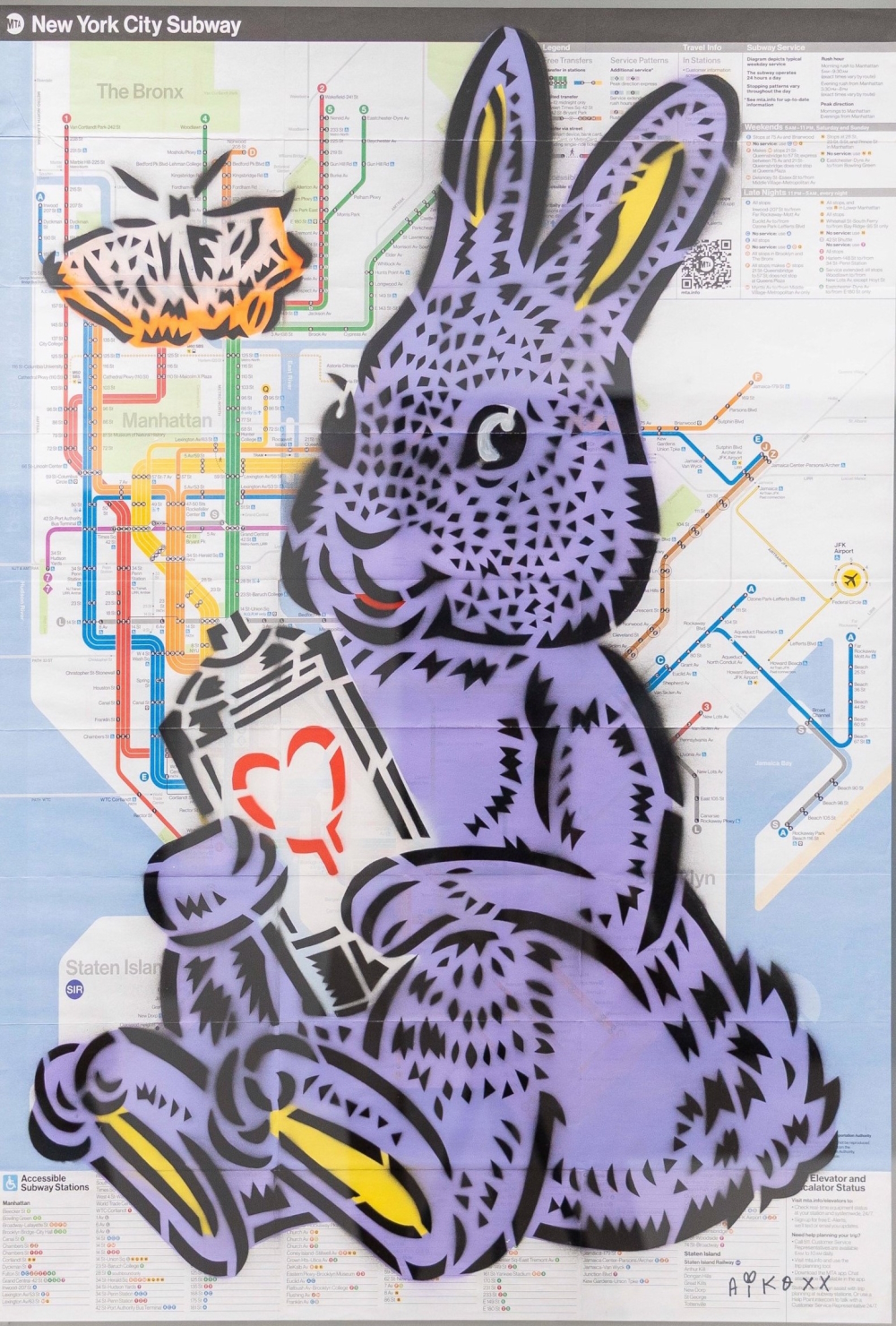
While the symbol of her world-famous colleague Banksy is the rat, hers is the rabbit. “I was born in the year of the rabbit, so ever since I was younger I’ve always had something rabbit-related in my purse,“ she explains on beyondthestreets.com. “Bunny is a symbol of freedom. It really makes me happy to see Bunny being embraced by so many people in different countries. In Asia, a rabbit is a symbol that represents long life and success. The bunny is beautiful; it brings good fortune and prosperity“. So the rabbit is present in different forms in her oeuvre, like ceramic bunny cookie jars, bunny pins, or even on the NYC subway map. The self-described “global citizen“ is a vivid traveller who enjoys working on street art projects with local artists in foreign countries like India or South Africa.
“Making art“, AIKO told the New York-based UP Magazine, “is part of my everyday life; it is not simply a way to make money, as it is for artists who are mainly concerned with their market value or legacy. Making art is my life. My life and my body are the ultimate artworks that I am creating and exhibiting every moment. I don’t want to repeat what I’ve already done. I want to keep surprising myself.“
An advice of her, which sums up this cosmopolitan‘s philosophy perfectly, Art Nouveau Magazine selected as a subheading: “I believe that to make great art, you need to take time and risk!“
LADY AIKO, who loves cooking and baking, lives and works in New York’s Lower Manhattan.
Interview September 2026
East meets West: “To make great art you need to take time and risk!“
INTUITION/IMAGINATION
?: How does intuition present itself to you – in form of a suspicious impression, a spontaneous visualisation or whatever - maybe in dreams?
All of them, especially when I am relaxing—while traveling, being in nature, taking a bath, or chatting with a friend. It can also appear as a sense of caution or warning when I am stressed or uncomfortable.
?: Are ideas written down immediately and archived?
Usually, if an idea is really good, I can remember it, so I don’t always need to write it down. But I have a good collection of collage books and an image library.
?: How do you come up with good or extraordinary ideas?
Like I said, when I’m relaxing and focusing on the moment—traveling, observing my surroundings, and spending time alone without interruptions or noise.
?: Do ideas arrive as a whole, or as a seed that evolves through endless trials and errors?
It often starts with a single word, one image, or even just a color. Then other elements come into my head one after another, creating shapes and stories.
?: What if there is a deadline, but no intuition? Does the first fuel the latter?
As a professional, when I have a deadline, I generate the best ideas for the client no matter what. In a professional setting, saying you have no intuition is often just an excuse.
INSPIRATION
?: What inspires you and how do you stimulate this special form of imaginativeness?
Traveling to different places, experiencing different situations, and meeting new friends and collaborators inspires me and keeps me motivated and excited about creativity.
?: How do you filter worthwhile ideas from bad ones?
In most cases, only the valuable ideas stay in my mind. My colleagues and clients help distinguish what is possible based on the time, schedule, and budget.
?: Does an idea need to appeal to you first, or is commercial potential essential?
First and foremost, it has to be an idea I actually want to pursue. Even if it is something the client wants, if I don’t want to do it, the result will not be amazing.
?: Do you revisit old ideas or check what colleagues or competitors are up to?
I sometimes go back to old ideas and look at things I didn’t complete in the past. I don’t really care what other people are doing. I’d rather not know.
CREATIVITY
?: What time or environment best suits your creative work process — for example, a time and place of tranquility or of pressure?
Both. It’s good to work on sketches and cut stencils when I’m alone and have peace and quiet. But I also enjoy pressure—painting on the street, working with a big team on museum and gallery installations, or collaborating with corporations and the government. Each situation brings a different motivation and creative process.
?: “Things are not difficult to make. What is difficult is putting yourself in the state of mind to make them,” is a quote by Constantin Brâncuși, considered one of the most influential sculptors of the 20th century and a pioneer of modernism What’s your path from idea to creation?
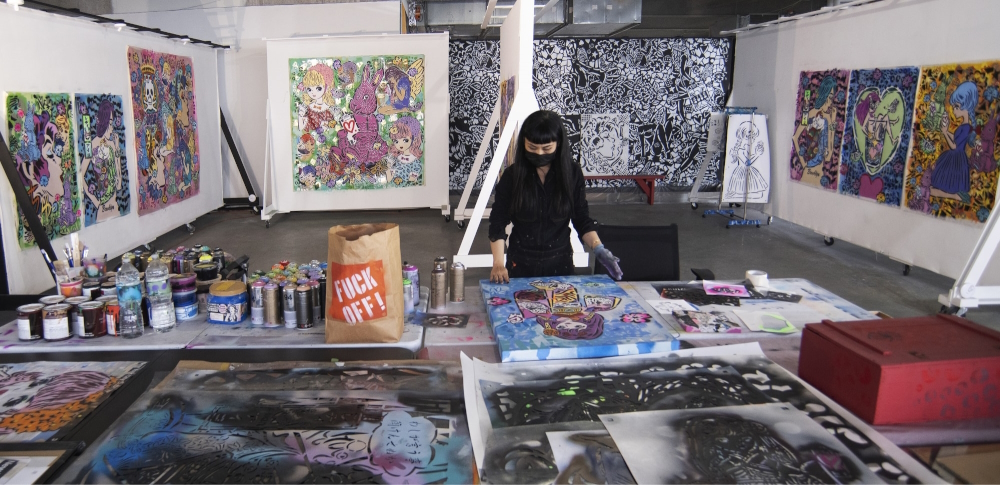
Let’s talk about a mural project. I create a collage sketch, then based on the image, I create large scale stencils and spray them onto the wall. The process takes a lot of time, especially making hand-cut stencils and spraying. The most difficult part is that I cannot control the weather or the outdoor situation, including traffic and people at the site.
?: Speed and grasping the magic of the moment, or a slow ripening and elaboration?
Both. I need time to prepare stencils and create details to make sure it looks good on a wall and canvas, but speed is also essential when creating massive pieces in public spaces with limited time.
?: How important are self-doubt and criticism by others during this process?
Not very important. Once I make a commitment, I just finish it and see the result. Usually, it comes out without much criticism, it comes with more appreciation and I believe the moment.
?: Better to work alone and trust your instincts, or in a team?
I prefer cutting stencils and spraying all by myself. However, I need to work with a team when I’m working on large scale projects in public spaces or on design projects for commercial products, film and fashion etc which is exciting in a different way.
?: Creative block, or worse, real failure — how do you climb out?
I take a break and do completely different things. Sleep well, eat well, dance with music, yoga, exercise, and of course travel to somewhere unusual.
?: Stay true to yourself and take risks, or make concessions to the market and clients?
Once I decide to work with a client, making compromises is part of the job. It is a crucial step toward getting paid. After all, the priority is to collaborate on a project that satisfies both the client and the consumer. I can pursue what I personally want to do later.
?: How is innovation possible once you have a distinctive style?
That is a very important question to me. Now that I have established myself as a painter, I’m also interested in completely different art forms, such as fashion, performing arts, film, and theater design. Exploring these areas is part of my innovation and my process of moving to the next stage.
?: Is it good to be ahead of your time even if you risk not being understood?
Absolutely. I don’t care if I’m not understood immediately (or forever) because the world is usually slow to get it and I am not making art to make people understand. My art is like a gift I want to create and leave.
?: When does the creative process end? Or is it always a work-in-progress?
I have been making art every day since I was two years old. The process never ends and my purpose is to become a better artist than yesterday.
?: How does artificial intelligence change human creativity? Do you use AI, or would you use it?
It is helpful in some way , especially with language. Speaking, reading and writing in different languages were my biggest obstacles for working in different countries. However I cannot ask AI to come up with creative ideas, cut stencils, or paint. That is the part I love and hate—the pleasure of art making with my hands and brain.
SUCCESS
?: “Success is the ability to go from one failure to another with no loss of enthusiasm.” Do you agree with this quote, which is attributed to Winston Churchill, the former Prime Minister of the UK?
I do agree. I have had many failures in the past and will probably continue to have them. But continuing to work has been the biggest solution for making my life meaningful, and that is my own definition of success.
?: Should or can you resist the temptation to recycle a ‘formula’ you're successful with?
There is no such formula. I never rest on a single success or stick to established conventions. I keep evolving day by day, constantly changing and pushing myself into something new.
?: Is it desirable to create an ultimate or timeless work? Doesn’t “top of the ladder” bring up the question, “What’s next?” — that is, isn’t such a personal peak “the end”?
I consider my ultimate work of art is my own life and existence itself. Therefore, the pinnacle of that ladder is likely my own death. Regardless of the activities I am engaged in—or even if I am no longer able to pursue them—I would be grateful if, at that moment, I could feel that I had truly lived my life to the fullest.
MY FAVOURITE WORK:
One of my creations that best represents my work is a large-scale piece for the Bowery and Houston Wall in NYC 2012, where Keith Haring painted in the 1980s. Ever since, only male artists had been chosen to paint the mural until me. It was a place where delicate feminine imagery met graffiti and street art. Being selected as the first female artist to paint the wall was quite sensational—a tiny Japanese woman creating such a large-scale work alongside legendary graffiti and street artists.