Kurt Wenner
Inventor of 3D/stereoscopic street painting & 3D pavement art illusion
US / Italy
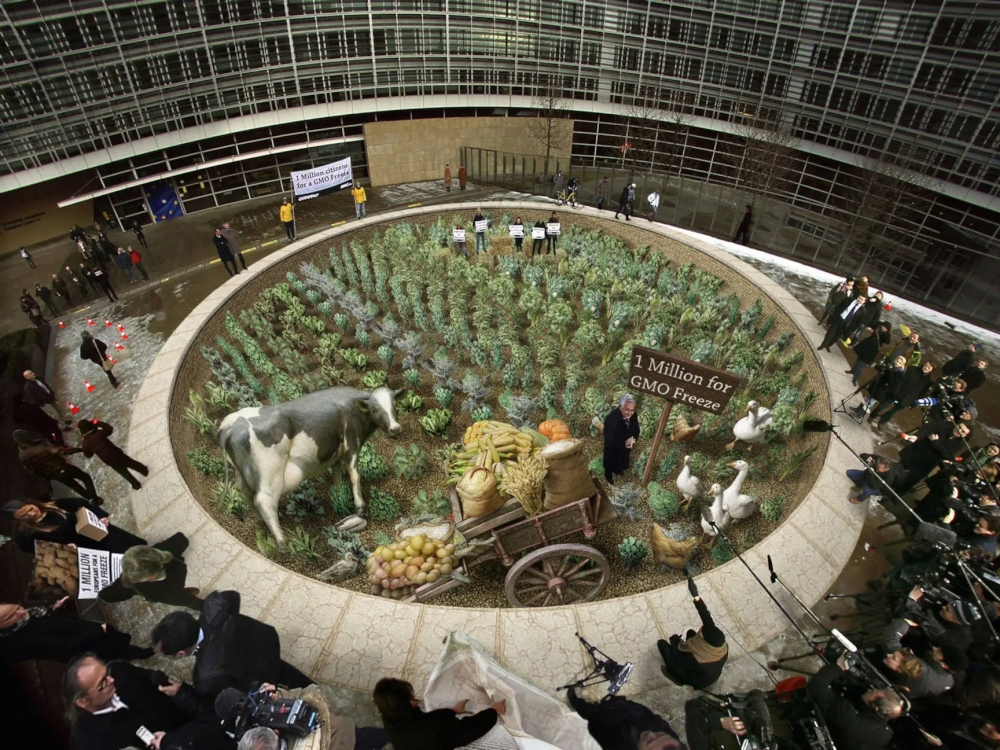
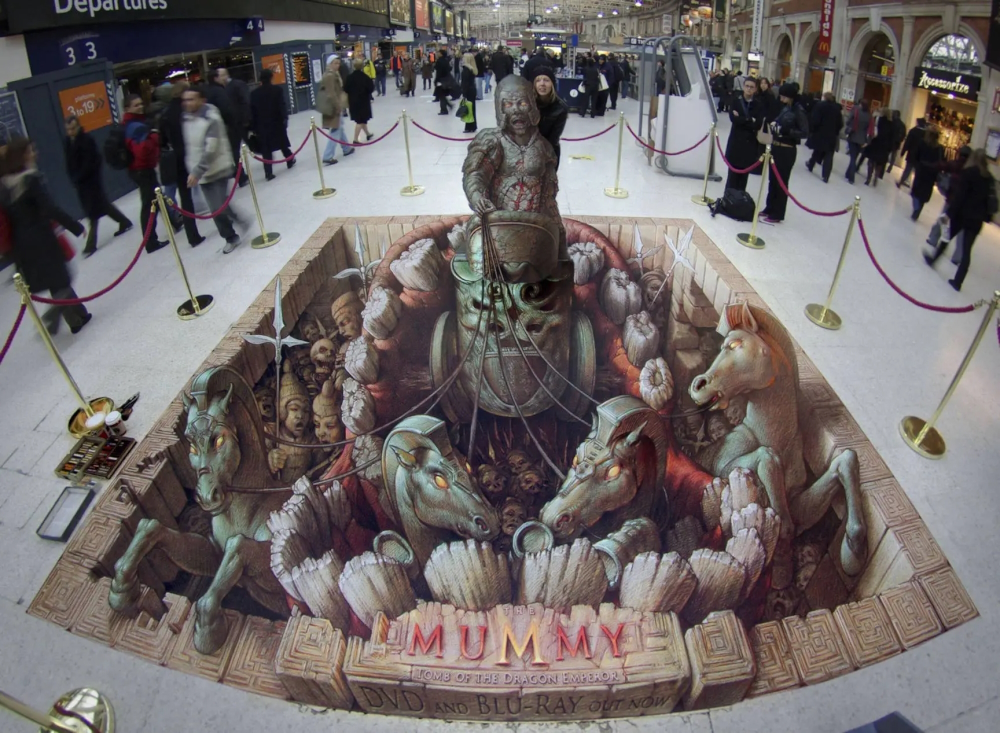
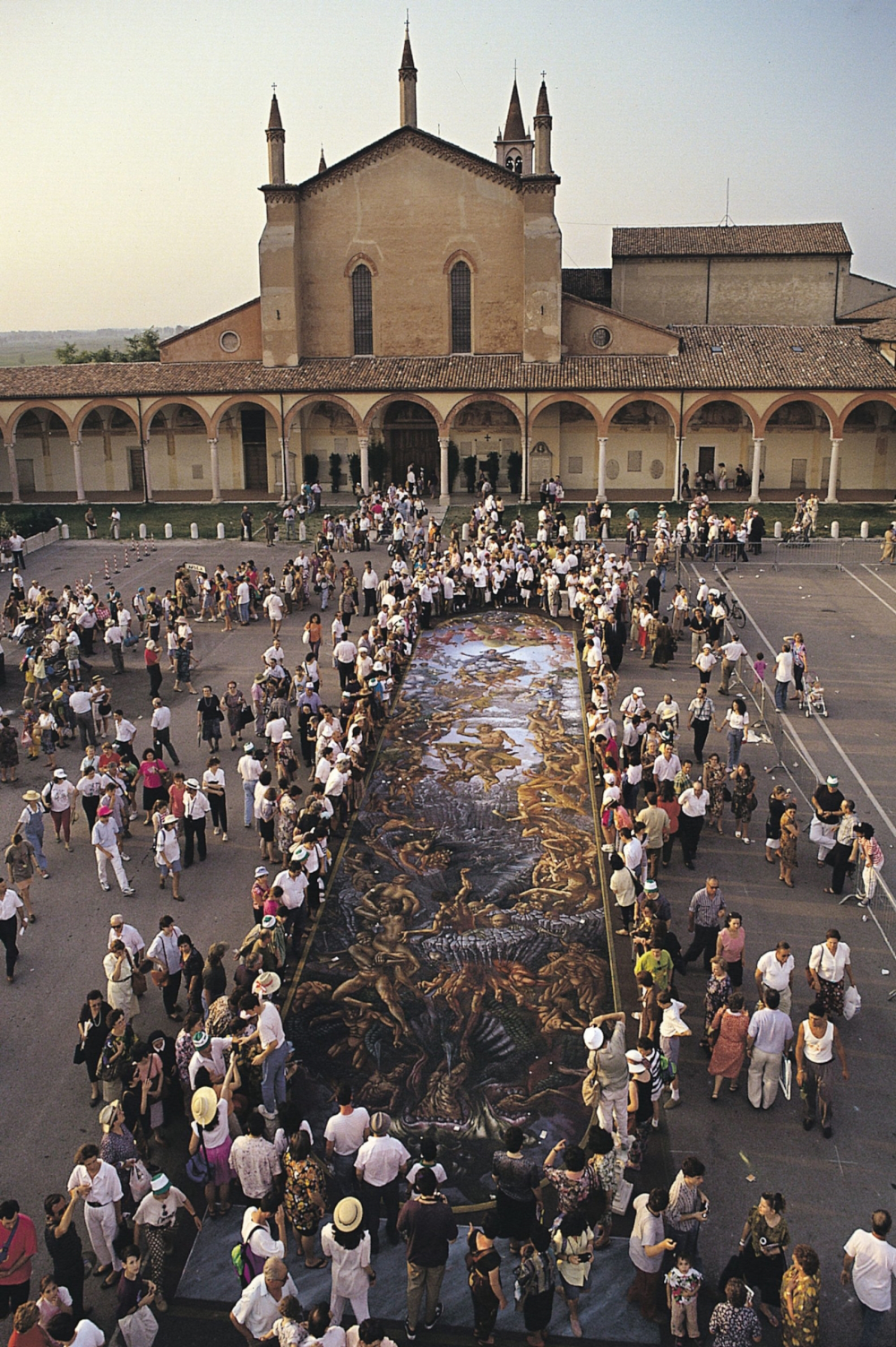
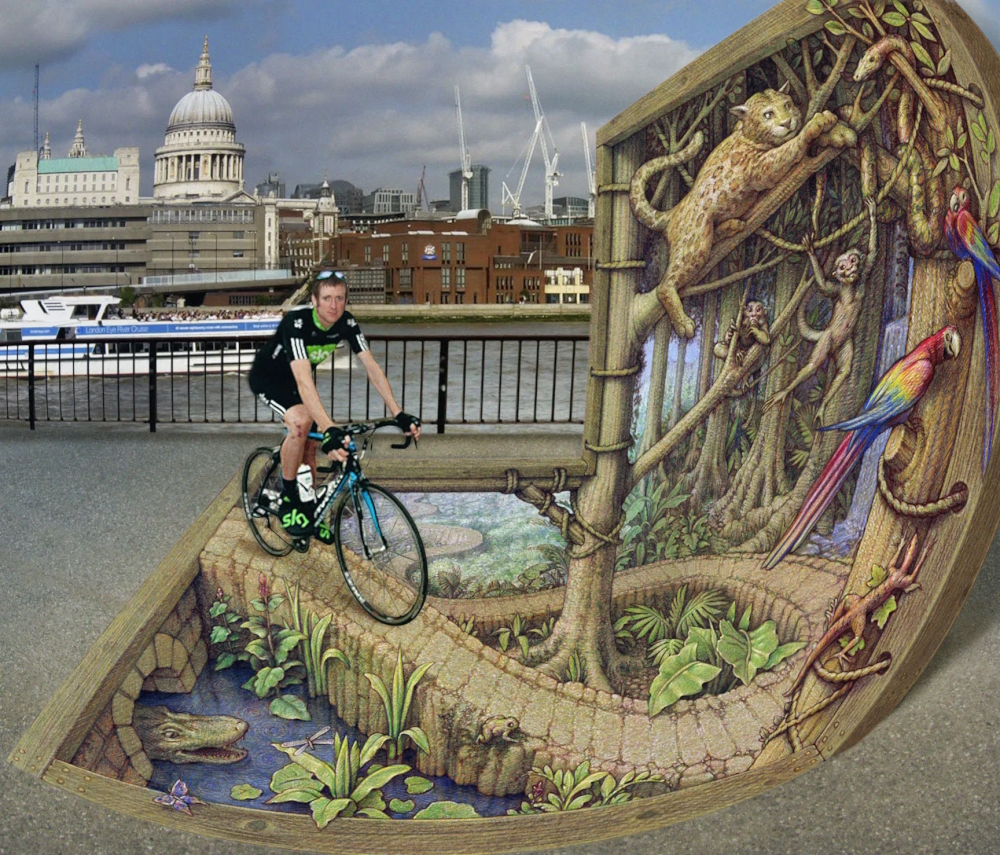
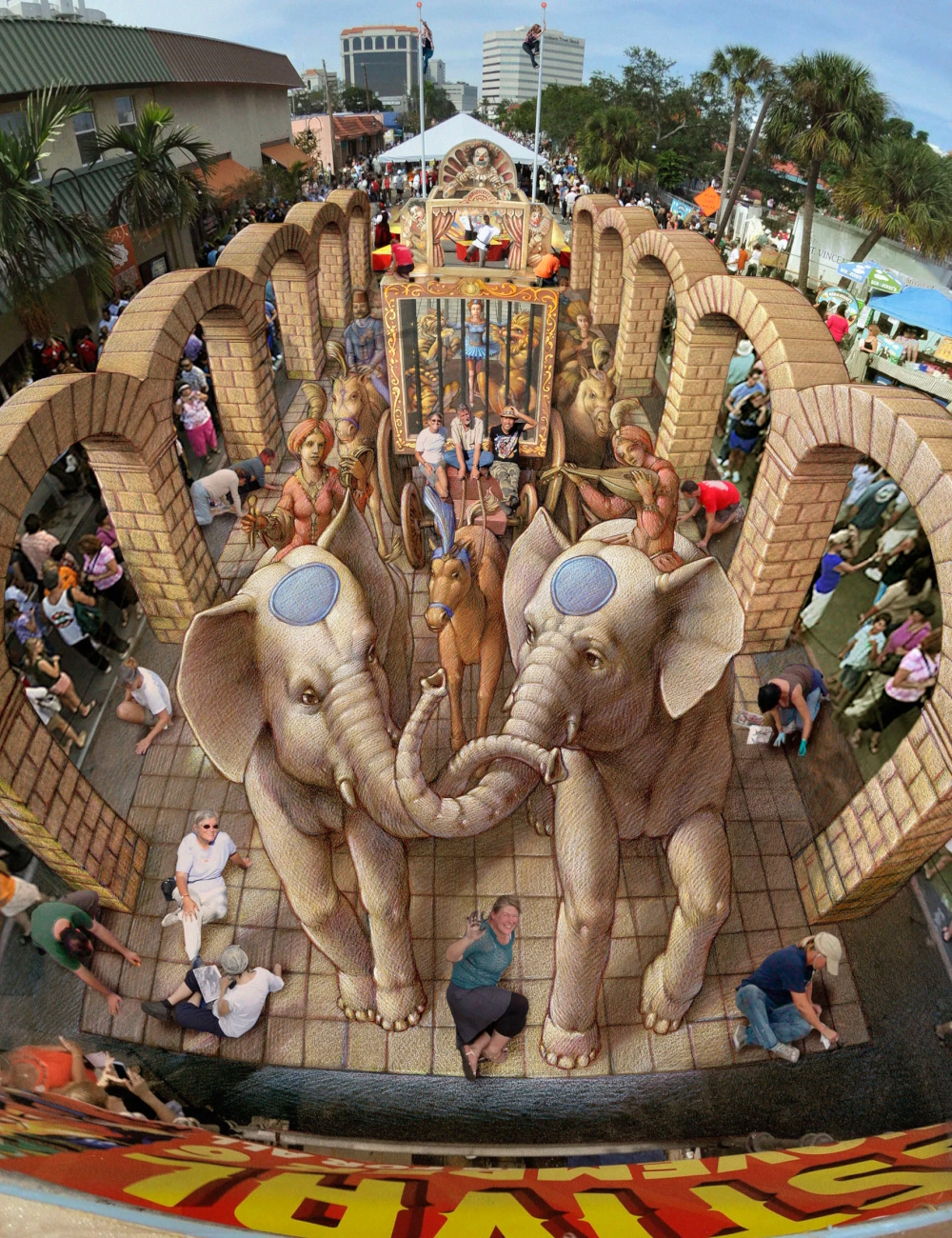
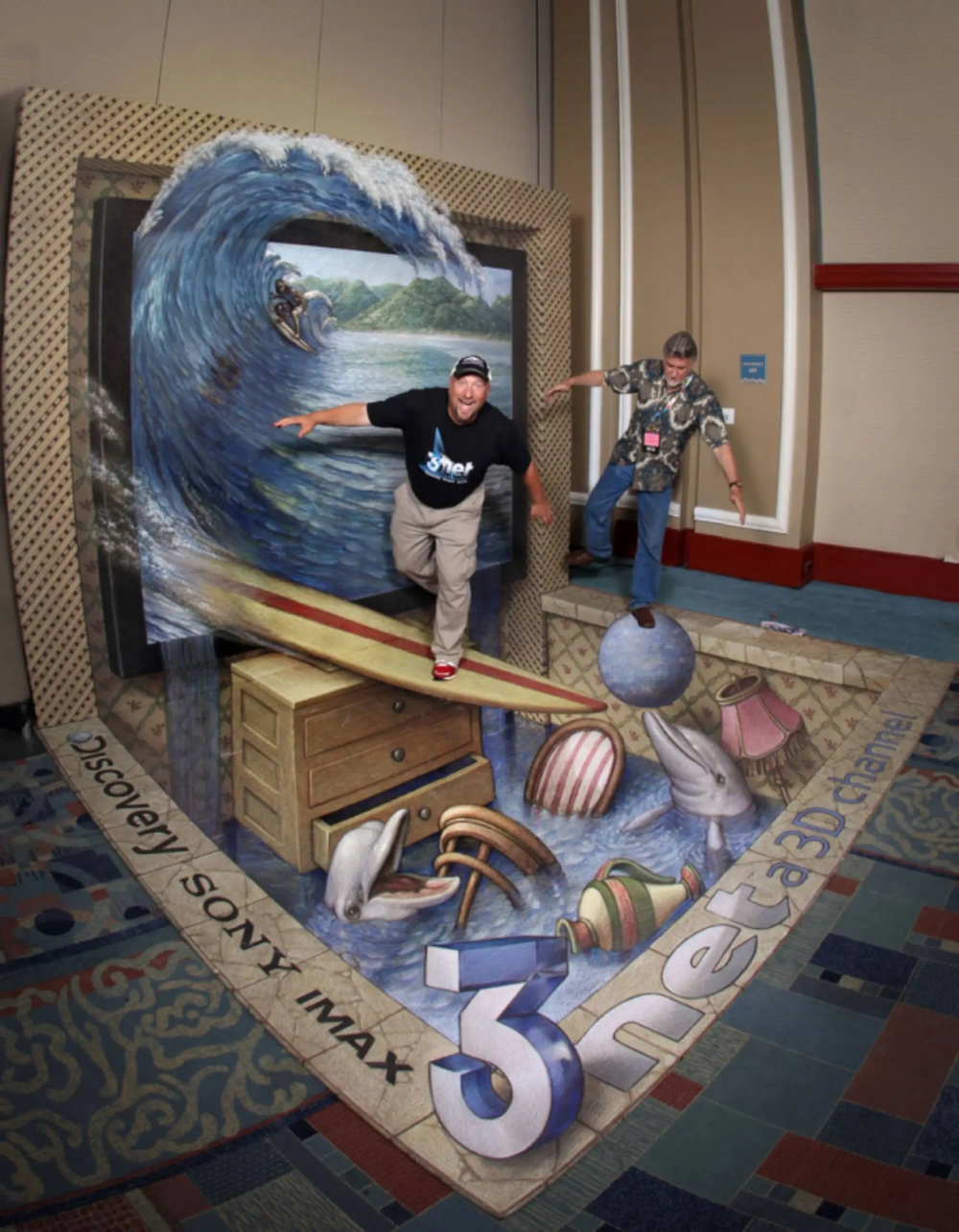
"Masterpieces in Chalk". That is the adequate title of an award-winning documentary by National Geographic about this creative’s unique oeuvre. It includes a 22-by-22-meter printed banner incorporating his 3D artwork and one million petition signatures. The commissioned work for Greenpeace and the international civic organization Avaaz as part of the first-ever European Citizens’ Initiative against genetically modified crops was unveiled to the European Commission in Brussels on December 9, 2010. Two years earlier the American shocked passengers at London’s Waterloo Train Station: his hyperrealistic drawing for the action-adventure film "The Mummy: Tomb of the Dragon Emperor", on behalf of Paramount Pictures, was an eye-catcher. The maker is the inventor of 3D pavement art illusions. The entire 3D Museum of Wonders in Playa de Carmen, Mexico, is dedicated solely to his spectacular images. The man‘s extraordinary craft that is shown in over 30 countries (including more than 20 oil murals and decorative ceiling paintings covering about 6,000 square feet for the church of St. George near Lake Como), even received a church blessing! In 1991 he had composed a street painting of the Michelangelo original "The Last Judgement" when Pope John Paul II visited the Sanctuary at Grazie di Curtatone, near Mantua, Italy. The head of the worldwide Catholic Church signed the pavement painting with his papal symbol. The gesture was interpreted as a symbolic recognition of pavement art as sacred art.
Kurt Wenner
Inventor of 3D/stereoscopic street painting & 3D pavement art illusion
US / Italy
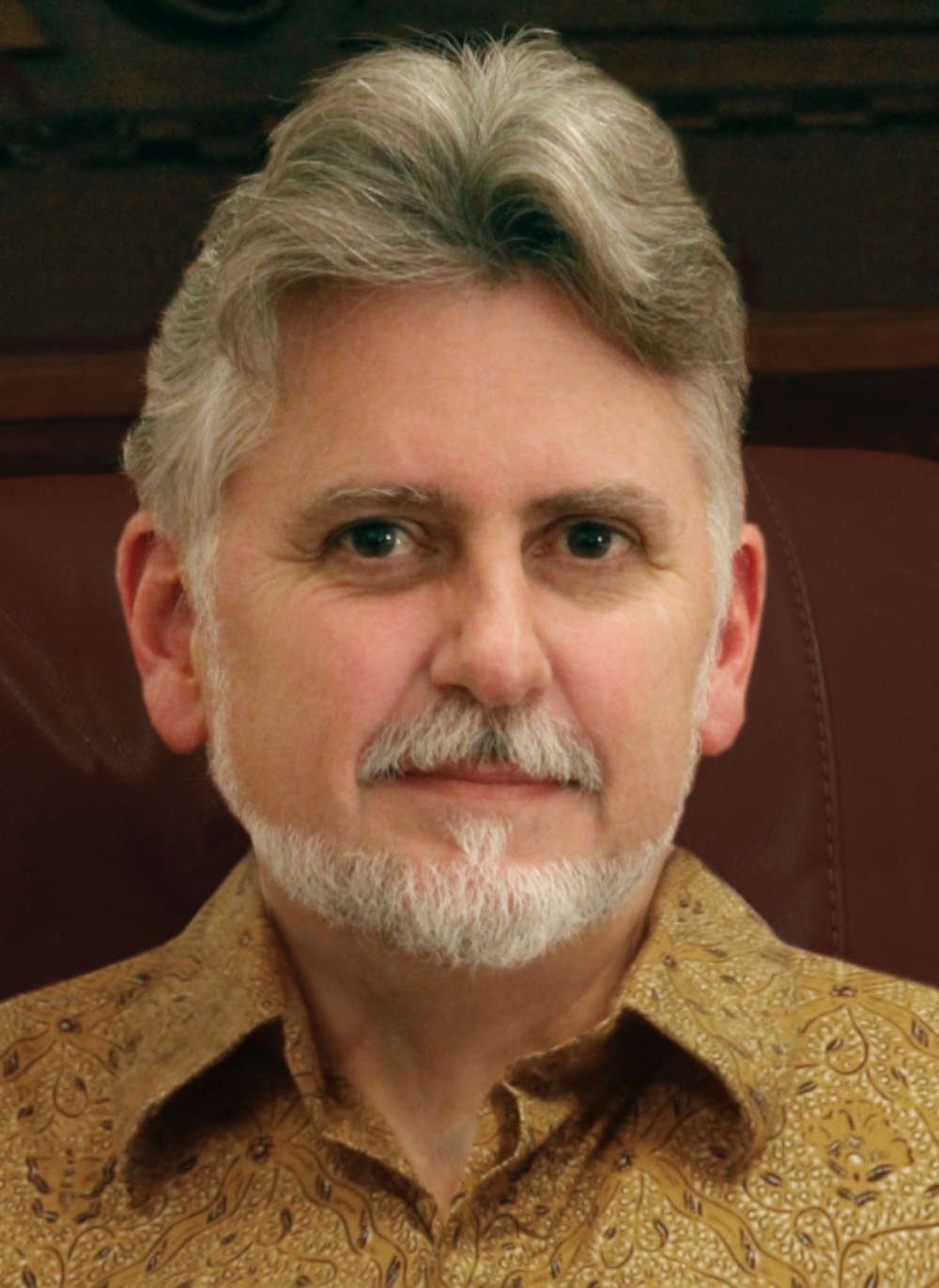
Before he came back down to earth, this artist had literally been dealing with the heavens. The man, namely, worked for NASA at the Jet Propulsion Laboratory “as an advanced scientific space illustrator creating conceptual paintings of future space projects and extraterrestrial landscapes“ (ebday200x.wordpress.com). This was an important professional step in the career of this natural talent, who at his parents‘ hand-cut stone garage, “produced his first commissioned mural at the age of sixteen, and by seventeen was earning his living as a graphic artist“ (Wikipedia).
Kurt Wenner (born on April 17, 1958, in Ann Arbor, Michigan, and growing up in Santa Barbara, California) had attended Rhode Island School of Design and while at ArtCenter College of Design in Pasadena was recruited by NASA’s Jet Propulsion Laboratory. In 1982 the artisan left JPL and moved to Italy. In Rome he pursued his love of classical art.
“My interest in Renaissance classicism started with the simple desire to draw well,“ quotes him from figurativeartist.org. “I was struck by the vast difference between how students and teachers drew in the 20th century and the way artists drew 500 years ago. It seemed to me that artists of the past had abilities far beyond those of today. My curiosity about this discrepancy took me to Italy’s capital in order to seek out and master drawing and painting within the “language” of Western classicism. During this time I isolated myself from 20th-century art in order to explore the ideals and concepts practiced in earlier centuries. It has since become an ongoing mission to rediscover classical traditions and communicate them to a contemporary audience.“ The young American who didn’t speak Italian and had no working permit checked into a guesthouse facing the Pantheon and spent six months, eight hours a day, drawing from paintings and sculptures in Rome’s museums, including the Vatican Museums. He experimented with traditional paint media such as tempera, fresco, and oil paint. In order to finance his studies, which took him throughout Europe too, the eager learner became a madonnaro, drawing chalk paintings on the streets.
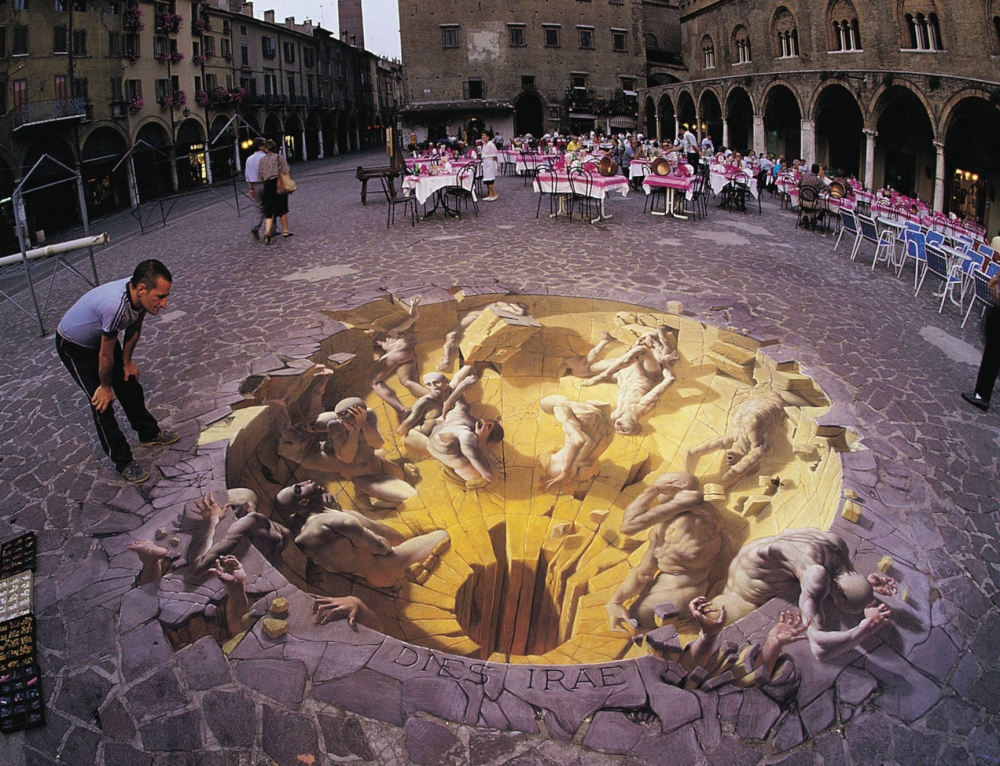
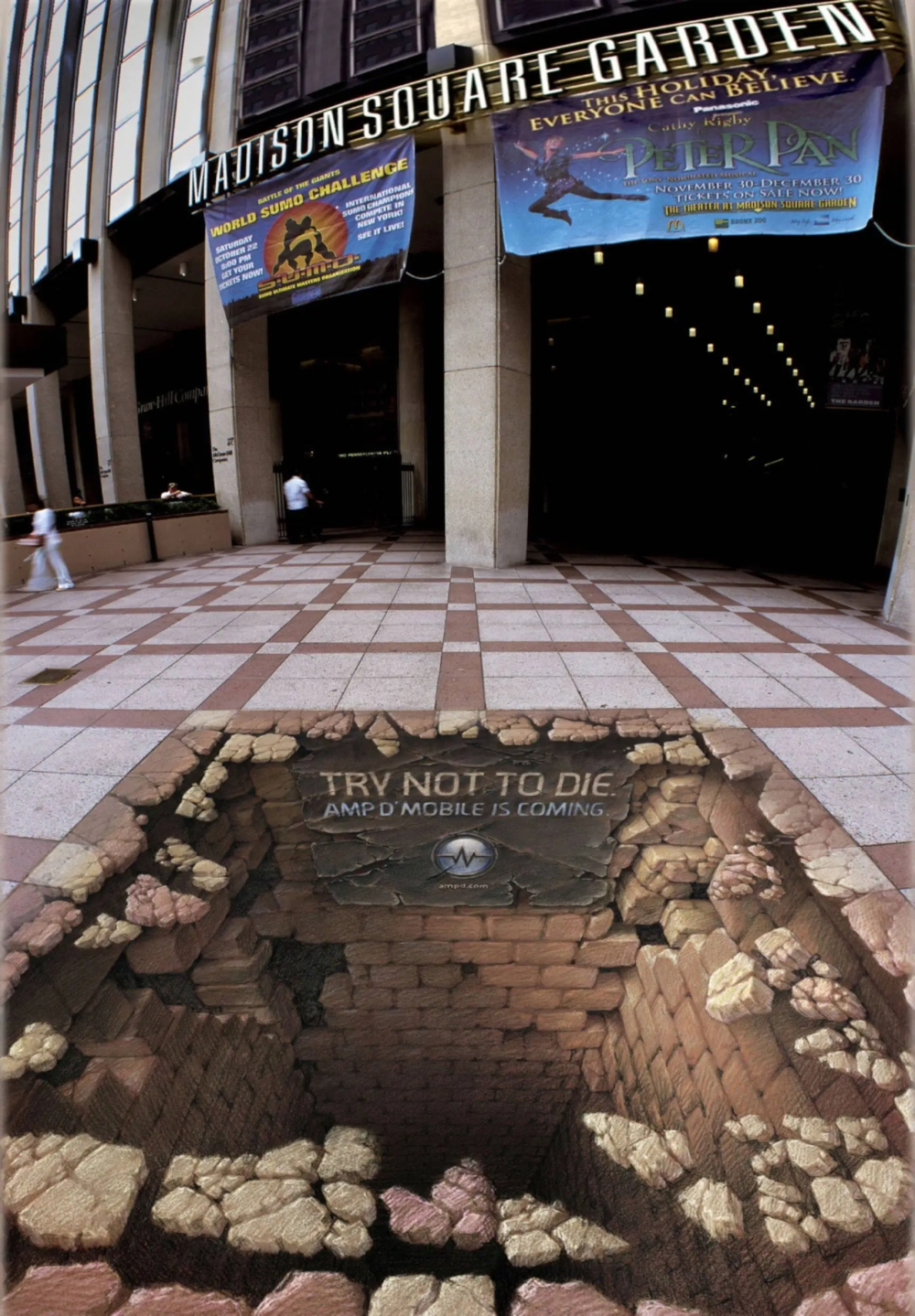
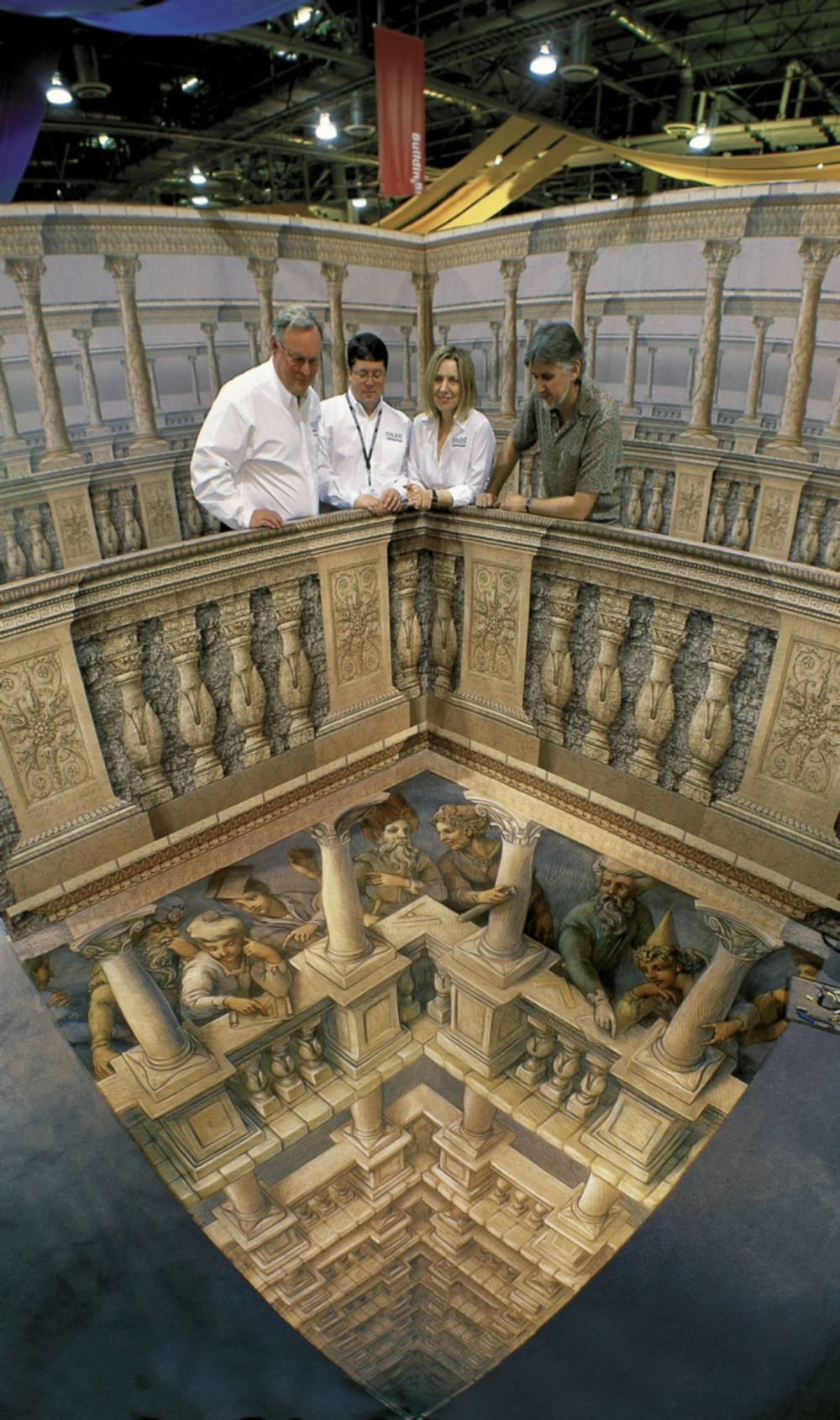
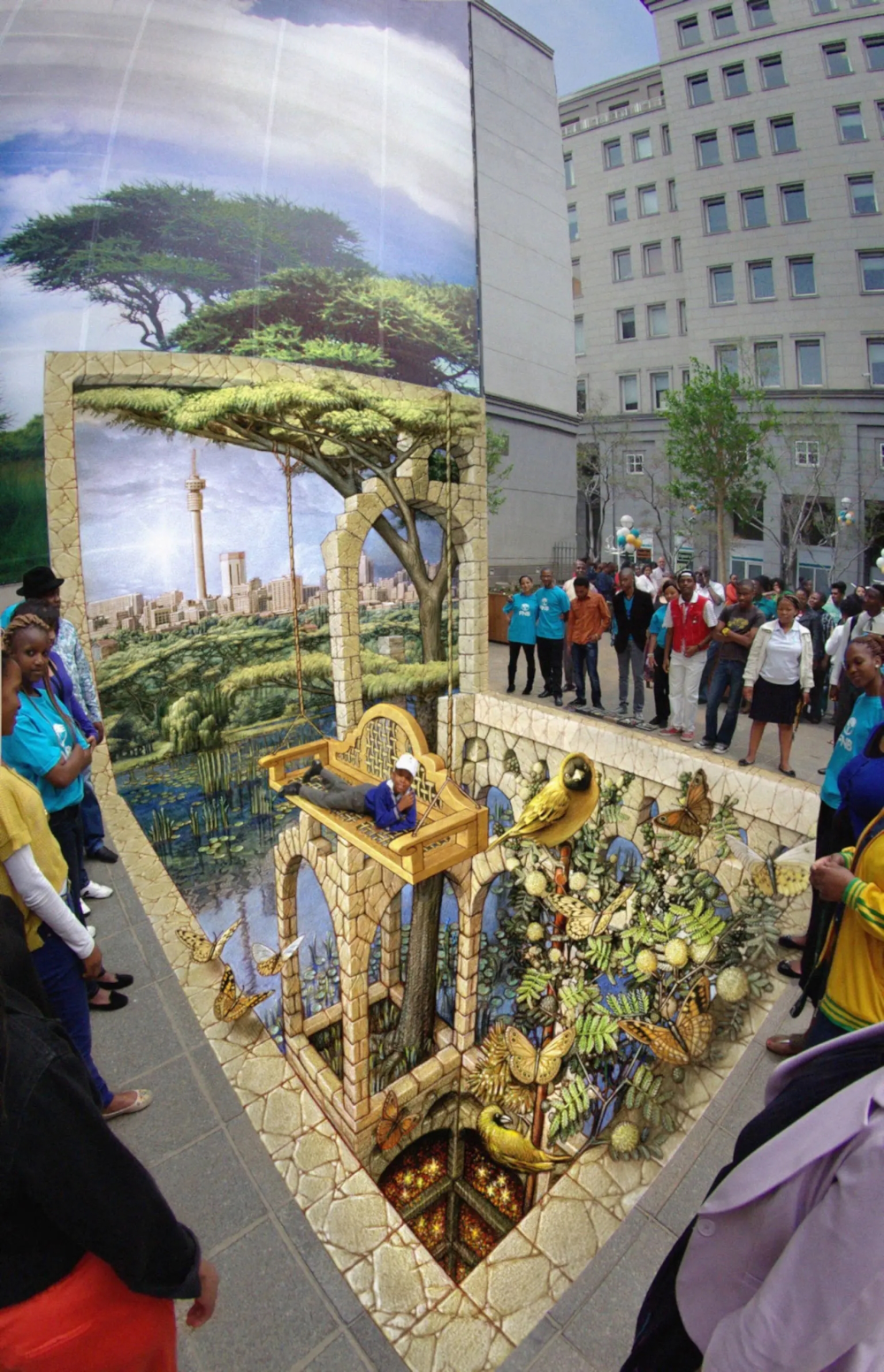
Come 1984, Kurt Wenner conceived an art form all his own. It’s famously called 3D pavement art, or 3D street painting. He had studied anamorphic perspective used in seventeenth-century ceiling painting and then developed a new geometry adapted to the extreme oblique viewing angles of pavement art. “I started,“ Mr. Wenner told businessinsider.com, “creating my particular perspective geometry by adjusting the proportions of the painted format to accommodate the viewpoints of the spectators at the base of the work“. Thanks to what he calls 'hyerbolic perspective', “a 2D drawing looks 3D“ (randomartlover.wordpress.com). By constantly perfecting his innovation, Kurt Wenner created Dies Irae in 1986, one of his early signature 3D pavement works and a labor he has identified as a personal favorite. “I usually spend about a week and a half on the conceptual part of a project,“ Mr. Wenner revealed on the aforementioned website, “and seven to ten days on the execution.“
In 1987 the US-maestro and the German street painter Manfred Stader helped launch the first I Madonnari street-painting festival in the United States at Old Mission Santa Barbara; the event was created by Kathy Koury, Executive Director of the Children's Creative Project, and the CCP.
“Wenner believes in giving back to his community and the world as a whole,“ knows ebday200x.wordpress.com. “In fact, a major part of his career that is often overlooked is the fact that he dedicated one month every year, for ten years, to teaching more than 100,000 students from elementary through university level how to work with chalk and pastels. He was awarded the Kennedy Center Medallion for his outstanding contribution to arts education (in 1991)“.
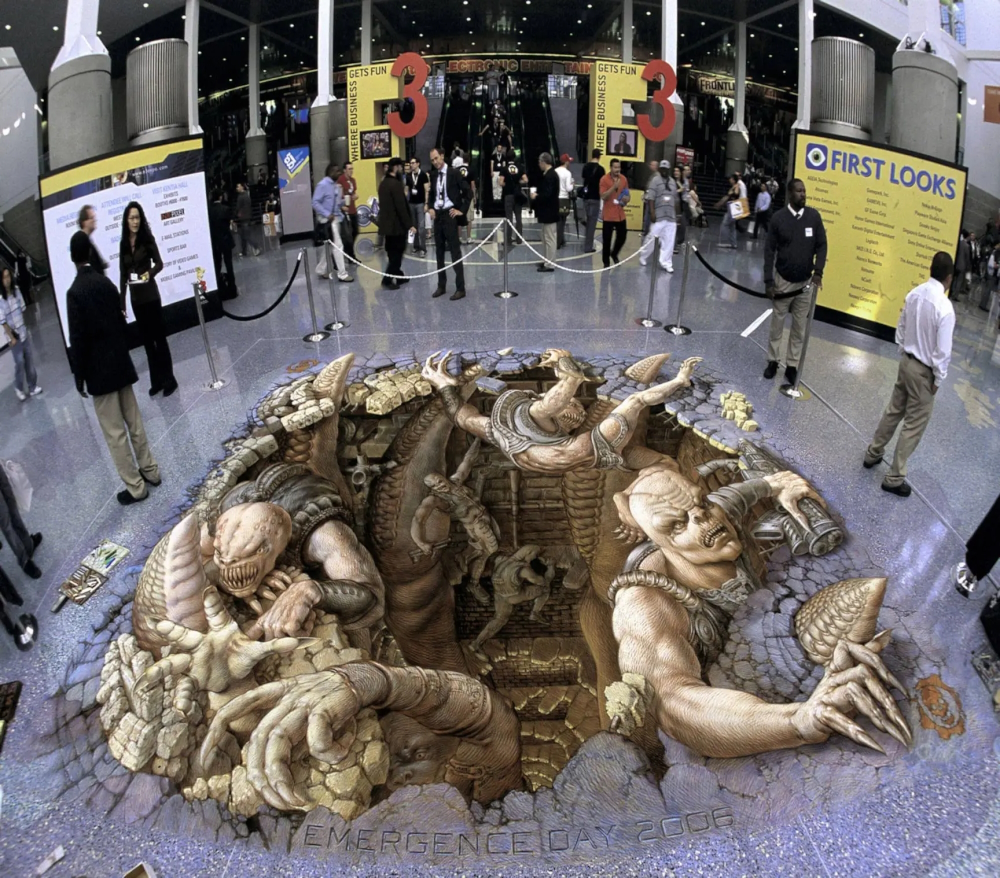
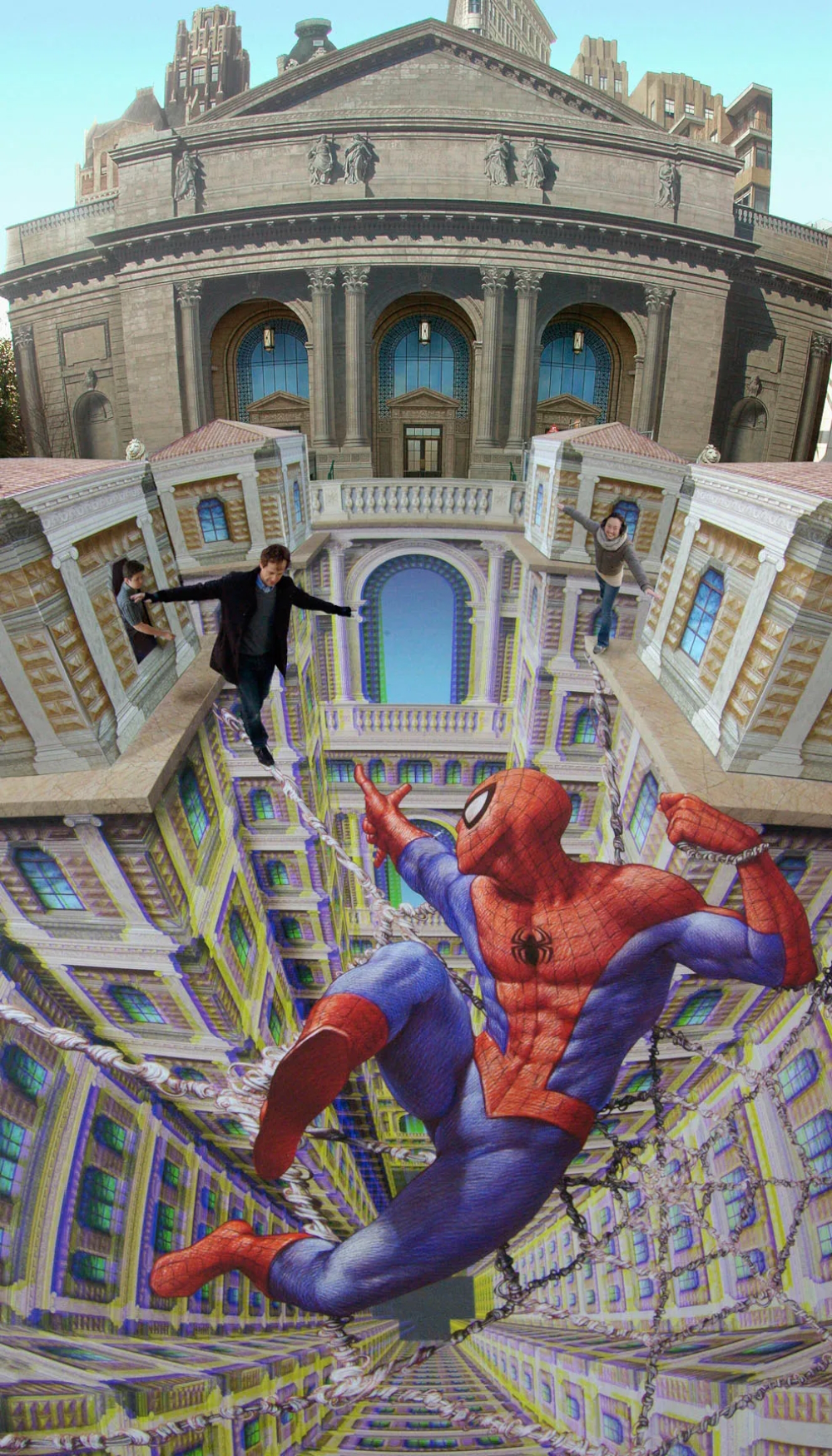
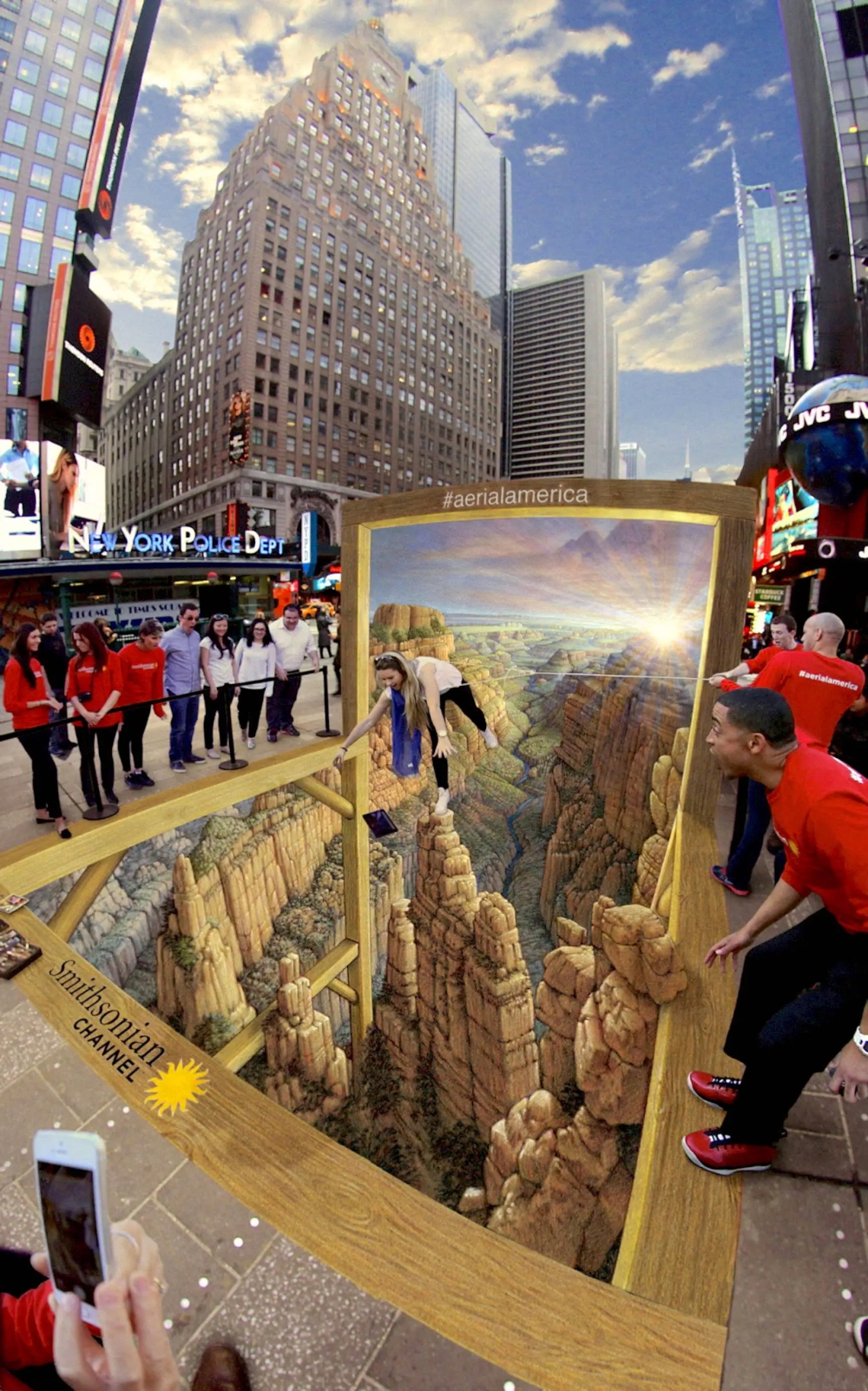
The unique, visually stunning craft of “the world leader of interactive art“ (quote from his website) is in high demand by global brands. Just two examples: In 2006 Kurt Wenner created a promo image of the Microsoft X-Box game Gears of War at the E3 Convention in Los Angeles. In March 2011 the “huge fan of Marvel and DC Comics“ (self-description) painted Spider-Man for Universal Studios Japan’s tenth anniversary. “Kurt Wenner’s mastery of classicism gives him the ability to work across all fields and mediums,“ states the artist’s online biography. “His body of work includes architectural designs, large-scale oil paintings, ceramic murals, sculptures, illusion rooms, fountains, and more... He’s a speaker at corporate and public events, a lecturer for the National Gallery of Art and the Smithsonian Institution, as well as a workshop leader for Disney and Warner Brothers Studios.“ Besides all that the man still finds time to write books (f.e. Asphalt Renaissance: The Pavement Art and 3-D Illusions) and creates programs that will teach geometry, perspective, and illusion as well as classical drawing and painting.
“I strive to have my work encompass the viewer and therefore enjoy creating spaces where people can live within a work of art,“ he writes on his website. But one separate quote of his sums up this creative’s overall insight: "Art is about process rather than product."
Kurt Wenner works globally and presently lives in Umbria, Italy.
Interview September 2026
Two-dimensional paintings look 3D: "Art is about process rather than product!"
INTUITION/IMAGINATION
?: How does intuition present itself to you – in form of a suspicious impression, a spontaneous visualisation or whatever - maybe in dreams?
Intuition can present itself in different ways, but there is one experience that is almost a method for me. If I have a difficult creative problem, I may formulate it as clearly as I can before going to sleep. Very often I wake up with a clear sense of the procedure I should use to approach it.
With especially difficult problems I sometimes pass through a period of half-sleep, where I am vaguely conscious of turning the problem over visually without really being awake. What comes out of this is usually not a finished image, but a direction or method.
I think intuition is knowledge that is not, or is no longer, accessible to rational thought or explicit memory. For that reason it can feel as though the answer arrives from somewhere outside the conscious self, even when it may represent years of accumulated experience.
?: Are ideas written down immediately and archived?
Yes, although not always as a quick note describing a single idea. For at least fifteen years I have been writing texts connected with different aspects of my work and research. Much of this material remains unpublished, but it is archived and I return to it periodically.
I also have many projects that cannot be developed simply because I have the idea. They require an appropriate structure around them. An educational idea may need a university or another institution; an architectural idea may need a client and a site. In those cases I keep the material until an opportunity appears that allows the idea to develop further.
?: How do you come up with good or extraordinary ideas?
I am not sure I experience ideas in quite the way this question suggests. For me, an idea very often begins as a question, a problem, or a challenge rather than as an image.
What may eventually appear to other people as an unusual idea is often the result of pursuing an unusual question for a long time. My work with perspective and three-dimensional pavement art developed in this way. I was not searching for an “extraordinary idea.” I was trying to solve a particular visual problem that interested me.
?: Do ideas arrive as a whole, or as a seed that evolves through endless trials and errors?
Usually neither description is quite right for me. An idea often arrives as a question or challenge, and what becomes clear is a procedural way of developing it.
I would not describe the subsequent process as endless trial and error. Errors certainly occur, but the process is generally controlled and structured. One stage creates the conditions for the next, and the result of each stage may slightly alter what I thought I was trying to achieve.
This means that the final result is not completely predetermined, but neither is the process disordered. Sometimes a project can remain in this developing state for years until the right circumstances, technology, client, or venue make another stage possible.
?: What if there is a deadline, but no intuition? Does the first fuel the latter?
A professional artist cannot depend on inspiration or intuition arriving on schedule. I have worked under deadlines for most of my career, often on very large, commissioned projects, so there has to be a method that continues to function whether or not a particularly inspired moment occurs.
Pressure probably makes me appear more productive because it forces a project toward a finished result. When I have greater tranquillity, I may actually produce just as much material, but I do not necessarily finish it. I tend to be more interested in the process than in finishing for its own sake.
Deadlines therefore do not create intuition for me so much as force decisions. The intuitive moments still occur, and they can be very important, but I would never build a large project around the expectation that one will arrive at the right moment.
INSPIRATION
?: What inspires you and how do you stimulate this special form of imaginativeness?
Challenges inspire me more than anything else. I am happiest when there is something I do not yet know how to solve. The problem gives the creative process something to act against. Creating without a challenge would be a little like playing tennis or chess without an opponent.
A great deal of my work has also come from studying parts of the European artistic tradition that are no longer well understood. Geometry, perspective, classical drawing, architecture, and historical methods have continually presented questions to me. I am less interested in copying what was done in the past than in understanding how it was possible and asking what can still be done with that knowledge today. In that sense, research itself stimulates my imagination.
?: How do you filter worthwhile ideas from bad ones?
I am not sure that I divide ideas very often into good and bad. Many ideas are worthwhile but cannot be developed under the circumstances in which they occur.
Some require a particular structure before they can really grow. An educational idea may need an institution; an architectural idea may need a client and a site. Others depend on technology, funding, or simply enough uninterrupted time. I tend to keep them rather than reject them and return to them when the circumstances change.
The more important question for me is whether an idea continues to generate useful questions and possibilities. If it does, it remains part of my creative potential even if I cannot act on it immediately.
?: Does an idea need to appeal to you first, or is commercial potential essential?
It has to interest me at some level, but commercial potential has always been a practical reality because I have earned my living from my work.
The two things do not necessarily coincide. Some of the ideas I value most have taken many years before there was any practical way to use them, while other projects have supported my family because they were immediately understandable and commercially useful. I have often used successful commissioned work to finance research and development that had no obvious market at the time.
I do not see this as a conflict between artistic purity and commerce. A client, site, budget, or public can create exactly the kind of constraint that makes a project interesting.
?: Do you revisit old ideas or check what colleagues or competitors are up to?
I revisit old ideas constantly. Some of my projects have remained dormant for years or even decades before the right opportunity appeared. I have also returned to earlier studies because later experience allowed me to see possibilities that were not available to me the first time.
My relationship with competitors has been more complicated. There have been several moments in my career when other artists entered an area I had developed and gained enough traction to become a real professional problem. I found that extremely stressful at the time.
My most successful response has usually been to invent something else. Competition has sometimes forced me to move beyond an approach that had become identifiable with my work and develop a new one. In retrospect, that pressure probably contributed to my formation, although it did not feel especially inspiring while it was happening.
CREATIVITY
?: What time or environment best suits your creative work process — for example, a time and place of tranquility or of pressure?
I work under both conditions and probably appear to be more productive under pressure. But that may be partly an illusion, because we usually measure productivity by finished results.
When I have more tranquility, I may produce just as much material without necessarily bringing it to completion. I am fundamentally process-oriented. Even unfinished projects are directed toward a goal, but the eventual form may remain flexible. An educational project, for instance, might become a book, a real course, an online course, or a series of lectures. Changing circumstances can change the best form for the idea.
Pressure forces decisions and tends to produce finished objects. Tranquility allows the underlying process to develop for longer.
?: “Things are not difficult to make. What is difficult is putting yourself in the state of mind to make them,” is a quote from Constantin Brâncuși, considered one of the most influential sculptors of the 20th century and a pioneer of modernism. What’s your path from idea to creation?
My process usually begins with a question or a challenge rather than with a finished image. I first try to understand the conditions of the problem: the environment, geometry, function, audience, material, or whatever else defines it. From there I establish a method.
In much of my visual work this begins with geometry and drawing. Once a structure exists, the project develops through successive decisions. Each result changes what I understand about the problem and therefore changes what becomes possible next.
For this reason I do not really think of creativity as transferring an idea from the imagination into material form. The process itself develops the idea.
?: Speed and grasping the magic of the moment, or a slow ripening and elaboration?
Both occur, but they play different roles.
There are certainly moments when everything comes together and the work seems to acquire its own momentum. I enjoy that state very much, but most of my projects are too large and complicated to depend on it.
Some designs may develop very quickly, while the questions behind them have occupied me for years. Other ideas remain dormant until a new client, technology, venue, or circumstance makes them possible. I have learned not to confuse the speed of execution with the length of the creative process.
?: How important are self-doubt and criticism by others during this process?
I think there are different kinds of self-doubt.
One is completely natural and probably useful. If I am doing something genuinely new, I do not yet know whether I can solve it. That uncertainty is part of taking on a worthwhile challenge.
The other is more ontological. I have sometimes experienced this strongly in academic environments, where I begin with the assumption that the people around me must possess greater knowledge or authority than I do. I never fail to be surprised when I discover that this is not necessarily the case.
Criticism from others can be painful, but it is information. Even criticism that is mistaken may tell me something about how clearly the work communicates. I do not think the critic has to be right in order for the reaction to be useful.
?: Better to work alone and trust your instincts, or in a team?
I have done both throughout my career, although in collaborative work I generally function better as the person directing the overall structure.
Many of my projects require teams simply because of their scale. I enjoy working with skilled people and have often learned from collaborators, particularly when they possess knowledge I do not have.
I am probably less naturally suited to being only a member of somebody else’s team. I have managed it without complete disaster, but leadership is generally the more natural role for me.
?: Creative block, or worse, real failure — how do you climb out?
I have never thought very much in terms of creative block. If one part of a project stops moving, there is usually another part that can be studied or developed.
A strong method is useful because it gives you somewhere to go when intuition is not providing an immediate answer. Earlier in my career I described good technique as something that allows you to retreat temporarily into safer territory when a work begins to fall apart. I would now broaden that idea from technique to method.
Failure is also not necessarily the opposite of creativity. A result that shows me why something does not work has changed my understanding of the problem. It may be a failed object but still a successful part of my formation.
?: Stay true to yourself and take risks, or make concessions to the market and clients?
I have supported myself through commissions for most of my life, so I have never had the luxury of pretending that clients and markets do not exist.
But I do not necessarily experience them as enemies of creativity. A client, budget, site, deadline, or public creates constraints, and constraints often make a problem more interesting. Some of my most important developments came from trying to solve very particular commissioned problems.
There are naturally compromises I would rather not make, and I have sometimes accepted work primarily because it supported my family. But commercial work has also financed years of research into ideas that had no market at all. For me the relationship is much more complicated than artistic integrity on one side and commerce on the other.
?: How is innovation possible once you have a distinctive style?
I have never deliberately searched for a style. I assumed that if I studied unusual things and asked unusual questions, a recognizable body of work would develop naturally. That seems to have happened.
Style becomes dangerous when it turns into a formula. A genuine method should be stable enough to produce results but flexible enough to accommodate problems you have not encountered before.
Several times in my career, an approach I developed became widely imitated. The uncomfortable consequence was that I had to invent something else. In that sense, innovation did not require escaping my identity. It required continuing the process that had produced the identity in the first place.
?: Is it good to be ahead of your time even if you risk not being understood?
It can be professionally miserable.
In 1985 another pavement artist told me that what I was doing was twenty years ahead of its time. It turned out to be an extraordinarily accurate prediction. The three-dimensional pavement work eventually became very successful, but some of the ideas underlying it—especially my interest in classical drawing, artistic geometry, and the recovery of historical creative methods—have taken much longer to be understood.
Being ahead of one’s time sounds romantic only afterward. While it is happening, it can simply mean that there is no structure in which the work can comfortably exist.
?: When does the creative process end? Or is it always a work-in-progress?
A particular object eventually has to stop. The creative process does not.
Every project produces two results for me. One is the work itself. The other is what I have learned by making it: new knowledge, new questions, new perceptual distinctions, new methods, and sometimes a realization that an earlier assumption was wrong.
That second result becomes part of the potential from which the next project begins. In that sense, artistic formation is cumulative. The finished work may leave my hands, but the creative process that produced it continues in a changed form.
?: How does artificial intelligence change human creativity? Do you use AI, or would you use it?
I use AI intensively, and I do not think it can be treated as an optional tool that artists may simply choose to ignore. It is an existential fact with enormous consequences for every form of human creative activity.
What interests me most is not whether AI can generate an impressive image, text, or design. We already know that it can. The more important question is what happens to human creative formation when machines can produce many of the external results that previously required years of training.
Creative work has always produced two things: the object and the development of the person who made it. If AI produces more of the object, we need to pay much more attention to what happens to the second result.
At the same time, AI enormously expands access to symbolic knowledge and can become an extraordinary partner in research, comparison, organization, and reflection. I use it in precisely this way. I think the important question is no longer whether we use AI, but how we use it without surrendering the processes through which human creative potential is formed.
SUCCESS
?: “Success is the ability to go from one failure to another with no loss of enthusiasm.” Do you agree with this quote, which is attributed to Winston Churchill, the former Prime Minister of the UK?
Only partly. I think failure is useful when it increases your understanding of the problem. Repeated failure without learning anything would not strike me as a particularly good creative strategy.
I have generally measured success less by whether every individual work succeeds and more by whether the process leaves me capable of doing something I could not do before. A failed experiment may therefore be extremely productive, while a successful repetition of something already understood may contribute very little.
Enthusiasm certainly helps, but I would probably substitute curiosity for enthusiasm. If a failure makes the problem more interesting, I usually want to continue.
?: Should or can you resist the temptation to recycle a ‘formula’ you're successful with?
Yes, although it is not always easy, especially when the formula is commercially successful.
A good method and a formula are not the same thing. A method gives you enough structure to deal with new problems. A formula gives you the same answer repeatedly.
There have been moments in my career when I could have continued producing variations of something that had become successful. Sometimes I did, because commissions required it. But eventually repetition becomes uncomfortable for me. I am happiest when I am learning something, and once a problem feels completely solved I tend to look for another one.
The irony is that the public often recognizes an artist precisely at the moment when the artist is becoming tired of the thing for which he is recognized.
?: Is it desirable to create an ultimate or timeless work? Doesn’t “top of the ladder” bring up the question, “What’s next?” — that is, isn’t such a personal peak “the end”?
I am not sure I believe very strongly in the idea of a timeless work.
I have worked for so many years in an ephemeral art form that I have had to think about permanence differently. A pavement work may disappear in a few days, while an oil painting may last for centuries, but neither survives by itself. Works last because a culture continues to value them and is willing to conserve them.
Today we often establish that value through markets, museums, collections, archives, and institutions. Once a work enters those structures, enormous effort may be devoted to preserving it. Outside them, even a technically permanent work can disappear very quickly.
So I do not think the artist is ultimately in control of whether a work becomes “timeless.” I can make something as well as I know how and hope that it remains meaningful to people after I am gone.
I also do not think there is a final rung on the ladder. A work may represent a peak because it brings together many years of development, but the act of creating it changes the artist. If the process is still alive, that new formation immediately creates another starting point.
MY FAVOURITE WORK:
I would probably choose Dies Irae. It brought together many things I had been studying for years: classical drawing, perspective, illusion, large-scale public performance, and the relationship between the viewer and the image.
It also marked the point where three-dimensional pavement art became something clearly distinct from traditional street painting. The work was very different from what people were accustomed to seeing, and it took time for the idea to be understood. For me, however, its importance was not only that it became widely known. I learned an enormous amount while making it, and it opened the way to many later developments.