Bart Koning
hyper-realistic painter
The Netherlands / Germany
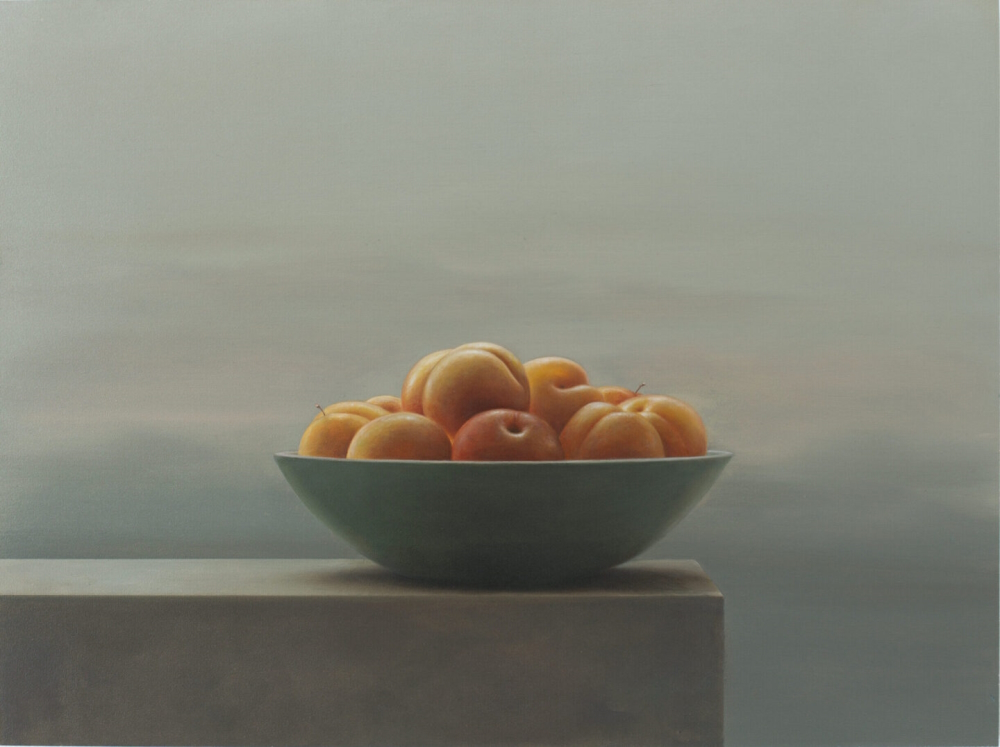
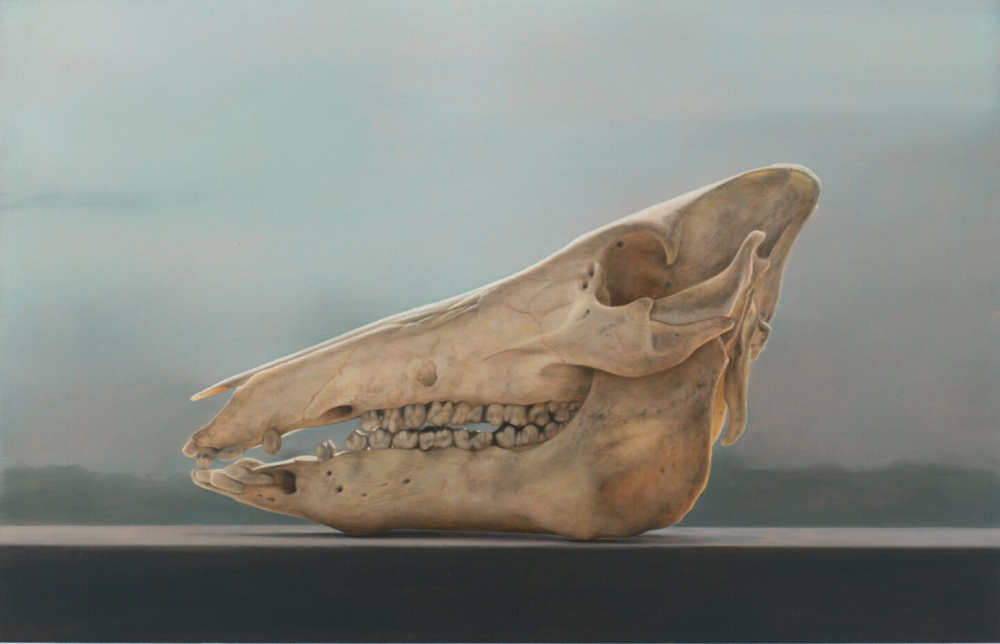
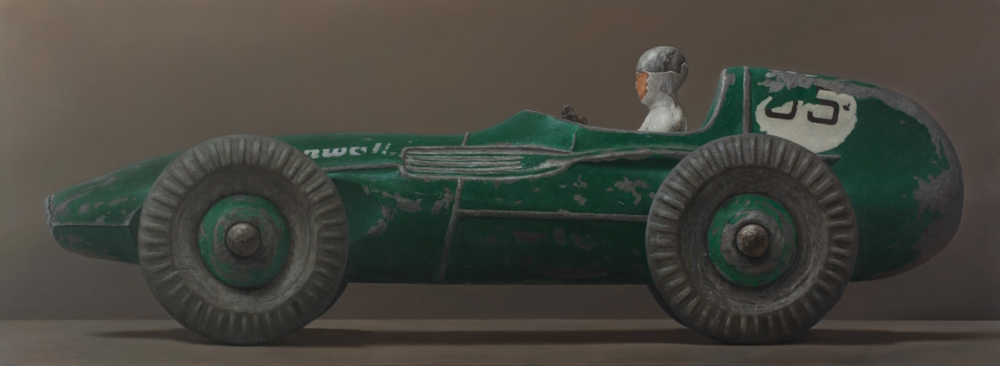
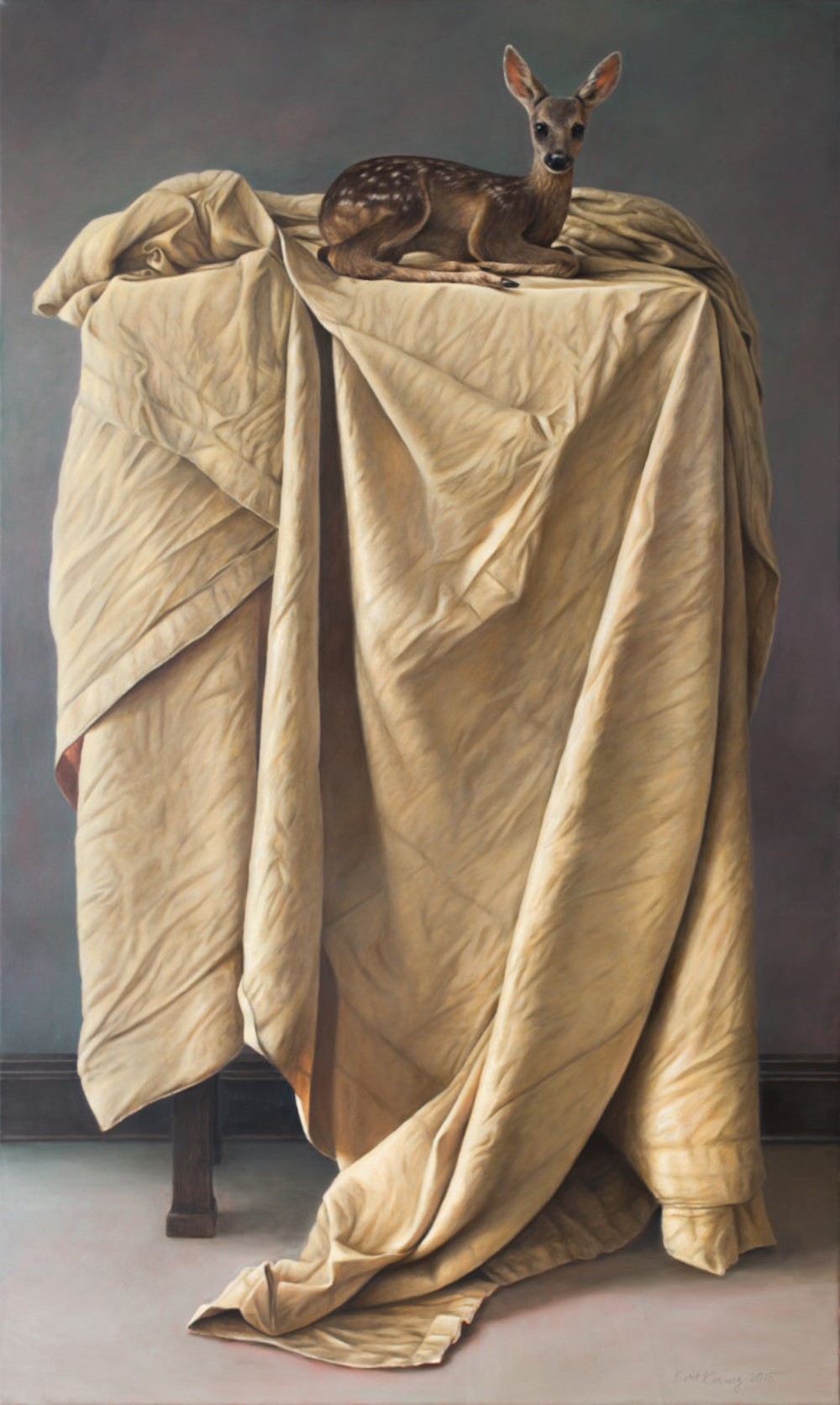
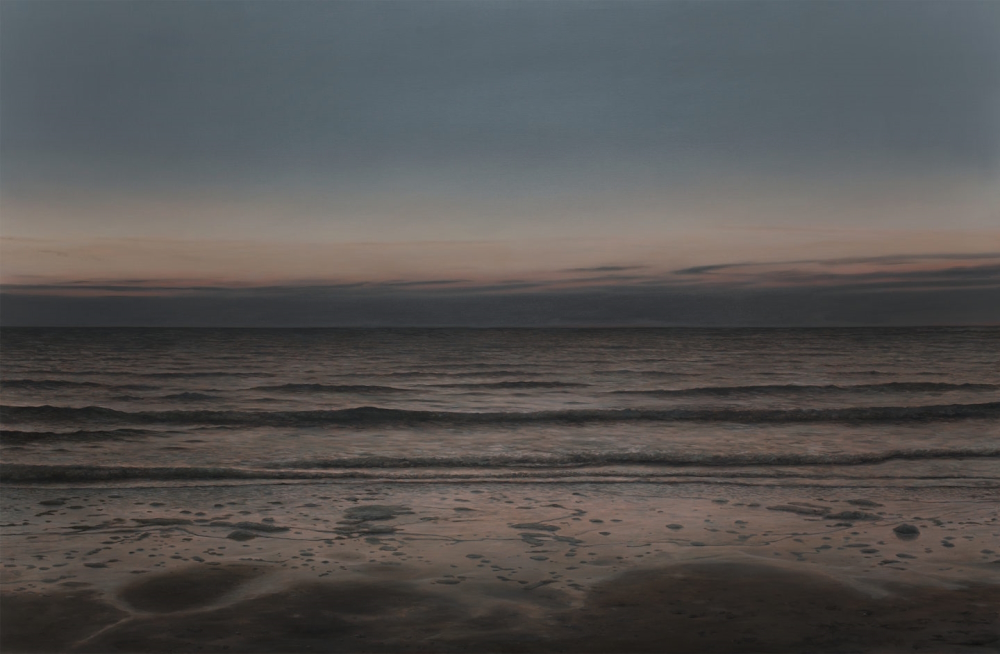
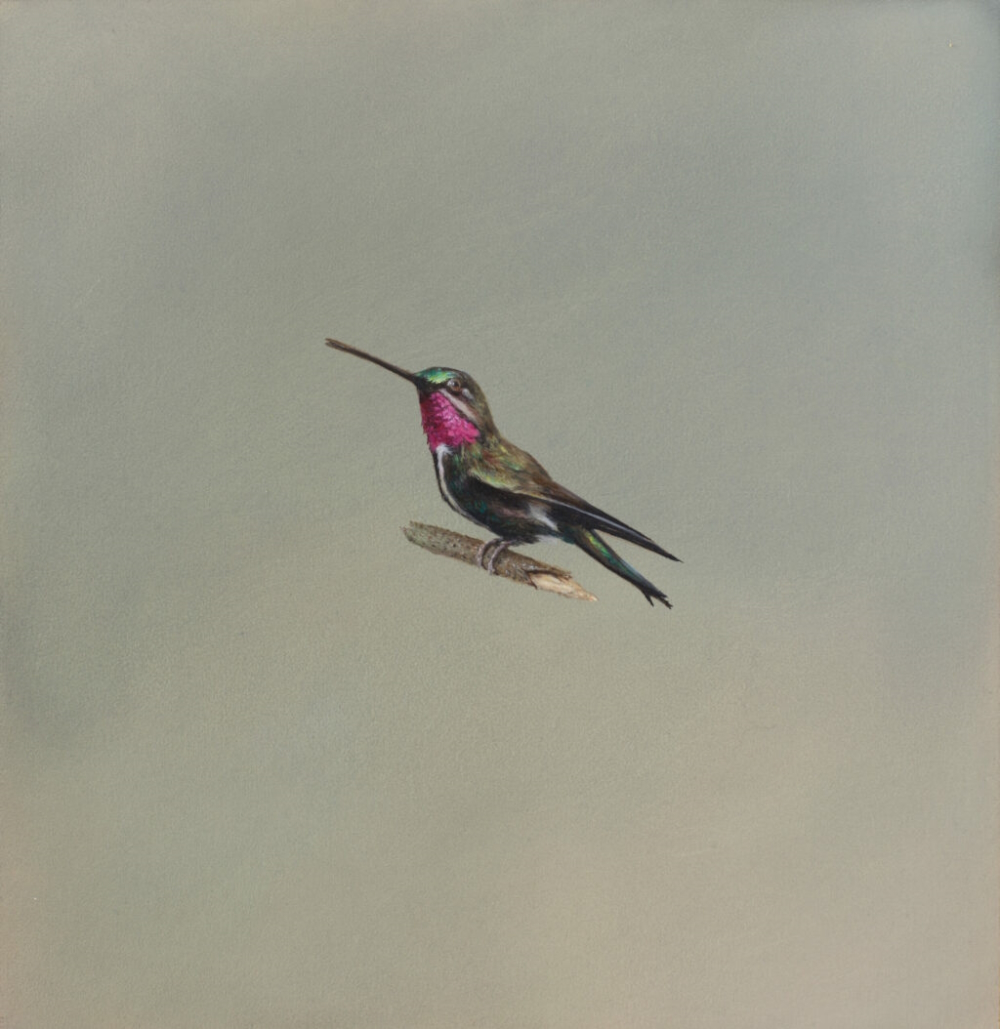
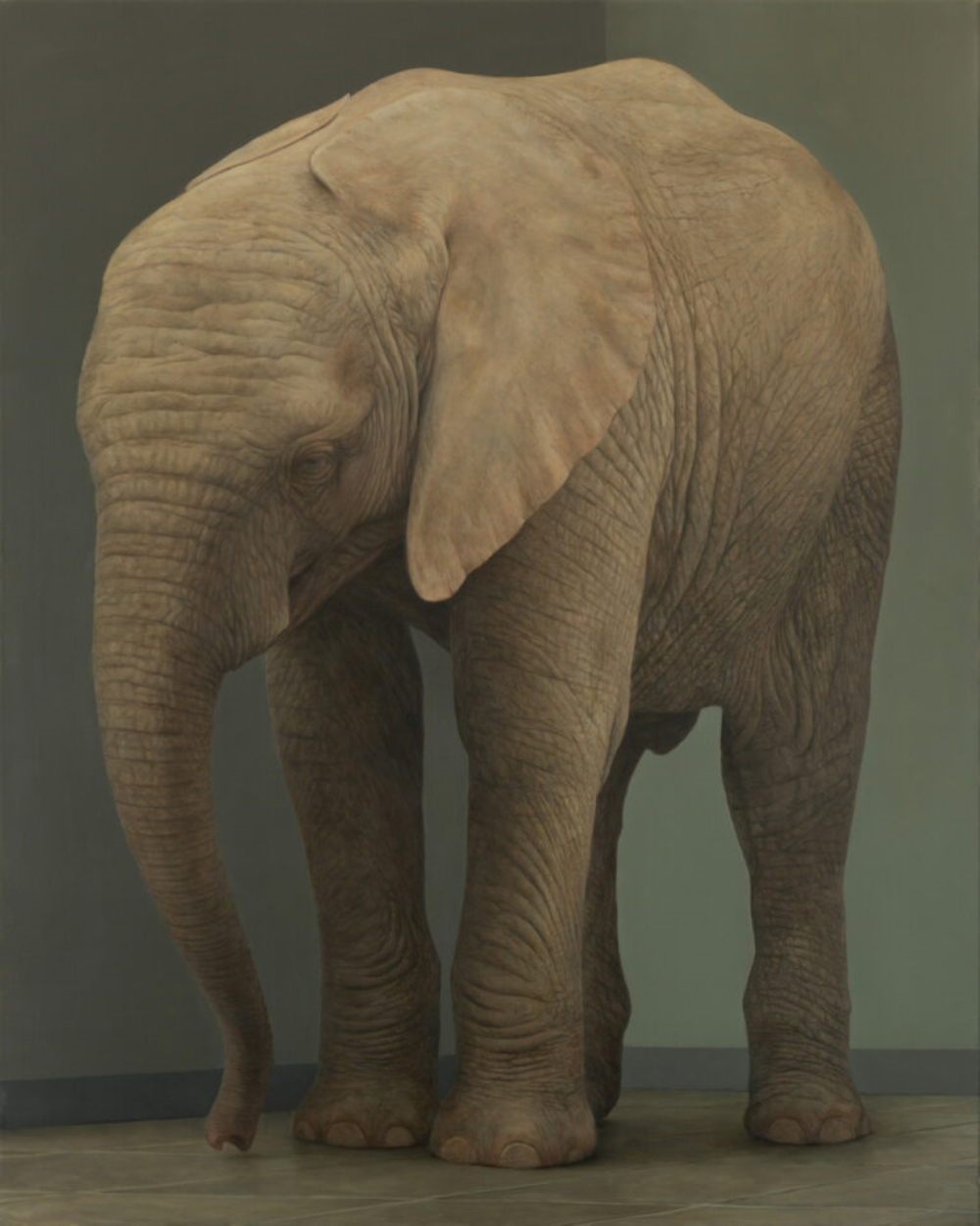
“No one paints as realistically as the Dutchman“. That strong statement introduces a feature in “Frankfurter Allgemeine Zeitung“, a German daily newspaper of record. It’s all about an outstanding artist and his highly focused, reduced-to-the-max still lifes (including furnishings in private homes) as well as paintings of sometimes taxidermy specimens. What frequently might be classified stilistically as photorealism is, however, more reminiscent of the 17th century’s Old Dutch school’s accurate style, even though “his modern version of Flamish detailed realism“ (writer Paul Ingendaay) dates from the 21st century. In addition, this master works in a 1:1 scale, meaning he depicts his objects at their actual size (therefore his image of a mouse is 4.8 x 5 inches)—and sometimes even larger, such as a well-used toy taxi the size of a real car or a teddy bear as tall as the man himself. What all his oil paintings, which are mostly rendered in muted tones, have in common is an almost contemplative aura. Given their breathtaking technical perfection, it is surprising that the painter who once planned to become a professional art teacher dropped out of his training program!
Bart Koning
hyper-realistic painter
The Netherlands / Germany
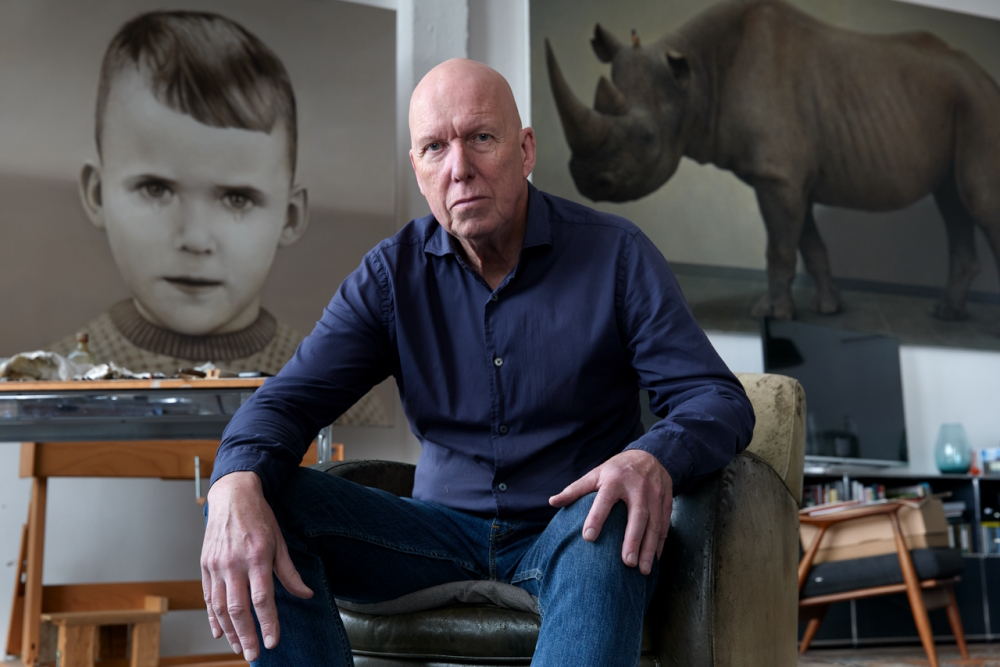
“Some of the most rewarding goals in life are reached through detours.“ This quote by American writer Francis Paul Wilson might come to mind if one looks at the start of this artist‘s career. Bart Koning (born on May 28, 1957, in Amsterdam, The Netherlands), who was deeply impressed by the museum exhibitions of Dutch Renaissance paintings in his hometown, didn’t take the path he initially set out on in 1975. Instead, he studied monumental art at the Academie Artibus in Utrecht from 1977 to 1979. Then a switch to the Gerrit Rietveld Academie, Amsterdam, followed, for being instructed in painting and graphic arts. During his final year there, Koning collaborated with various colleagues in a painters' collective. This collaboration continued after he graduated in 1982, and it gave rise to the artists' initiative Aorta.
William Lindhout, his former teacher at the Rietveld Academie, is one of his many influences, which may come from any artistic field. “Nevertheless, Koning is no mere imitator", the German daily wz.de states. “It is his colours and intermediate shades, as well as his subtle colour gradients. And it is the humour that is uniquely his own.“
Mr. Koning, who sang in various choirs for a long time, compared on zoom-duesseldorf.net his art to chamber music. “They are small works for a very small ensemble, without spectacular solos or operatic drama... ‚Attention‘ is a key concept in his work. Spending weeks focusing on a single object leads to an intense, almost contemplative engagement.“
Thomas Janzen, museum educator at Kaiser-Wilhelm-Museum/Krefel, daptly, analyzed this virtuoso‘s art as follows: “The means deployed by Koning to enrich—and to latently subvert—the mimetic character of his paintings are very economical. Whilst he adheres faithfully to the form of the individual object, the dramaturgy of the colour and lighting in his pictures is significantly more emotional in character. The tremendous sharpness of detail sometimes creates a veristic alienation of the motifs. What could easily be interpreted as merely an effect allows the painterly métier to be seen with clarity.“
Since 1992 Bart Koning works and lives in Krefeld, Western Germany.
Interview September 2026
Modern version of Flamish detailed realism: paintings like chamber music
INTUITION/IMAGINATION
?: How does intuition present itself to you – in form of a suspicious impression, a spontaneous visualisation or whatever - maybe in dreams?
as a reliable possibility.
?: Are ideas written down immediately and archived?
Ideas are being kept in the test-chamber in the back of my head.
?: How do you come up with good or extraordinary ideas?
Good ideas are probably developed in the subconscious, and when the time is right, they pop up.
?: Do ideas arrive as a whole, or as a seed that evolves through endless trials and errors?
Ideas are welcome to expand.
?: What if there is a deadline, but no intuition? Does the first fuel the latter?
Deadline forces to focus in time. Intuition comes through focus.
INSPIRATION
?: What inspires you and how do you stimulate this special form of imaginativeness?
Inspiration comes a) in complete relaxation
b) in recognizing inspiration in others
c) out of nowhere
?: How do you filter worthwhile ideas from bad ones?
looking closely and waiting.
?: Does an idea need to appeal to you first, or is commercial potential essential?
Artistic ideas have no commercial connection. Commercial ideas are a different matter.
?: Do you revisit old ideas or check what colleagues or competitors are up to?
When old ideas emerge, they will be considered. I try to be aware of the activities of my colleagues, not to check, but to enjoy their inspiration.
CREATIVITY
?: What time or environment best suits your creative work process — for example, a time and place of tranquility or of pressure?
tranquility works for me.
?: “Things are not difficult to make. What is difficult is putting yourself in the state of mind to make them,” is a quote by the Constantin Brâncuși, considered one of the most influential sculptors of the 20th century and a pioneer of of modernism. What’s your path from idea to creation?
Brancusi was right for me.
?: Speed and grasping the magic of the moment, or a slow ripening and elaboration?
Slowly approaching the goal.
?: How important are self-doubt and criticism by others during this process?
Self-doubt in an appropriate dose is indispensable. Criticism by others will be listened to.
?: Better to work alone and trust your instincts, or in a team?
Alone, but some activities need teamwork.
?: Creative block, or worse, real failure — how do you climb out?
Relax and keep going.
?: Stay true to yourself and take risks, or make concessions to the market and clients?
Staying true is the path to glory.
?: How is innovation possible once you have a distinctive style?
Innovate by going deeper or expand your style. Maybe through playfulness.
?: Is it good to be ahead of your time even if you risk not being understood?
No one knows.
?: When does the creative process end? Or is it always a work-in-progress?
Always in progress.
?: How does artificial intelligence change human creativity? Do you use AI, or would you use it?
AI does not change human creativity. I use it for practical purposes.
SUCCESS
?: “Success is the ability to go from one failure to another with no loss of enthusiasm.” Do you agree with this quote, which is attributed to Winston Churchill, the former Prime Minister of the UK?
Losing your enthusiasm is a disaster, so not losing it is a personal success.
?: Should or can you resist the temptation to recycle a ‘formula’ you're successful with?
Recycled formula rarely bring success, unless they are expanded. So, when you need the money, you may try.
?: Is it desirable to create an ultimate or timeless work? Doesn’t “top of the ladder” bring up the question, “What’s next?” — that is, isn’t such a personal peak “the end”?
Of course not.
MY FAVOURITE WORK:
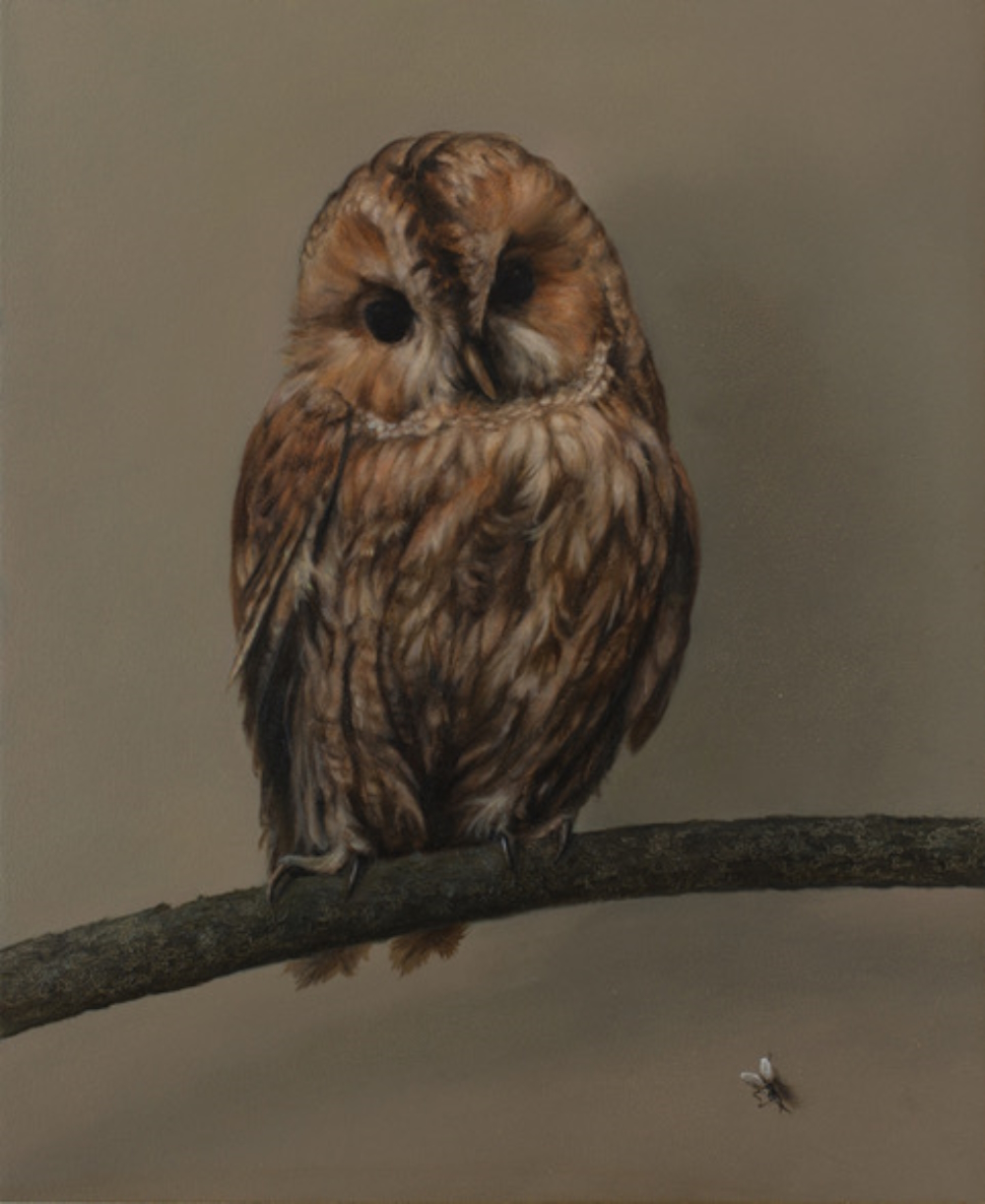
A painting of an owl sitting on a branch, looking down at a fly.
However, the fly casts a shadow on the surface of the painting in the best trompe-l´oeil manner,
Therefore, it is impossible for the owl to see the fly: They are in different dimensions.
We can see both the owl and the fly, maybe thinking, there is a fly on the painting.
Is the fly more real than the owl?