Alex Dowis
visual artist (light art, sand art, speed painting)
Czech Republic
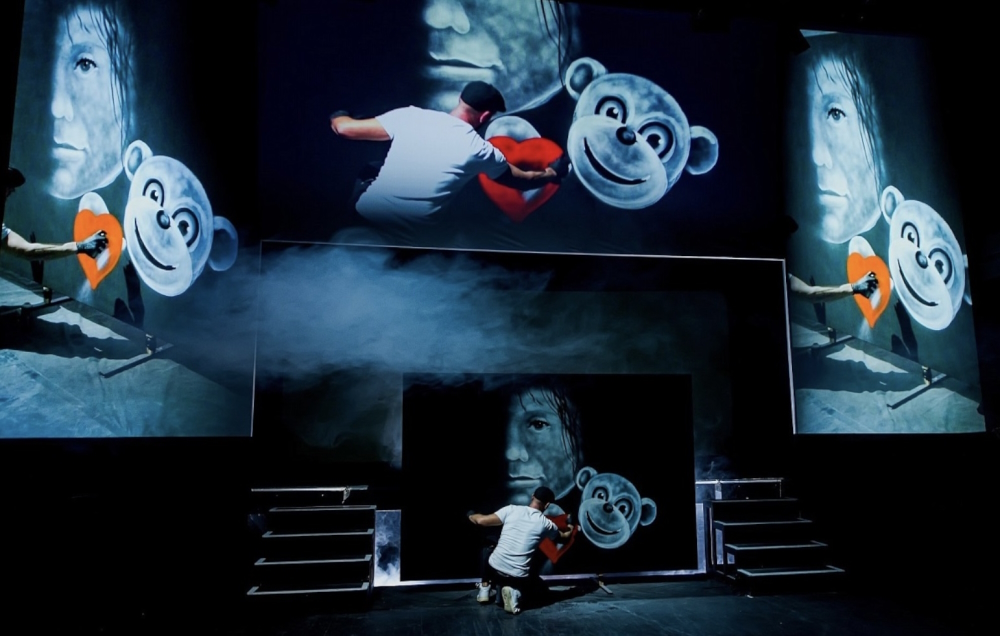
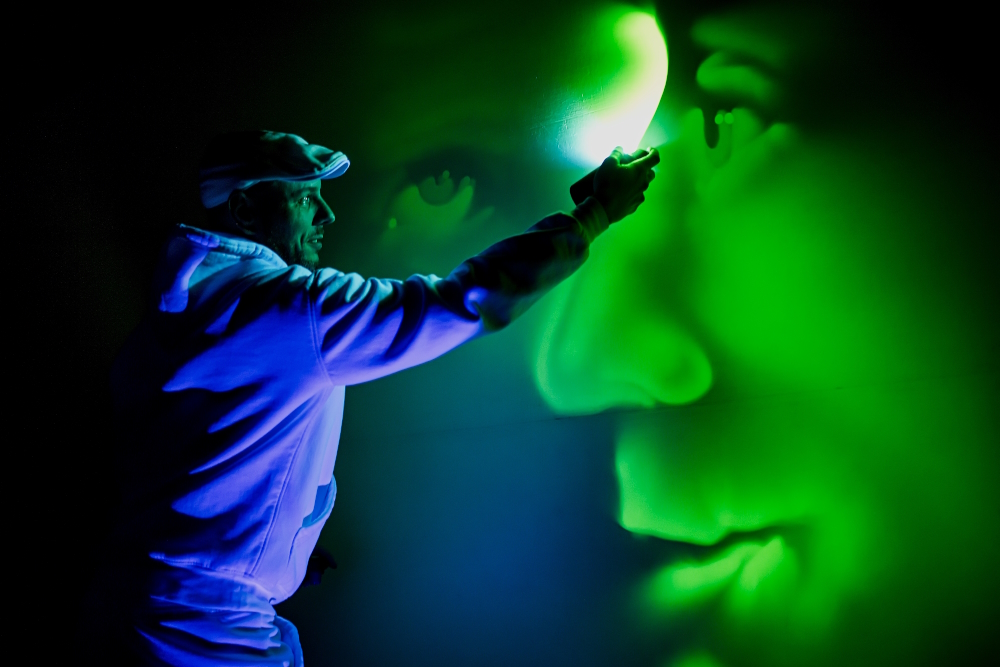
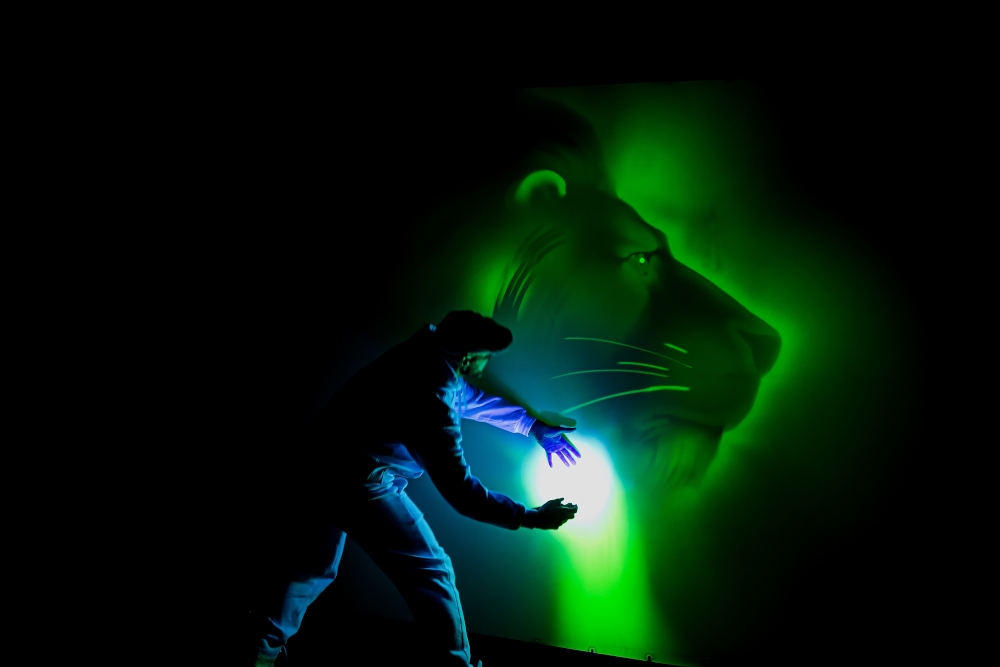
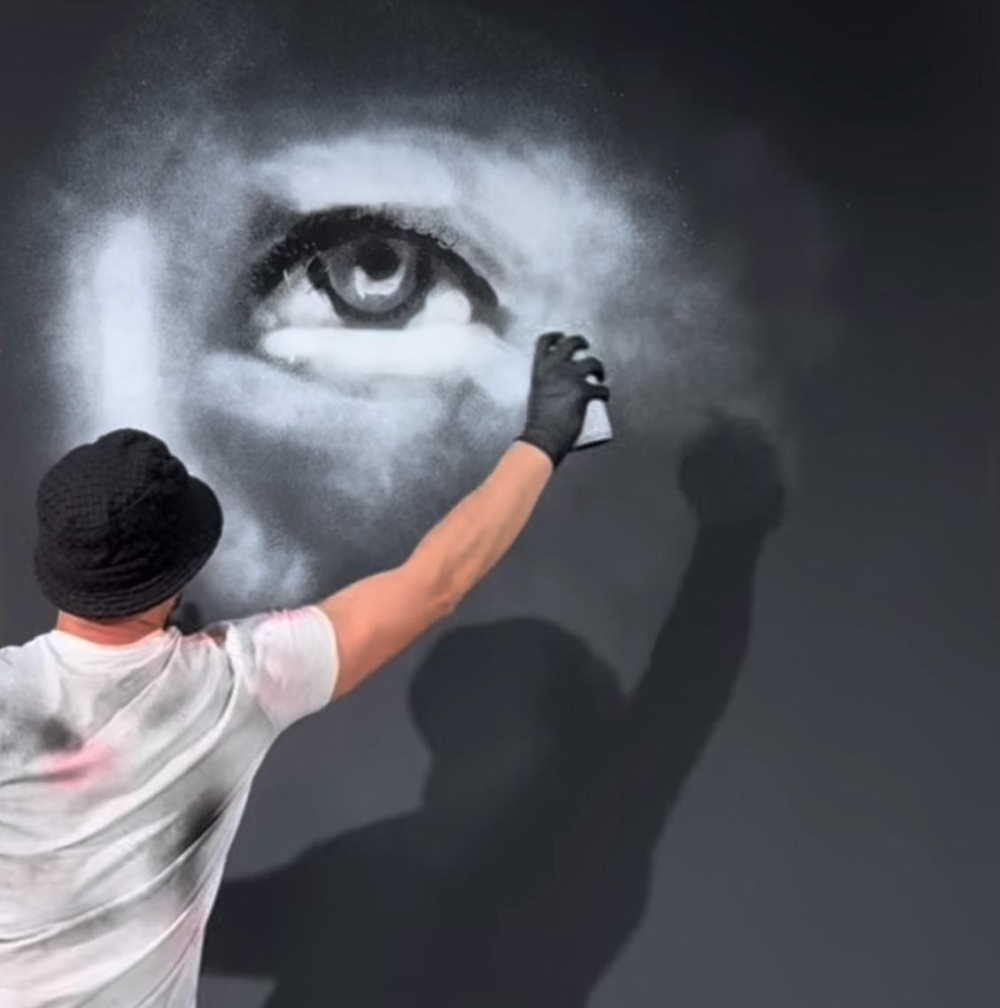
Reaching the semifinal of „America‘s Got Talent“ is a huge honor for someone’s outstandig skills! This artist made it that far in season 14 of the international aired tv show that had an average of 9.12 million viewers. „He introduced the general public to light-art“ (iamprague.en) in form of the spectacular blacklight painting! That is „using ray of light on a luminiscent screen“ (askart.com). His visual tribute to the first responders of 9/11 wasn’t just eye-dropping, but emotionally stirring too like the previous meaningful ones in the quarterfinals and at the judge cuts (a painting of the history of the world in two minutes and a tribute to the 50th anniversary of the Apollo 11 moon landing). These performances in front of a worldwide audience are the highlights in the career of a Czech creative who excels in many more artistic fields and laid the foundation for it at an early stage already.
Alex Dowis
visual artist (light art, sand art, speed painting)
Czech Republic
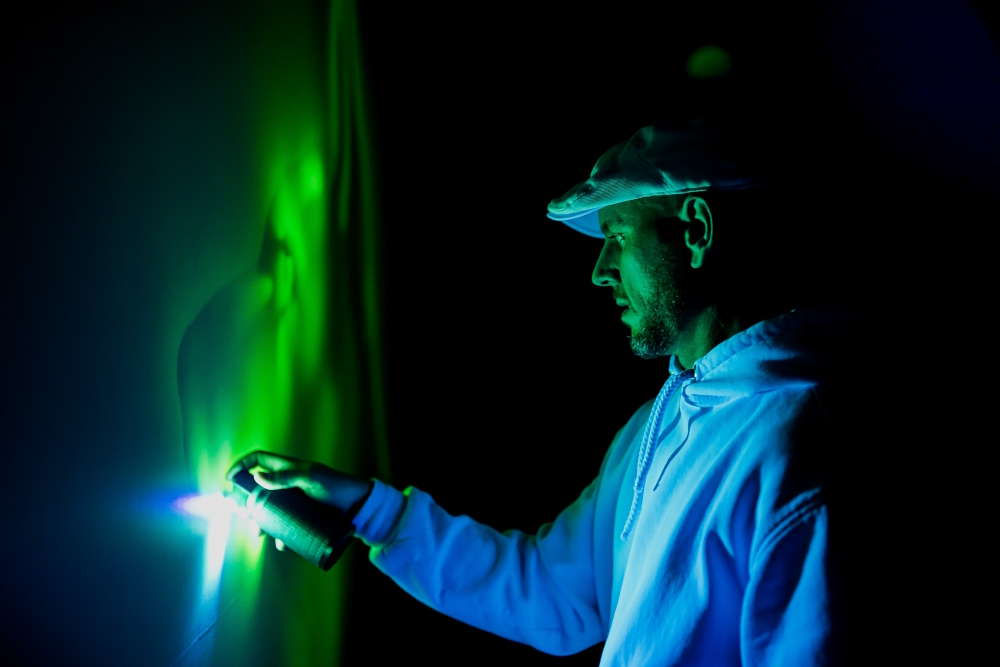
„Practice makes perfect.“ This famous saying applies perfectly to the career of Alex Dowis (* March 29, 1979 in Prague). „It all started in his childhood“, knows askart.com. „As a teenager Alex Dowis felt in love with street art and graffiti. That´s why he is very good when it comes to spray painting.“ After many years of developing the spray painting into Light Painting/Light Art the young artist managed to create this very special technique for „forming ephemeral and captivating compositions“ (prototypbrno.cz). Since having turned professional in 1996 the graduate of Interactive Media & Experience Design at Prague’s School of Creative Communication can be seen performing all over the world during events of various kinds. Companies like BMW, Disney, Hewlett Packard, Hyundai, Mastercard, Mazda, Samsung, Shell, Siemens, Swarowski or TK Maxx book his startling shows.
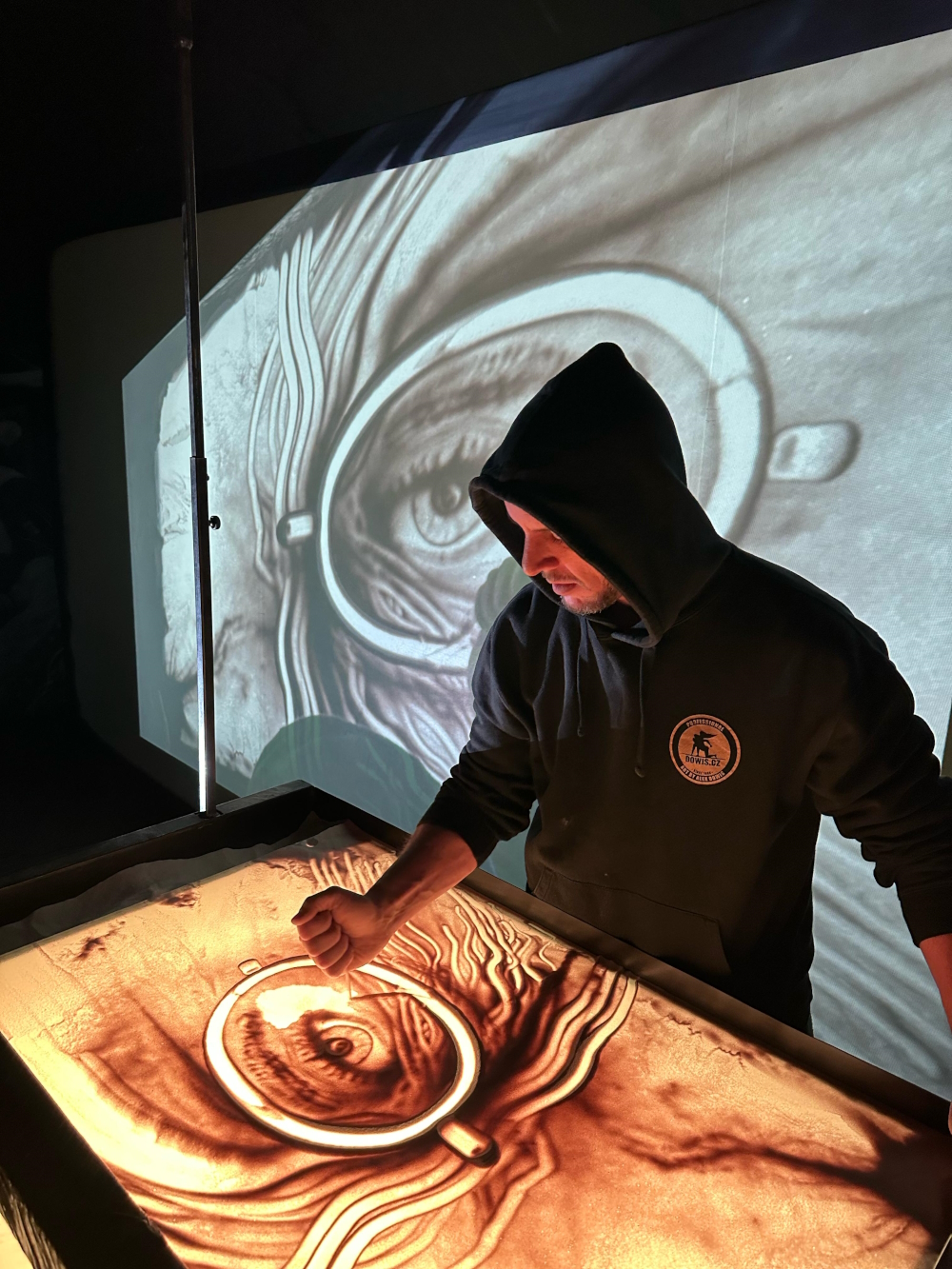
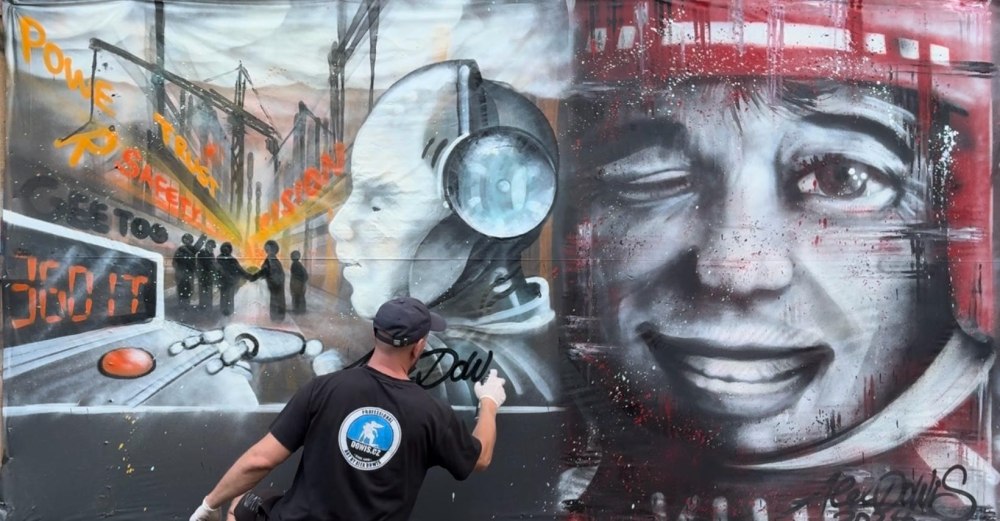
The exceptional talent has much to offer as he’s a gifted artisan of many talents: besides Light Art that earned him accolades across the globe Alex Dowis offers a Sand Art show (drawing on sand is a technique based on the extraordinary design of images with fingers in the soft sand on a specially designed table with a backlit glass panel - all streamed on an LED screen or projection, so viewers can watch every aspect of the creation). And then there is his Speed Painting. Alex Dowis being „probably the fastest speed painter on earth“ (askart.com) creates - on submission! - realistic and life-like drawings and stylized paintings in record time. In the process his craft melts graffiti and street art. Furthermore there are his own painted artworks.
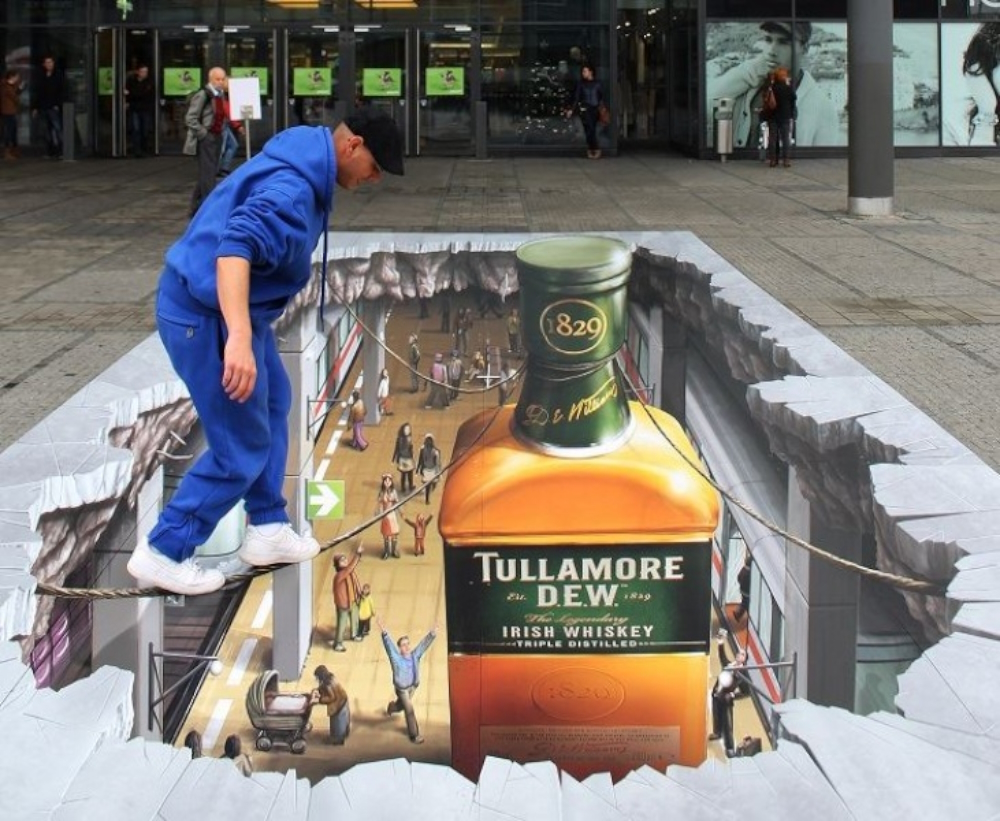
Besides all these mentioned examples of mainly live art the multimedia creative „has worked on animation, large-scale murals, stage design“ (prototypbrno.cz) plus „creating a thrilling play (for Prague’s Archa Theatre) shown in the capital of the Czech Republic, New York, and Tokyo from 2003-2005“, notes nuave.art. In the following period the craftsman was instrumental in the launch of one edition of the avant-garde Dance Hakushu Festival in Japan. „In 2015 he produced and directed the opening ceremony of the IIHF World Championship“, the annual international men’s ice hockey tournament. But that’s not all yet: the man devotes himself to film decoration and scenography, as well as workshops at various exhibitions and social events.
With the first Light Art NFTs (available on OpenSea) „AD“ advances in the modern world.
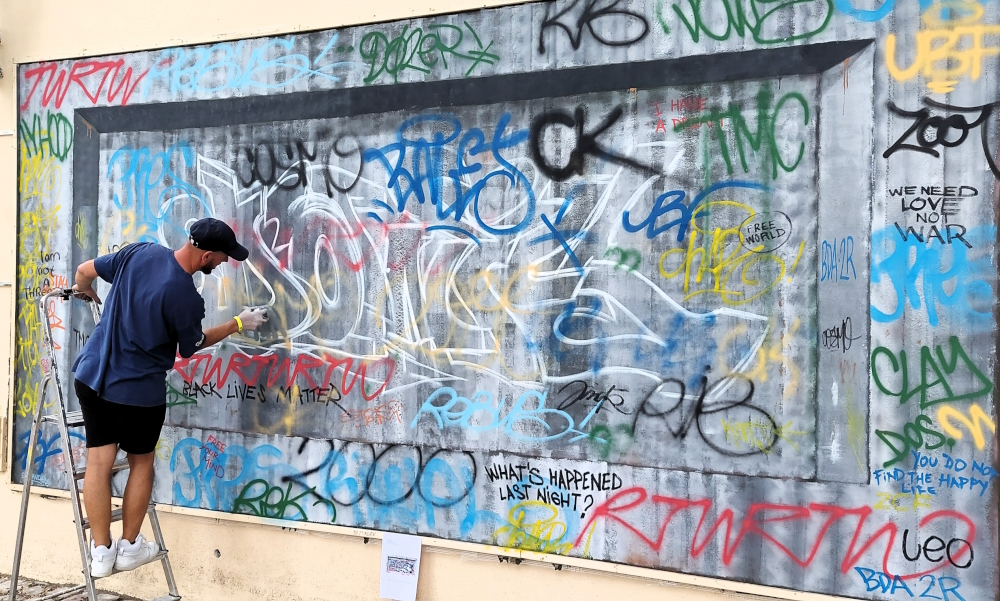
Alex Dowis, who is still linked to the graffiti- and street art-scene by being a member of DEPO crew and the Hip Hop Kemp-event, lives and works in Prague.
Interview May 2026
Visual pantomime: when quickly created images replace words for an emotive storytelling
INTUITION/IMAGINATION
?: How does intuition present itself to you – in form of a suspicious impression, a spontaneous visualisation or whatever - maybe in dreams?
It’s a vision that appears without warning, and I see it as an image in my mind. Almost like an additional sense. I don’t perceive it as a thought, but rather as a signal, as if it were coming from somewhere outside, from a space that goes beyond me. Sometimes I let it pass. Other times it’s so strong that it pushes me to act immediately. Most often I make a sketch, because images are closer to me than words. I used to ignore these moments, but today I know they have meaning, and I try to work with them.
?: Will any ideas be written down immediately and archived?
Ideas are fleeting and fragile, so I need to capture them. It’s not always the same. Sometimes I make a quick note, other times a sketch, or I simply take a photo of the moment. It depends on where I am and how the idea arrives. I’m very visual, so the moment I get the image onto paper, I start developing it and searching for its form.
?: How do you come up with good or extraordinary ideas?
It’s a synergy of meanings and visions. It usually comes on its own, but only when I reach a certain inner calm. I need to be focused and tuned in - it’s a kind of meditation for me. Today I can consciously induce it: being well-rested, calm, letting my mind slow down. It happens most often during long flights, when I’m cut off from the world, in silence, high above the ground. I look down at the planet and suddenly feel a sense of distance, as if I’m not part of it but just observing it. My mind clears and things start to make sense. I enjoy that strange position of my soul. I don’t know why, but that’s where it comes.
?: Do you feel that new creative ideas come as a whole or do you get like a little seed of inspiration that evolves into something else and has to be realized by endless trials and errors in form of constant developments until the final result?
I’m a very visual person, so ideas usually come to me as a whole. I see them immediately, including the details, almost like a finished image. But that doesn’t mean they are final. It’s more like a strong starting point that I continue to develop and refine in the process.
?: What if there is a deadline, but no intuition? Does the first fuel the latter maybe?
A deadline isn’t a problem for me, it’s a framework. I don’t wait for intuition; I know how to induce it. Waiting for inspiration doesn’t work for me. If it doesn’t come right away, I start working - sketching, experimenting, searching. After some time, a moment appears in those drafts that I can hold onto and build from. I actually enjoy that process. When I have a clear brief and enough information, I always find a solution. I like the moment when a challenge comes from the outside and through my work, I can transform it into something that isn’t just a job, but has its own artistic expression.
INSPIRATION
?: What inspires you and how do you stimulate this special form of imaginativeness?
Every day I wake up with the feeling that my mind is like a swarm of wasps - constantly in motion, full of energy and ideas. My drawers are overflowing with sketches and images, so it’s actually the opposite problem. Sometimes I need to disconnect from that flow for a while. I love the process because inspiration, for me, has no boundaries or limits. At the same time, it’s so intense that I sometimes feel like I wouldn’t manage it even in ten lifetimes.
?: How do you filter between ideas that are worthwhile pursuing and bad ones that you just let go of?
Bad ideas usually disappear on their own. The good ones stay. They’re strong enough to return and remind me of themselves. Today I can recognize whether they have potential. A good idea always finds a way; it somehow communicates with me. Context also matters. I think differently when working on theatre than on a sculpture. And sometimes even weaker ideas don’t disappear completely; they just shift elsewhere and find a new place.
?: Does an idea need to appeal to you primarily or is its commercial potential an essential factor?
It depends on the field of art I’m working in, but the personal level is always essential. The idea has to resonate with me, otherwise it doesn’t make sense to develop it. I try to bring that personal line into commercial work as well, and I’m lucky that it works there too. Often, ideas I once considered unrealizable come back and suddenly make sense in a different context.
It gives me joy to deliver good work, and I enjoy finding balance between free creation and commercial assignments. I also see commercial performance as a form of art - just within a different framework.
?: Do you revisit old ideas or check what colleagues or competitors are up to at times?
It’s impossible to completely disconnect from others’ work, so I naturally stay aware of what’s happening around me. At the same time, I follow my own path, which has been evolving over time and gradually finding its way back to me. Today I know what truly interests me and suits me best, and I return to that, whether it’s new or older ideas.
CREATIVITY
?: What time or environment best suits your creative work process — for example, a time and place of tranquility or of pressure?
The most important thing for me is the environment, ideally my own studio. I like winter, when it’s harsh outside and you naturally turn inward. As for time, I work best at night, when everything is asleep. The space feels more focused and whole, whereas during the day there are too many distractions.
?: What’s better in the realization process — for example, speed and forcing creativity by grasping the magic of the moment or a slow, ripening process for implementation and elaboration?
It’s spontaneous. I’m very impatient, so I need to see the first version as quickly as possible. In the studio, I immediately grab whatever is at hand and create a prototype within a short time - even at the cost of chaos around me. I don’t want to lose that moment. It’s important to capture it, so I record it right away, even improvised, for example with a phone leaning against a chair. Then I come back to it, reflect, plan, and search for the final solution. Maybe that’s why I became a pioneer of light painting, where a two-meter portrait can be created in 30 seconds.
It depends on what the project requires, it's complexity and the technique used. Some things need time to mature. With light art performances, I first create a concept, a storyboard, record a first version, and then return to it repeatedly, watching it over and over, looking for shortcuts. It’s important for me to be able to adjust and refine the process gradually. On the other hand, speed painting relies on speed. That’s where the energy of the image is captured. But for something to be created in a few seconds, it’s backed by years of training. That’s how I’ve gradually built those steps and choreography.
?: How important are self-doubt and criticism by others during such a process?
Both are essential. I don’t create just for myself - my work is meant to communicate, so I need to perceive reactions from the outside. Feedback is part of the work, and I naturally expect it. At the same time, I understand that even harsh criticism, if it comes from a relevant source, can be crucial and transformative.
?: Is it better to be creative on your own, to trust only your own instincts, or to work in a team?
Over time, I’ve realized more and more that working in a team opens new possibilities. In a good symbiosis, things happen faster and more powerfully. When a team works well, the emotion I put into the work becomes even stronger. At the same time, I know that finding such a team is more of a gift than a given.
?: In case of a creative block or, worse, a real failure, how do you get out of such a hole?
I see failure, even in the form of negative criticism, as a natural milestone on the journey. It’s a starting point from which I can move forward and improve something. Those falls are part of it. You pick yourself up and continue, slightly recalibrated. At the same time, it’s a strong emotion that can also be used creatively. With time, I’ve realized that these moments have pushed me the most, and in a way, I’m grateful for them.
?: Should a creative person always stay true to him- or herself, including taking risks and going against the flow, or must the person, for reasons of commercial survival, make concessions to the demands of the market, the wishes of clients and the audience’s expectations?
Ideally, it’s about connecting both. Being flexible, able to navigate between them. I see every project as a personal challenge - if I want to push my perspective through, I need to speak through my art in a way that people want to engage with. I see art as a communication tool, which is why I don’t use words, but images. They leave space for interpretation. I try to remain open, without strict boundaries or labels, so different people can connect through the work. But I arrived at this approach gradually, over time.
?: How are innovation and improvement possible if you’ve established a distinctive style?
Constantly. I have many “drawers” within me, so there’s always something to reach for. Style isn’t a limitation for me, but a space in which I can continue to move and evolve. And sometimes I realize there are so many ideas that one wouldn’t manage them even in ten lifetimes.
?: Is it good to be ahead of your time, even if you hazard not being understood?
I consider it necessary. I enjoy innovation and that moment of being a pioneer. Sometimes it’s difficult because what I see isn’t yet readable to others. But that’s exactly the point. I see the result in advance and just look for a way to bring it out. When I tried to create a portrait through light painting, I stood in front of the canvas for two months straight. I knew it was possible because I had it in my head. I just had to find the shortcut. Eventually, I did.
?: When does the time come to end the creative process, to be content and set the final result free? Or is it always a work-in-progress, with an endless possibility of improvement?
The moment it fulfills the original intention and I feel that “this is it.” It’s a very intuitive moment when the work closes itself. I can still fine-tune details, but I know not to overdo it. The feeling is clear and that’s when I start looking forward to the next one.
?: How does artificial intelligence change human creativity? Do you use AI, or would you use it at all?
In what I do, AI mainly helps me work with large amounts of information that I would otherwise have to hold in my head. It simplifies technical processes, and I see it as a tool with memory that can react quickly. It’s also useful for quick visualizations, for example when I need to share something with the team. It helps me simplify and refine thoughts that I would otherwise formulate much longer.
But it doesn’t replace the moment when something truly comes into being.
SUCCESS
“Success is the ability to go from one failure to another with no loss of enthusiasm.” Do you agree with Winston Churchill‘s quote?
In principle, yes. Success is, of course, a combination of many factors, but persistence and the ability to keep going are essential in my view.
?: Should or can you resist the temptation to recycle a ‘formula’ you're successful with?
Recurring principles are a natural part of creation. When something works, I like to return to it. These patterns gradually form a style and that’s what defines the author.
?: Is it desirable to create an ultimate or timeless work?
I don’t think that should be the goal. If it happens, it’s more a reaction of society. I focus on the present on what I feel and perceive right now.
?: Doesn’t “top of the ladder” bring up the question, “What’s next?” — that is, isn’t such a personal peak “the end”?
I don’t see it as an end. What I create is part of a larger whole that could last me several lifetimes. My path is more about constantly opening new “drawers” that I can return to and continue developing.
MY FAVOURITE WORK:
Art of Evolution: a full-length multi-disciplinary performance where the main and only language is the image, carrying the entire narrative. It’s a story of the birth of humanity up to its destruction, created live by the hands of the artist. It’s a living comic unfolding with music. It’s universal, understandable across cultures even without language. During 90 minutes, I create hundreds of images that carry the entire story.
It represents my work because it combines all the visual techniques I use, all created live in front of the audience from beginning to end.