Antje Damm
author / illustrator of children’s books
Germany
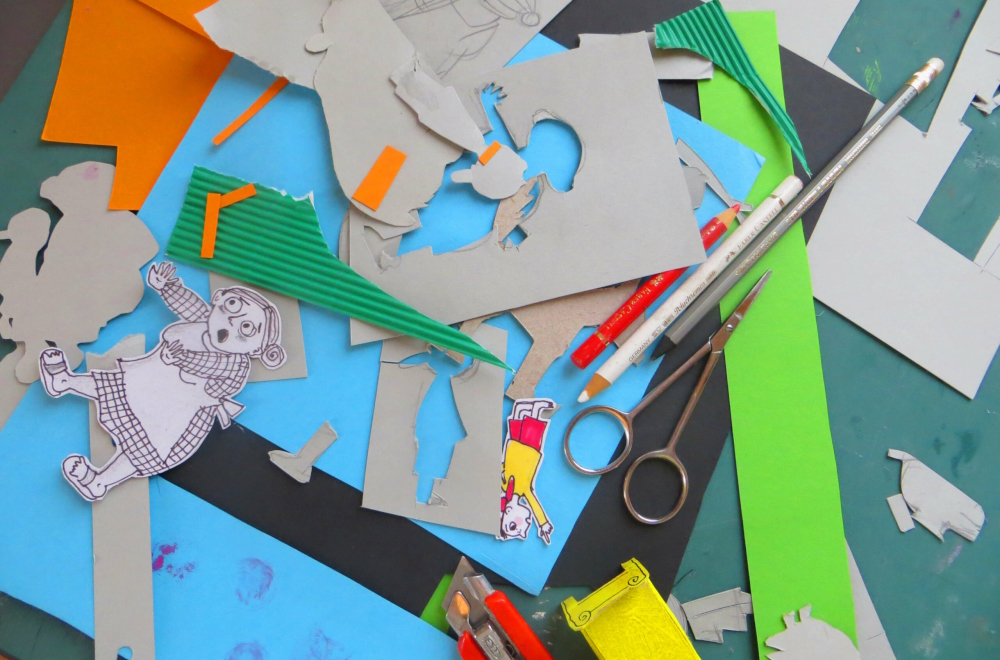
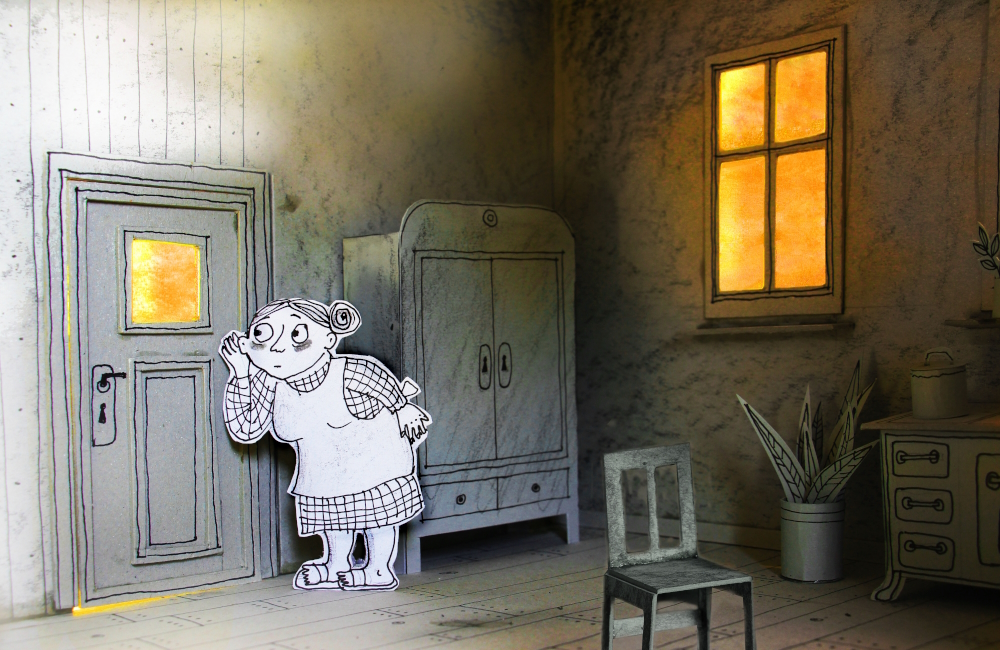
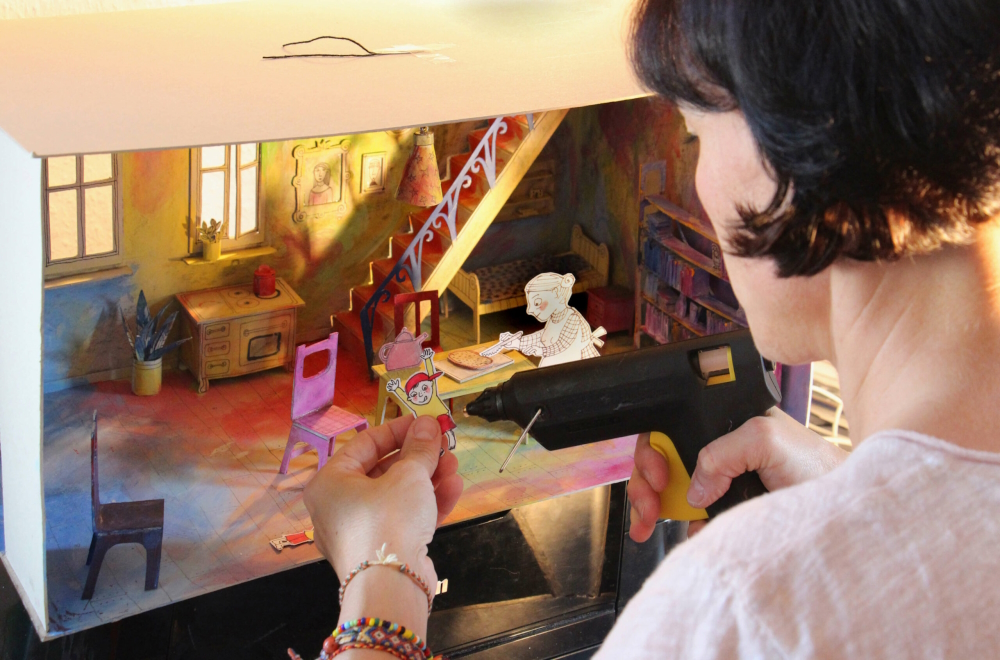
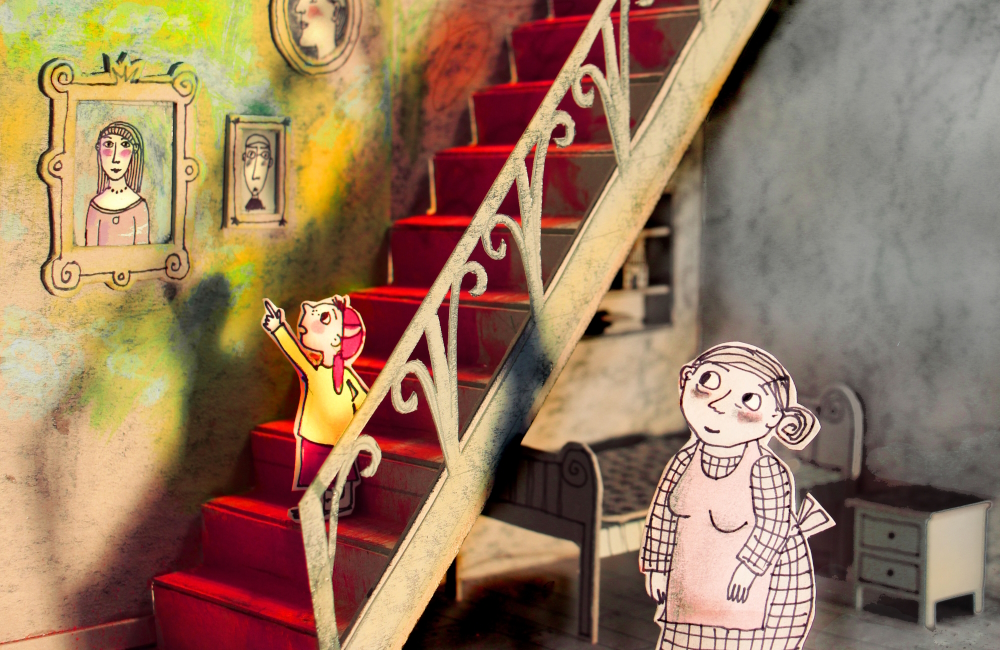
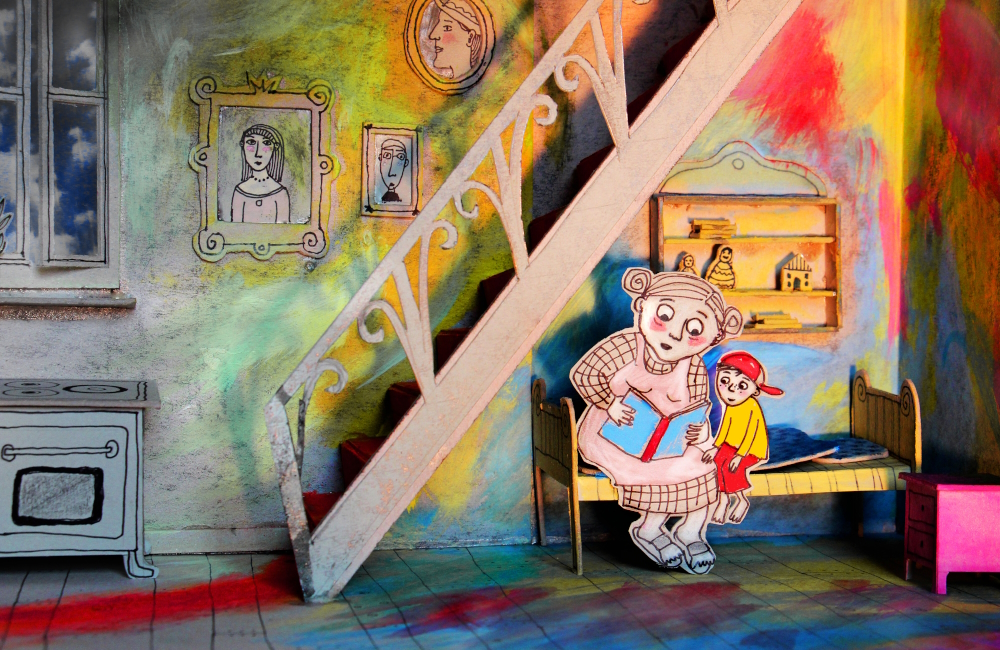
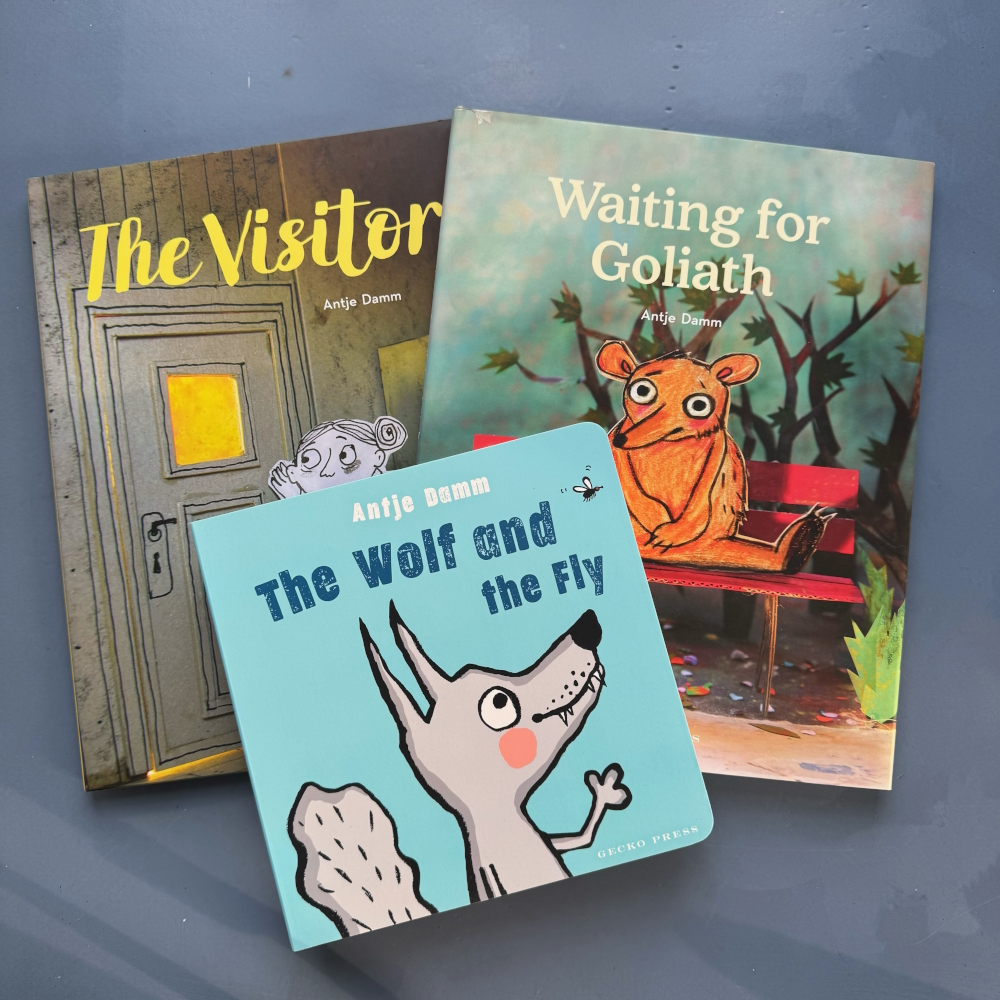
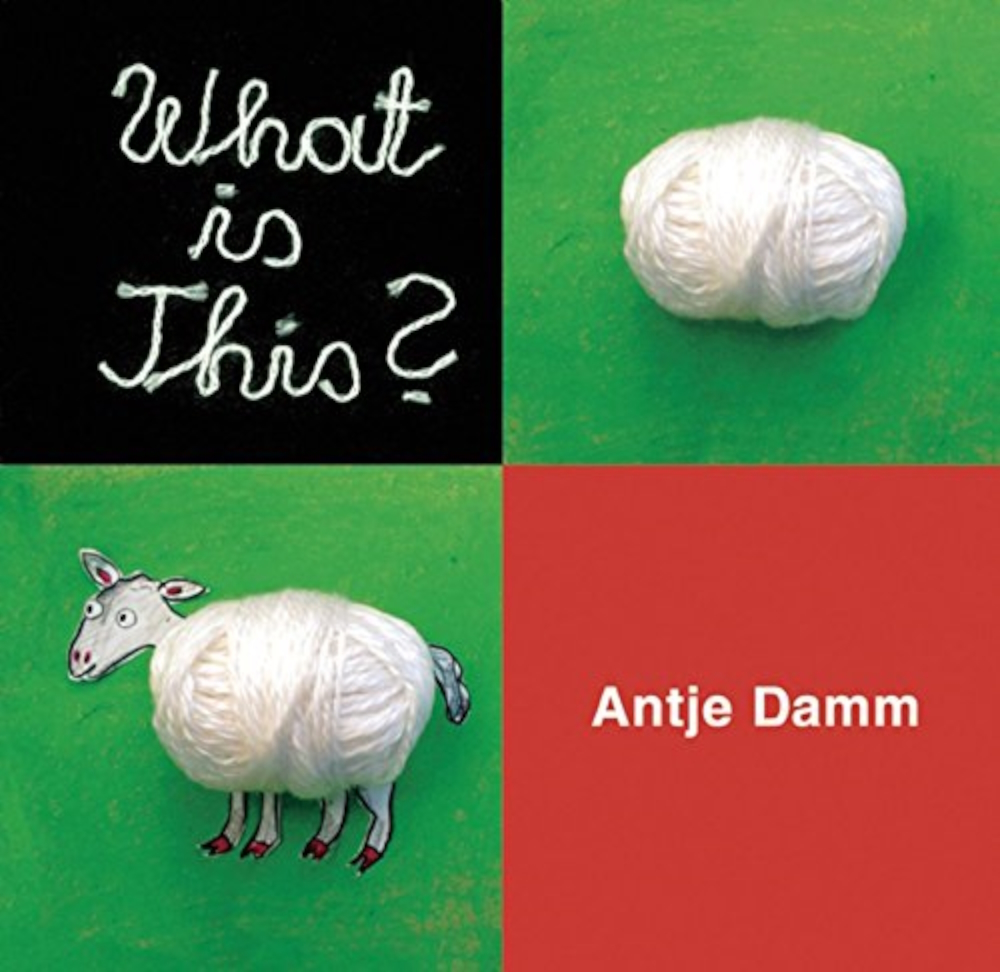
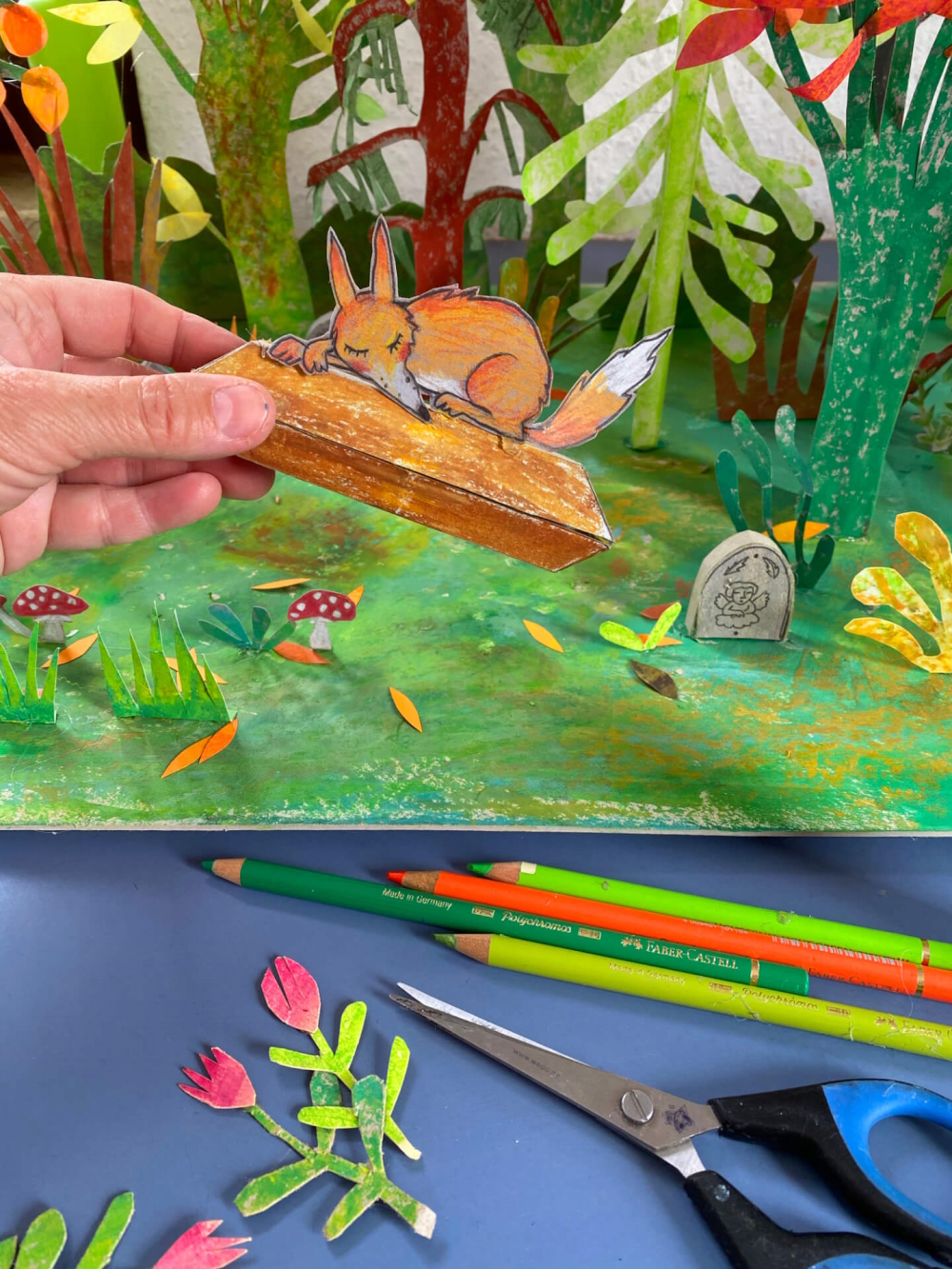
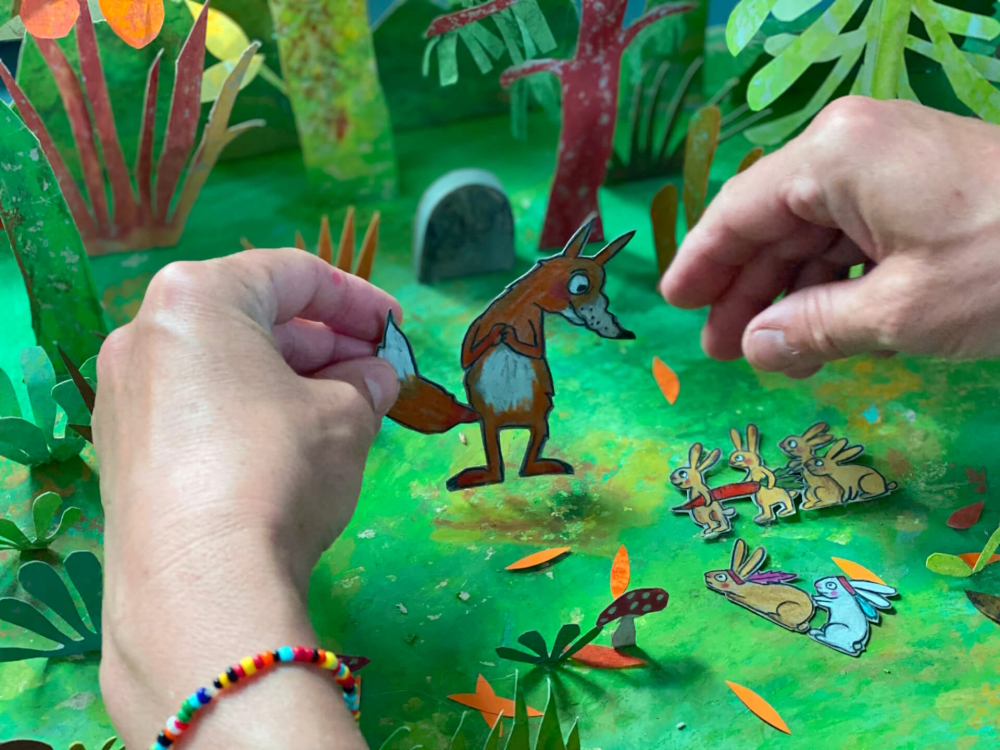
The New York Times/New York Public Library honored the ten Best Illustrated Children’s Books worldwide and „The Visitor“ was one of them! The English edition of her board book made it into this elite group despite heavy competition from 1.000 submissions globally. Among other things, the renowned American daily newspaper praised the ‘explosion of colour and light’ and the unusual illustrations. The latter is a trademark of this German author/illustrator. She mixes various techniques like drawings, collages, paper cuts, photos of her self-made three-dimensional sceneries et al. by exploring spatial concepts in a playful way – always according to the story told in a visually appealing way. The award-ceremony in The Big Apple was the highlight in the international career of a creative woman who has already received lots of honors in her native country. These include the special prize in the category of lifetime achievement in illustration at the German Youth Literature Prize, probably the most prestigious award one can receive in this field in Germany. Her well-earned success is the proof that you can do it even if there‘s no intention, you‘ve previously worked favourably in a different profession and one’s even self-taught.
Antje Damm
author / illustrator of children’s books
Germany
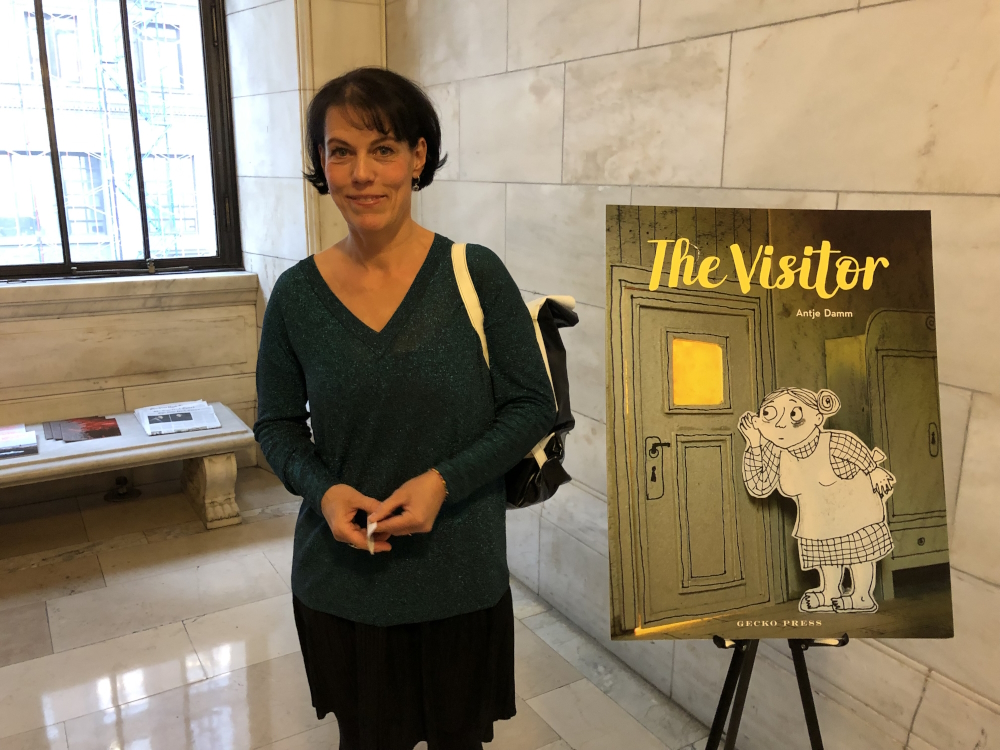
„I stumbled into it by chance when I had children and was at home part of the time“, Antje Damm told the regional multimedia information and news channel hessenschau.de. „As occupational therapy, I started drawing picture books. But not with the intention of publishing them. By chance, I met a woman in the toddler group who worked for a publishing house in Munich – she encouraged me to send the books in. I eventually did so and, after a few rejections, received an offer from a small publisher.“ Since the year 2000 new books by the independent creative are released almost on an annual basis.
„Nothing comes from nothing“ is a saying that applies to Antje Damm (* 15th of September 1965 in Wiesbaden, Germany) too. Her mother was a teacher, who encouraged her kid’s love for drawing from childhood onwards very much; her father worked as an architect. The daughter followed in dad‘s foodsteps and studied in Darmstadt after having spent some time as an au pair in Italy. She returned there for two semesters abroad in Florence. Back home the young lady worked as a freelancer for various architectural practices.
Her professional background was helpful for the realisation of her creative ideas and therefore is visibile in the diverse outputs too – especially in case of The Visitor. „I have always built models because I realised that reading plans is very difficult for many people, but models can be understood at a glance“, the former architect told boersenblatt.net, the weekly magazine for the German book trade. It’s obvious that design and content intertwine in her work whereby she always finds new visual forms of expression for the respective subject matters.
The major topics that her books deal with are friendship, fear, loneliness, öcology/nature, childhood, ageing, philosphy. „My sole aim is to entertain children“, she’s quoted on illustratorsinresidence.de. „I want my books to touch them, spark their curiosity and encourage them to marvel at the world. However, I don't want to dictate anything to children or give them answers. My approach is to ask questions and leave answers open. I find this very important, and it is also my aspiration for my own books: to leave plenty of room for interpretation and to anticipate as little as possible. My goal is not to educate or convey a specific message“. The fact that she strikes a chord with her large and steadily growing readership is proven by the great popularity of her readings and workshops, which have already taken the author as far as New Zealand to Maori children.
The essentials of her worldwide success was summed up aptly by the local newspaper’s online site lz-giessen.de in one sentence: „Antje Damm has mastered the art of breaking down the big issues of our existence and giving children credit for understanding them.“ The basis of her work was expressed even more concisely on boesner.de, a German wholesaler and retailer of artists' material, framing and art books, in just five words: „Understanding the world through art!“
Antje Damm is married and a mother of four daughters. She works at home, living in a little village nearby Gießen in the north-western part of Germany.
Interview January 2026
Understanding the world through art: „I want my books to spark childrens‘ curiosity and encourage them to marvel at reality without dictating anything!“
INTUITION/IMAGINATION
?: How does intuition present itself to you – in form of a suspicious impression, a spontaneous visualisation or whatever - maybe in dreams?
My intuition usually works quite well; I have a kind of gut feeling that tells me whether an idea is worth pursuing and implementing.
?: Will any ideas be written down immediately and archived?
I write down ideas in a small notebook and collect them. Sometimes I leaf through this book and marvel at my thoughts.
?: How do you come up with good or extraordinary ideas?
Sometimes an idea for a book starts with a single image that I have in my head, without knowing exactly where it will lead me. This intuitive way of working suits me.
?: Do you feel that new creative ideas come as a whole or do you get like a little seed of inspiration that evolves into something else and has to be realized by endless trials and errors in form of constant developments until the final result?
During the work process, I also leave myself plenty of room for ideas that may come up or disappear. It's a very experimental way of working.
?: What if there is a deadline, but no intuition? Does the first fuel the latter maybe?
Fortunately, I don't have this problem, because I always show my book projects at a stage when they are already relatively ‘complete’.
INSPIRATION
?: What inspires you and how do you stimulate this special form of imaginativeness?
Good ideas usually come to me when I'm out in nature. I need a certain amount of distraction to be creative. Pressure blocks me.
?: How do you filter between ideas that are worthwhile pursuing and bad ones that you just let go of?
I turn the ideas over and over in my head for quite some time. If they continue to interest me and I enjoy developing them further, then I stick with them. If the plans bore me or I find them exhausting, then they go in the bin.
?: Does an idea need to appeal to you primarily or is its commercial potential an essential factor?
I always work for myself and don't think about the marketability of my books. That would slow me down!
?: Do you revisit old ideas or check what colleagues or competitors are up to at times?
Ideas don't come out of nowhere, they are always a reflection of what you are interested in. For example, I go to museums a lot, and what I see there is naturally an input that can influence me.
I think it's important to find out what's available on the children's book market, because it makes no sense to pursue an idea that has already been done many times before.
CREATIVITY
?: What time or environment best suits your creative work process — for example, a time and place of tranquility or of pressure?
I can work very well in my small study in the mornings and evenings, when the house is quiet and my family is out. When I'm working on a book project, I stick with it and try to make progress every day. I need peace and quiet and undisturbed time. When there's a lot going on, I find it much harder to concentrate.
?: What’s better in the realization process — for example, speed and forcing creativity by grasping the magic of the moment or a slow, ripening process for implementation and elaboration?
I work quite quickly and spontaneously, try things out, discard them, and try again in a different way. It's not particularly planned.
?: How important are self-doubt and criticism by others during such a process?
My children are my first readers and their opinion is very important to me.
?: Is it better to be creative on your own, to trust only your own instincts, or to work in a team?
I work at home and alone. Sometimes I really miss interacting with colleagues. I have learned to trust my intuition and I do my own thing, but that is also born out of necessity. Unfortunately, there are no colleagues here in my town.
?: In case of a creative block or, worse, a real failure, how do you get out of such a hole?
When I don't have any ideas, I wait. That can be agonising at times, and these phases are stressful for me. But I know that eventually, an idea will come along that is worth pursuing.
?: Should a creative person always stay true to him- or herself, including taking risks and going against the flow, or must the person, for reasons of commercial survival, make concessions to the demands of the market, the wishes of clients and the audience’s expectations?
I have been writing children's books for over 25 years now. I don't let myself be swayed. But perhaps that's also a matter of experience. I am very happy to accept constructive criticism, but I don't think about what the market likes, and sometimes it's important to stay true to your own principles, even if it's detrimental to the profitability of a book.
?: How are innovation and improvement possible if you’ve established a distinctive style? Is it good to be ahead of your time, even if you hazard not being understood?
I'm not interested in having my own style. Yes, sometimes you make a book and know that it has a difficult subject matter, but if it grabs me, I do it anyway.
For example, I made a book on the subject of ‘nothingness’. It's clear from the outset that people will struggle with the subject matter and that it won't be a big seller.
?: When does the time come to end the creative process, to be content and set the final result free? Or is it always a work-in-progress, with an endless possibility of improvement?
I have to hand in my projects at some point, and then they go to print, and I'm often left with the feeling that I hope I've done as good a job as possible.
But letting go also has its advantages, because then my head is free for new things.
?: How does artificial intelligence change human creativity? And do you? Would will you use it at all?
I don't use AI, but I can see how it is already changing the children's book market.
I don't see any danger for my own work (yet), because I create images that AI cannot yet generate. I think we need to be careful that our images are not used by AI without our permission or against our will.
SUCCESS
“Success is the ability to go from one failure to another with no loss of enthusiasm.” Do you agree with Winston Churchill‘s quote?
He's right, because sometimes it's hard work and you just need success to get motivated and validated again. Prizes and recognition are important, but for me, success is when children ask me after an event if I can come back tomorrow.
?: Should or can you resist the temptation to recycle a ‘formula’ you're successful with?
Well, if that formula existed, I would take a look at it. But I often find repetition boring.
?: Is it desirable to create an ultimate or timeless work? Doesn’t “top of the ladder” bring up the question, “What’s next?” — that is, isn’t such a personal peak “the end”?
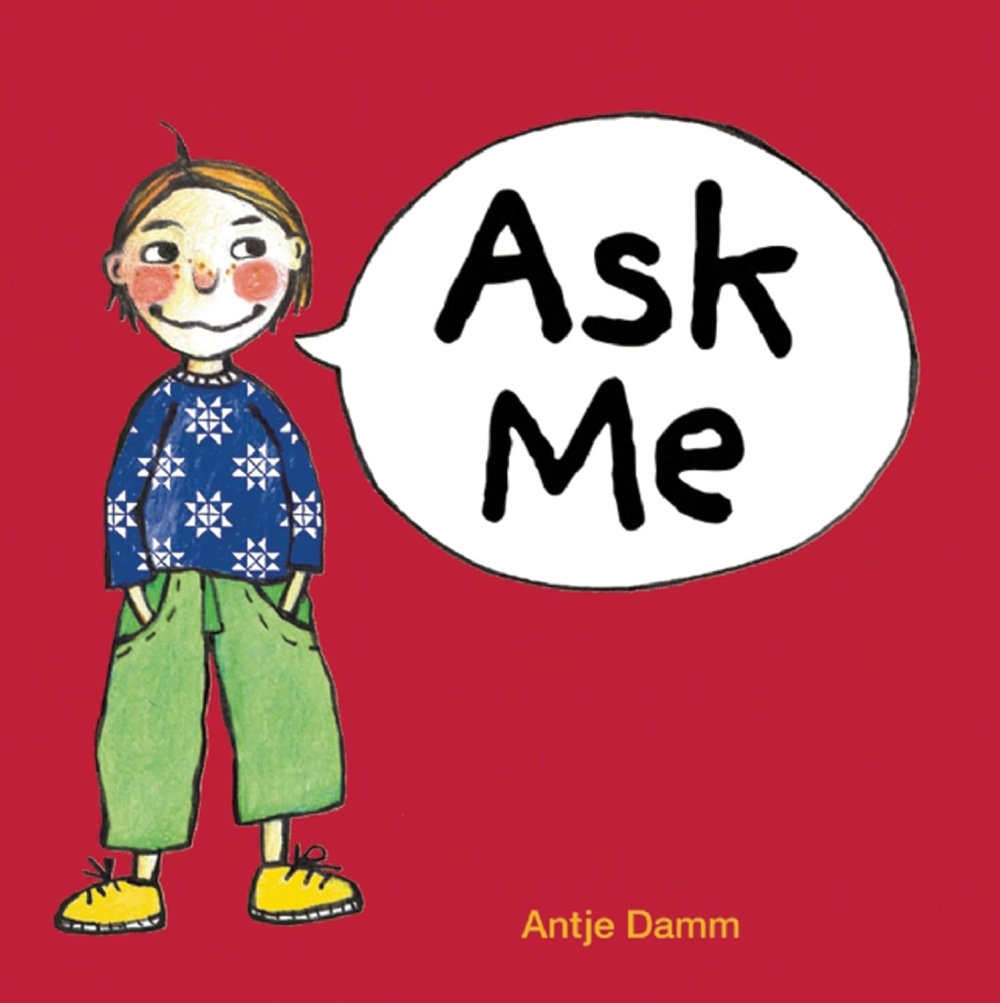
My most successful book, ‘Ask Me’, is now over 20 years old, and I am grateful that I was able to write it. Nevertheless, the question of what comes next has always been important to me.
MY FAVOURITE WORK:
In ‘Ask Me’ I ask children 118 very different questions. Each question has a picture on the side. There are questions about their biography. How does the child see the world, what relationship does it have with other people or living beings? What dreams, wishes and fears does it have, right down to very simple questions of a practical nature.
Examples include: "What funny stories are there about you as a baby? ‘ ’What would you like to be good at?‘ ’Have you ever found a dead animal, what did you do with it?"
Children want to be asked questions, and this book provides space for conversation and exchange among themselves.
The pictures are very different, drawn, photographed, collaged, etc., so that there is always a different visual introduction to these different questions.