Feroz Abbas Khan
Director / Playwright / Screenwriter
India
Hailed by The Times of India as “the director with the Midas touch,” this creative is recognized by The New York Times for “bringing the quality of Indian theatre to a high standard.” Interestingly, the director added "Abbas" as a middle name early in his career to distinguish himself from the late Bollywood style icon and actor-director, Feroz Khan (1939–2009).
Feroz Abbas Khan
Director / Playwright / Screenwriter
India
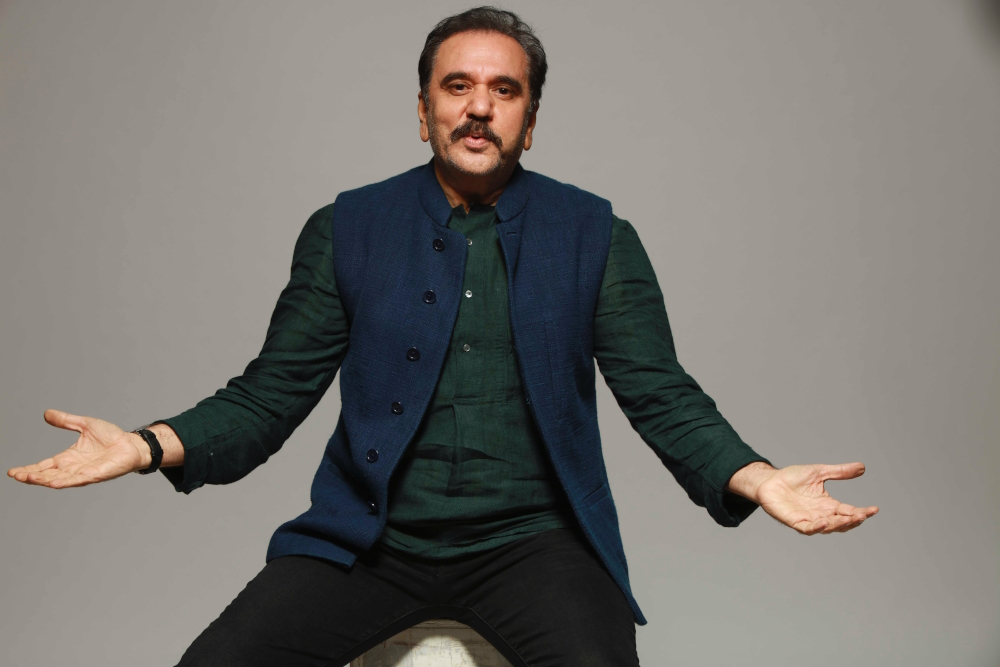
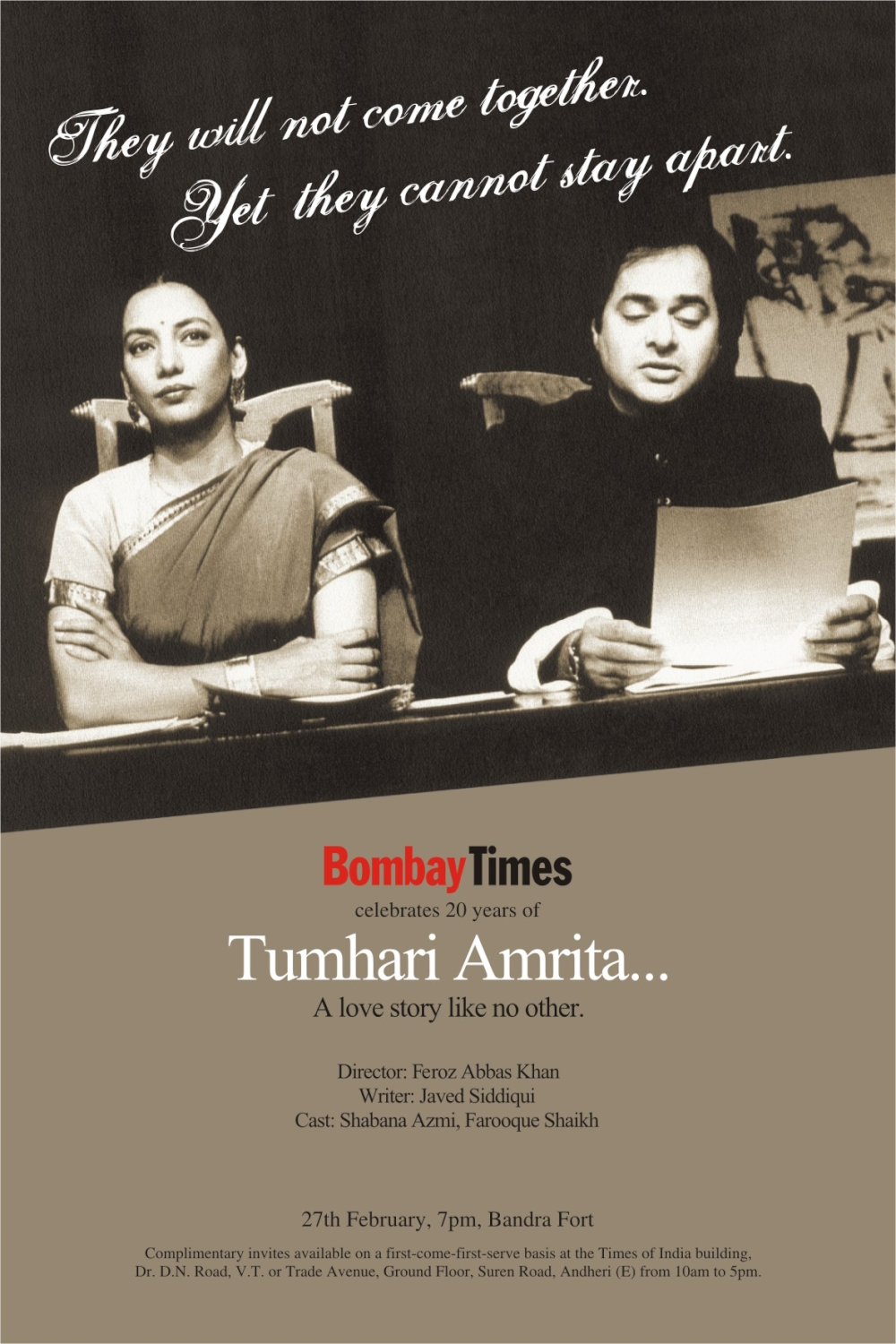
Khan’s success story is defined by deeply impressive milestones. His production of Tumhari Amrita—a Hindi-Urdu adaptation of A.R. Gurney’s Pulitzer finalist Love Letters—toured the world for 21 years. Another pillar of modern Indian theatre is his direction of Salesman Ramlal, a contemporary adaptation of Arthur Miller’s Death of a Salesman. His original production, Mahatma vs. Gandhi, created a global stir, with The New York Times describing it as “the finest English play to emerge from India in a long time.” Other landmark works include Raunaq & Jassi, a reimagined musical version of Romeo & Juliet, and Hind 1957, an adaptation of August Wilson’s Fences.
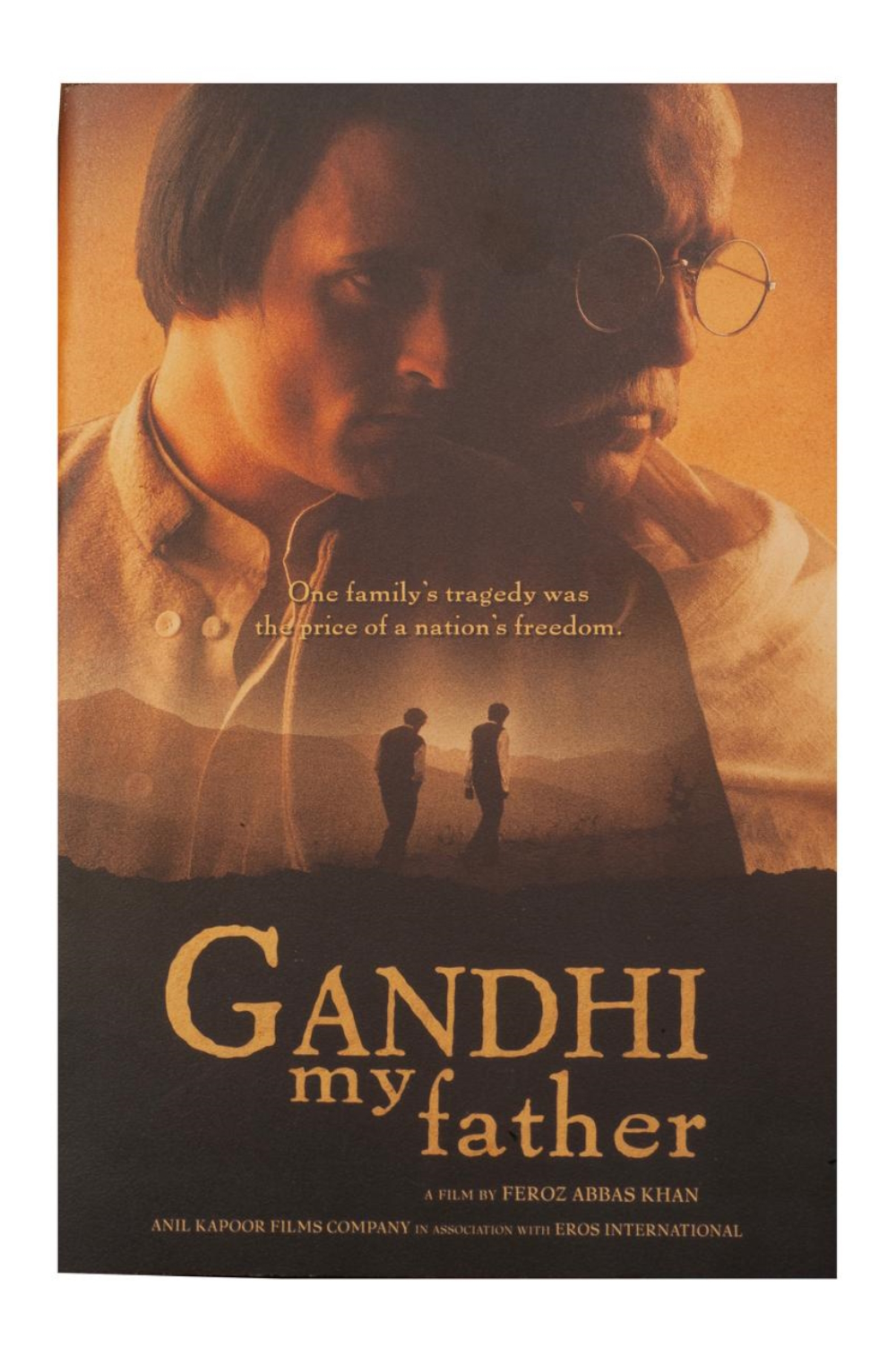
In cinema, Khan’s debut film Gandhi, My Father (2007) focused on the poignant struggle between the Mahatma and his eldest son, Harilal. South African anti-apartheid activist and statesman Nelson Mandela (1918-2013) described the film as "very moving," and The Guardian praised it as "one of the most revealing and courageous movies ever to come out of India. It will be an eye-opener to those whose knowledge of the Mahatma is limited to Richard Attenborough's epic biopic." The film earned the Special Jury Award and Best Screenplay at the 55th National Film Awards in New Delhi.
Detours often lead to the true destination, a fact Khan (* October 6, 1959 in Mumbai) can personally confirm. Directing was not his first choice. An avid cricket player, he graduated from Narsee Monjee College of Commerce and Economics (affiliated to University of Mumbai) and initially pursued a career as a chartered accountant. However, the pull of the arts proved too strong. After winning a Best Actor award during college, he became deeply involved with Prithvi Theatre in Mumbai.
Faced with the choice between financial security and creative fulfillment, Khan chose the latter. He was instrumental in introducing the Prithvi Theatre Festival in 1983 and became the venue’s inaugural Artistic Director. His leadership during these formative years helped shape Prithvi’s legacy, blending Eastern storytelling traditions with Western modernity.
Khan describes theatre as a "calling." Speaking to the Rotary Club of Bombay, he explained: “Theatre is the power and freedom of doing it with nothing... In theatre, you can explore three or four very important themes with very little resources and still give a powerful experience. When you’re participating in a live story with real people, there is nothing like it.”
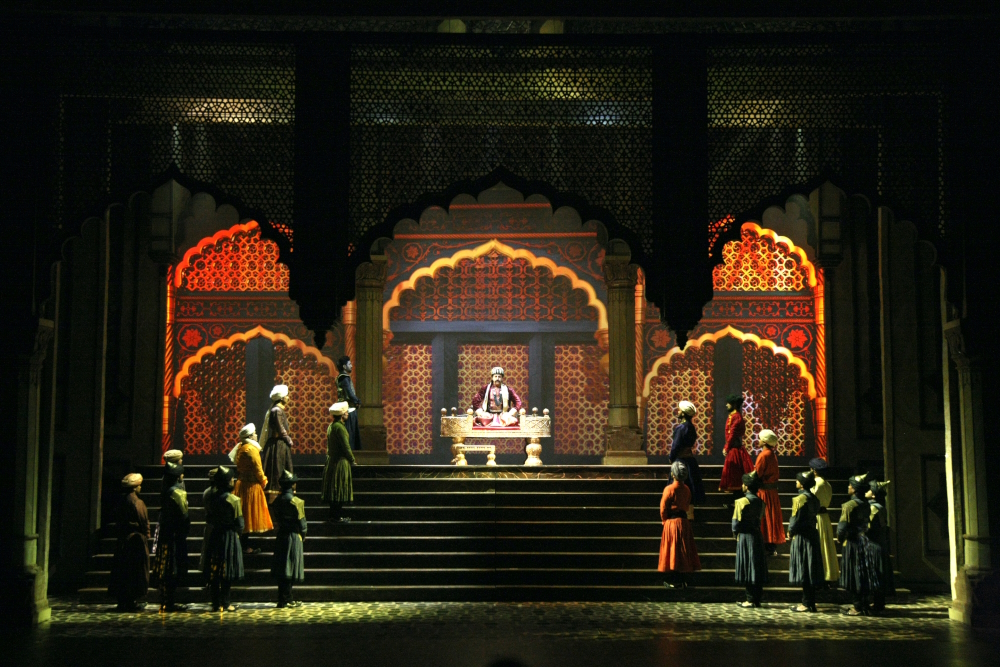
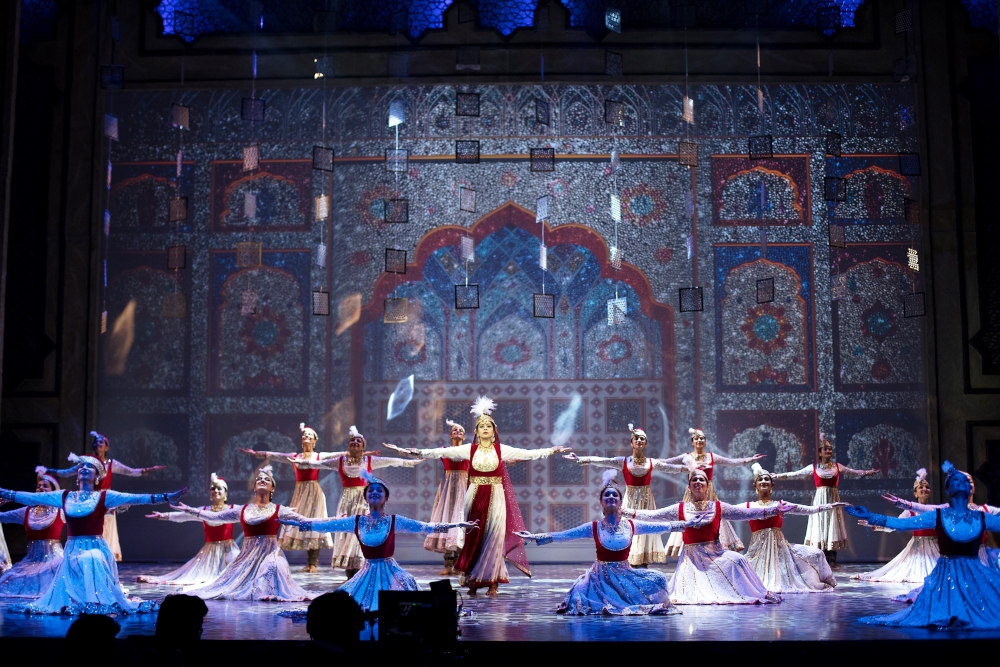
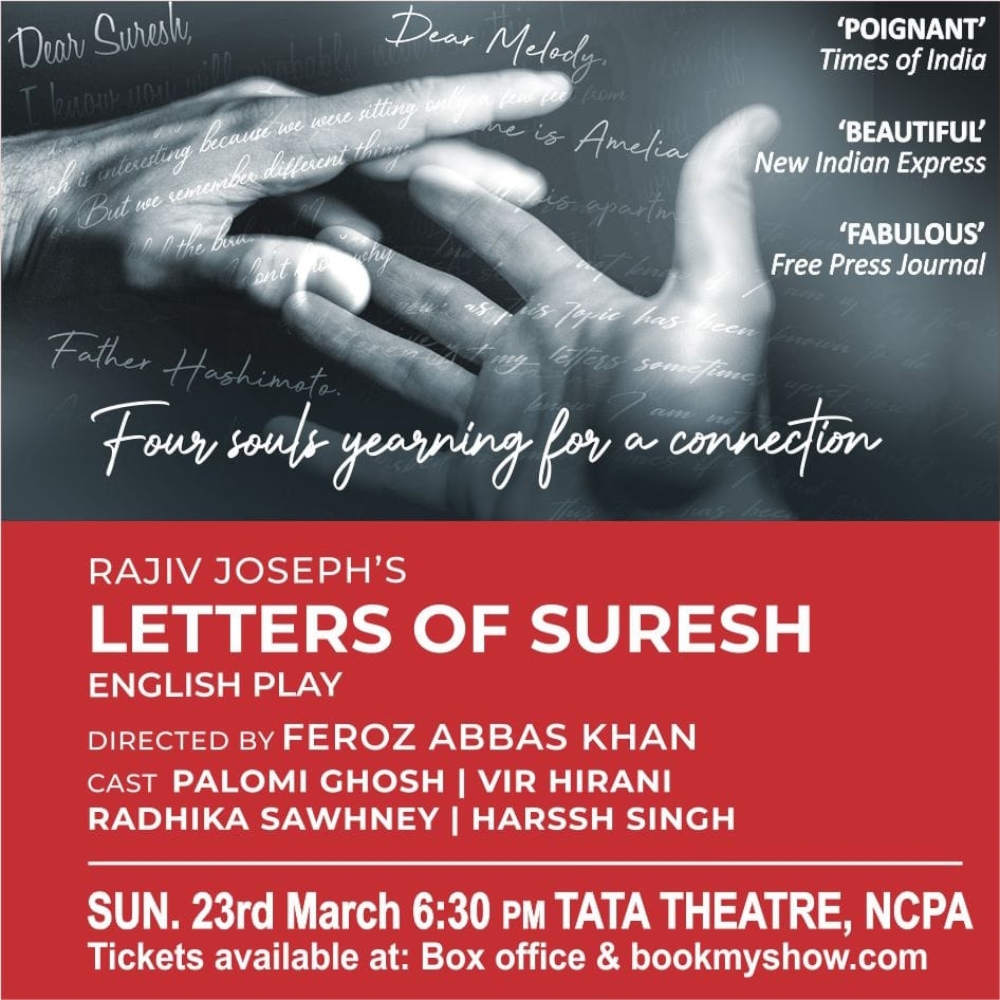
Regardless of scale, Khan excels in every format. He directed the minimalistic Letters of Suresh by Rajiv Joseph (premiering on March 9, 2024). Conversely, he set a new benchmark for spectacle with Mughal-E-Azam (2016), India’s most expensive theatre production. This opulent musical won seven Broadway World India Awards and has toured extensively across the globe.
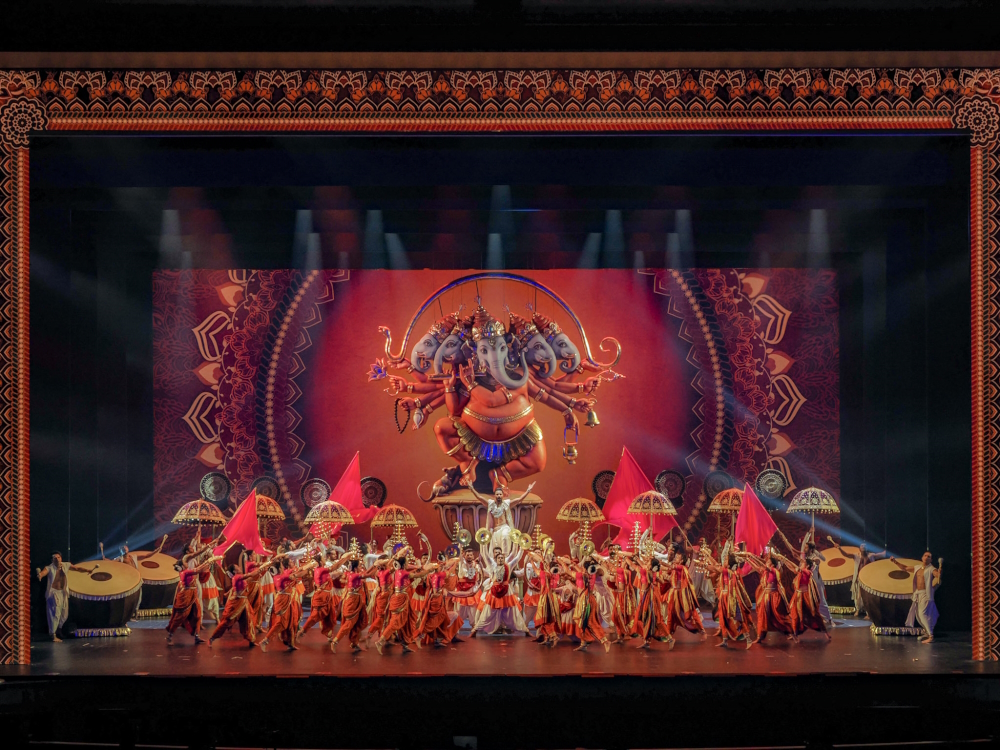
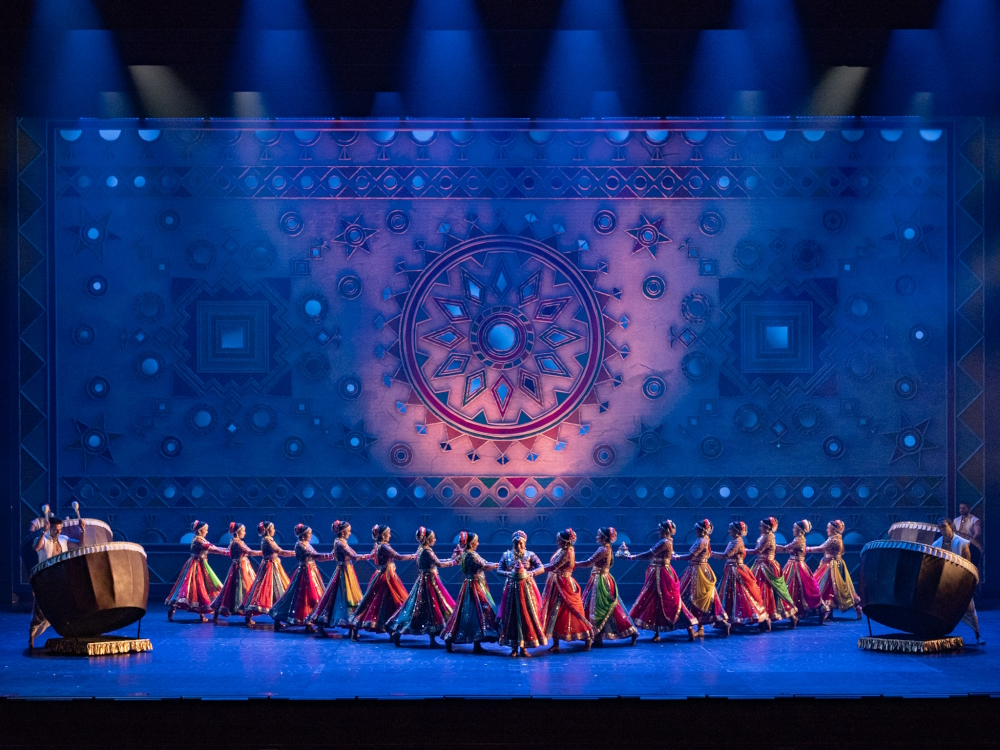
His triumph, Civilization to Nation: The Great Indian Musical, opened the Nita Mukesh Ambani Cultural Centre (NMACC) in Mumbai on March 31, 2023. Featuring 400 performers and 1,300 costumes, the show takes audiences through 2,500 years of Indian heritage.
Despite his accolades, Khan remains “soft-spoken and media-shy" (The Times Of India). He revealed a unique philosophical approach to his work on rotaryclubofbombay.org: “I’m very uncomfortable with success because the moment you start becoming successful... you start repeating yourself. If your journey is to create something better or different, you have to go back to uncertainty. If I do work which I know how to do, then I should not do it.” This philosophy led him to create Main Kuch Bhi Kar Sakti Hoon (I, A Woman, Can Do Anything). This TV soap opera centered on women’s empowerment and reached a recordbreaking viewership of over 250 million on Doordarshan, India's state-owned public television broadcaster. It is now considered a global benchmark for social-change programming.
Feroz Abbas Khan lives and works in Mumbai, continuing to push the boundaries of what Indian stories can achieve on the world stage.
Interview April 2026
Theatre as a Calling: Success through „the uncertainty principle“
INTUITION/IMAGINATION
?: How does intuition present itself to you – in form of a suspicious impression, a spontaneous visualisation or whatever - maybe in dreams?
I'm finely tuned to the political, social and religous discourse of our times. My identity, survival and hope are intertwined with these concerns. An image, a sentence, conversation, news report and restlessness instruct me to do something about it. There is nothing mysterious. It is a compulsion to create to heal or get sick.
?: Will any ideas be written down immediately and archived?
Mind and heart is open and alive… ideas become almost physical, I don't record them externally.
?: How do you come up with good or extraordinary ideas?
Good or extraordinary are post release labels not at inception, incubation or creation. I let myself be deeply affected with life around me…. the intensity of living personally and then detaching from it to watch its shattering absurdity might make my work seem different not necessarily extraordinary.
?: Do you feel that new creative ideas come as a whole or do you get like a little seed of inspiration that evolves into something else and has to be realized by endless trials and errors in form of constant developments until the final result?
As directors we normally shape and sculpt existing material into a medium that is shared with a willing or suspicious audience. However, there have been plays and films that germinated as a compelling idea meeting the writer as the principal collaborator.
The development through discussions, arguments, support, fear, ecstasy, insecurity, rewritings, relentless pursuit despite obstacles, more collaboration, rehearsals, shooting and finally letting the audience be the final arbitrators. This process is very long heartbreaking, but when you get it right, it is sheer bliss.
?: What if there is a deadline, but no intuition? Does the first fuel the latter maybe?
As practical craftsmen faced with impossible deadlines, sometimes we do have to deliver qualify work in a hurry. In such conditions, experience triggers some inspiring moments in a state of flow and you do survive with flattering results. In fact some of your best work is realised when delivered a deadline. The survival mode can surprise you with crazy stuff.
INSPIRATION
?: What inspires you and how do you stimulate this special form of imaginativeness?
There is something in the audience that must change after experiencing your work. It must become part of their buried or operative memories.
Since it is a collaborative creation, all involved must believe, they are contributing their time, talent and reputation for a special purpose. The society must feel the impact and its reflection in the mirror that the work holds.
?: How do you filter between ideas that are worthwhile pursuing and bad ones that you just let go of?
If it haunts me and is a constant companion, I know this has a special purpose and meaning.
Any idea that I believe I can execute with ease I reject immediately. It is an indicator that a formula is evolving where certainty and comfort will prevail over uncharted and dangerous.
?: Does an idea need to appeal to you primarily or is its commercial potential an essential factor?
I am the first audience and it should be so compelling to me that I want to share it with a larger audience. The first impulse is the primary reason.
Theatre is a communal, temporal shared experience. A lot of human and monetary resources are employed and at the least it must be financially viable. Commercial success is still a mystery and guesswork.
Self indulgence is always a lurking danger, but respect for audience can be a bulwark.
?: Do you revisit old ideas or check what colleagues or competitors are up to at times?
I am very excited with new ideas that pose fresh challenges. However, I would like to revive earlier productions with a fresh perspective.
In arts we don't compete, we celebrate other practitioners and get inspired by their vision and artistry. My work has been hugely instructed by watching great work by other creators.
CREATIVITY
?: What time or environment best suits your creative work process — for example, a time and place of tranquility or of pressure?
I prefer to work in the same space but flexible time. There is the churning inside you and you are struggling to commit yourself to an idea or plan of action. The unconscious receives this message and a pattern starts emerging over a period of time and your work starts taking shape. The logical steps you take to start the process of creation erupts from a mysterious source. You need to show up always and commit to creating the piece. Tenacity and commitment are serious tools.
?: What’s better in the realization process — for example, speed and forcing creativity by grasping the magic of the moment or a slow, ripening process for implementation and elaboration?
There are no fixed rules or a manual..Importantly, each work comes with different possibilities therefore imposition of preconceived notions will only result in bland and repetitive work.
Ideally, let it simmer, no censorship, no force, gentle nurture but very attentive to burst of radiance and when the flow sweeps, you just let it be. Eventually with time and experience you will discover that each creation comes with its own ticking clock.
?: How important are self-doubt and criticism by others during such a process?
Self-doubt is natural; embrace it as a process but don't let it emotionally paralyse you. All good work begins with doubt; certainty stifles creativity. Your questions will only stop once in the court of audience. Constructive criticism or notes are very critical in the evolution process. However, it must begin when your work has taken shape to your expectation.T oo early is premature and too late is futile. It must be timed just right.
?: Is it better to be creative on your own, to trust only your own instincts, or to work in a team?
Collaboration is the operating mantra of a theatre & film director; we are co-creators in that sense. However, there are many moments of solitude and contemplation to give clarity to your work and solace to fears.
?: In case of a creative block or, worse, a real failure, how do you get out of such a hole?
Blocks, obstacles have to be met with perseverance, self-belief and showing up. Don’t stop, keep working. These are anxieties masquerading as respectable concerns.
Failure is a real event. It will teach you more than success. Yes, it can lead to serious emotional upheaval filled with self-loathing and even depression.T his is the true test of your character. Analyse what worked and what didn't. Armed with new learnings, get to work fast.
Failure is an insight not a judgement.
?: Should a creative person always stay true to him- or herself, including taking risks and going against the flow, or must the person, for reasons of commercial survival, make concessions to the demands of the market, the wishes of clients and the audience’s expectations?
It would be very presumptuous and condescending on my part to advice others how they must conduct their lives. Each artist is driven by their life situation, worldview and ambitions. Lifestyle choices can also drive your decisions. An unyielding visionary is almost nihilistic. A market savvy creator is maleable. Most of the people fall somewhere in-between.
?: How are innovation and improvement possible if you’ve established a distinctive style? Is it good to be ahead of your time, even if you hazard not being understood?
I would let the ideas evolve into a distinct style intrinsic to its nature. I never impose and this process drives innovation and exciting new forms.
Ahead of time is a posthumous judgement. Artists are work in progress driven by passion and vision, if they are conscious of being ahead of their time their work will be unworthy for all times. It is a highly narcissistic proposition to consider while struggling to create.
?: When does the time come to end the creative process, to be content and set the final result free? Or is it always a work-in-progress, with an endless possibility of improvement?
It's like the birth of a child. Every process of evolution has gone into making a perfect human specimen to now face the real heat and light of the real world. The period of incubation is fixed and you need to deliver on a fixed date.
?: How does artificial intelligence change human creativity? And do you? Would will you use it at all?
I'm yet to fully comprehend AI. The possibilities are shattering, but the ethical issues are equally urgent. Evolution and innovation cannot be stopped and sooner or later we will have to embrace it. To put it mildly, I am excited and terrified at once
SUCCESS
“Success is the ability to go from one failure to another with no loss of enthusiasm.” Do you agree with Winston Churchill‘s quote?
Absolutely.
?: Should or can you resist the temptation to recycle a ‘formula’ you're successful with?
Recycling a formula is a reductive process and announcement of your creative defeat.
?: Is it desirable to create an ultimate or timeless work? Doesn’t “top of the ladder” bring up the question, “What’s next?” — that is, isn’t such a personal peak “the end”?
‘Timeless work ‘ is a declaration much after you are done and dusted. The pursuit of excellence is your daily chore. 'Til your last day at work you could be creating better than the last creation.
MY FAVOURITE WORK:
It's a hindi film titled Gandhi, My Father. One family’s tragedy was the price for a nation’s freedom.
It deals with the troubled relationship between Mahatma Gandhi and his eldest son,who rebelled against his father to find his own identity .You will find a very human gandhi struggling to keep his family together and fighting for the freedom of India.It won several National and International awards.
Nelson Mandela was deeply moved and Nobelprize winner Nadine Gordimer was laudatory in her praise.