Jean-Remy von Matt
co-founder of multiple award-winning advertising agency Jung von Matt / conceptual artist
Swiss living in Germany
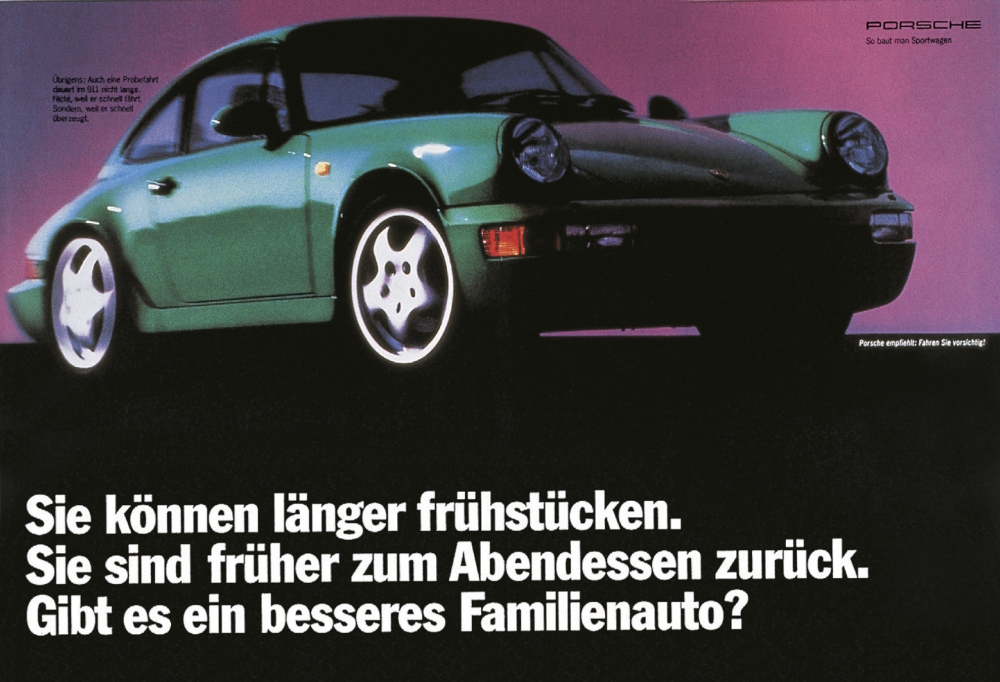
„Most creative advertising agency of all times“ (W&V, German trade magazine for the communications and media industry). „No. 3 of Most Effective Independent Agency Offices“ in the worldwide Effie Effectiveness Index. Repeatedly „Independent Agency of the Year“ at the Cannes Lions International Festival of Creativity, receiving 53 awards at the New York Festivals Advertising Awards in May 2018. A native Swiss is the co-founder of Jung von Matt (affiliates in Austria, China, Czech Republic, Poland, Sweden et al; clients featuring Mercedes-Benz, multinational car rental company Sixt and - in 2017 – JvM also worked on the CDU campaign for German chancellor Angela Merkel. „The most creative German ad-agency“ (Manager Magazine) won more trophies at international industry events over the years than any other German ad agency up to this date. The member of The Hall of Fame of German advertising since 2002, who became a legend because of provocative, clever or witty slogans like „3...2...1...mine!“ for eBay in 2003, confessed to Horizont, the German Magazine for marketing, advertising and media: „I would rather be known as a nuclear physicist or a violin virtuoso!“
Jean-Remy von Matt
co-founder of multiple award-winning advertising agency Jung von Matt / conceptual artist
Swiss living in Germany
Being expelled from the Catholic convent school in Einsiedeln/Switzerland marked the start of the career of a man who became a professor at Wismar University of Applied Sciences in 2003. Despite the troubled start Jean-Remy von Matt (* November 2, 1952 in Brussels, Belgium) took up speed with his A-levels in Zuerich. Following that he attended a college of advertising in Biel/Bienne and graduated with a diploma in business studies in 1975. Next steps for the young professional were a training program at the Tagblatt in the Swiss capital and after moving to Germany, working as a junior copywriter for BMZ in Duesseldorf/Germany first, then being engaged as a copywriter at the German outlet of the British advertising, marketing, and public relations agency Ogily & Mather in Frankfurt. Onwards to become Creative Director at Eiler & Riemel (part of BBDO, recognized as one of the world's largest advertising agency networks). In 1986 Springer & Jacoby in Hamburg hired him as managing partner. At one of the 20 most successful agencies in the creative world at this time Jean-Remy von Matt befriended Holger Jung. On July 1st, 1991 the two widely experienced experts founded Jung von Matt (JvM) in the Hanseatic city.
The guiding principle of what became not only the second biggest owner-run German advertising agency, but an internationally active company with more than 1,200 employees wordwide was, right from the beginning: „We remain dissatisfied!“ The deeper meaning of these three words Jean-Remy von Matt explained to the daily newspaper Augsburger Allgemeine: „I actually enjoy this relentless pursuit of better solutions. As a creative person, you can only succeed if you enjoy optimising things. This belief that everything can and should be improved is deeply ingrained in me.“ Therefore it’s no surprise how he, who’s said to be chronically dissatisfied and a stickler for detail, describes his work approach on forward-festival.com: „Make. Optimize. Optimize. Optimize.“ In this context the son of a Swiss bookseller and his Belgian wife revealed: „As I have hardly read any books and know practically no movies, inspiration for me has always been what I could observe in my everyday life...And every great innovation was born out of dissatisfaction, dissatisfaction with the status quo.“
Talking to German news-mag Der Spiegel Jean-Remy von Matt said: “No one is as close to the deadly sins as the creative person. Pride, vanity, hubris, and sometimes sloth – these are typical of us. The Frankfurter Allgemeine Zeitung once wrote about me: ‘His nature is characterised by a constant struggle between shyness and vanity. In the end, the latter usually prevails’.”
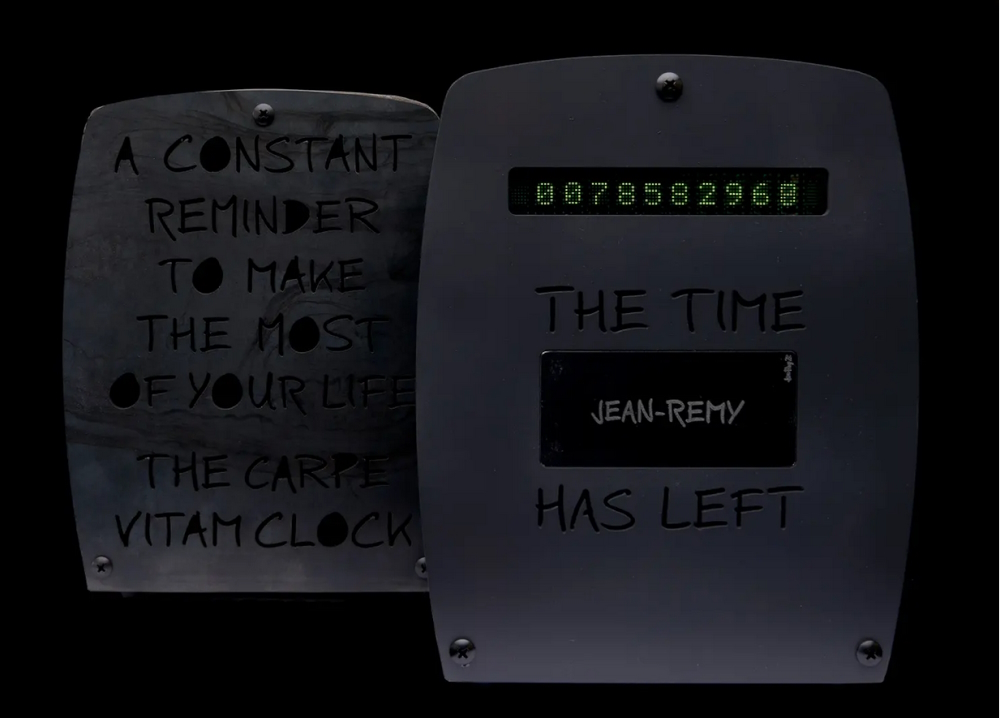
In July 2018 the member of the Art Directors Club Switzerland since 2004 and honorary member of the ADC Germany as well als president of Cannes‘ outdoor jury left his daily job as a "creative service provider" (his self-description) at Jung von Matt, became part of its supervising board and started creating conceptual art. „My goal was to stay true to creativity, but use it for something more sustainable“ (forward-festival.com). The step in this new territory „revived my old ambition to create something unique“ (Augsburger Allgemeine). The very wealthy dropout now could concentrate full time on what he had be began already 16 years earlier by developing a Lifetime Clock for himself. „It makes our transience visible and thereby conscious“ (forward-festival.com).
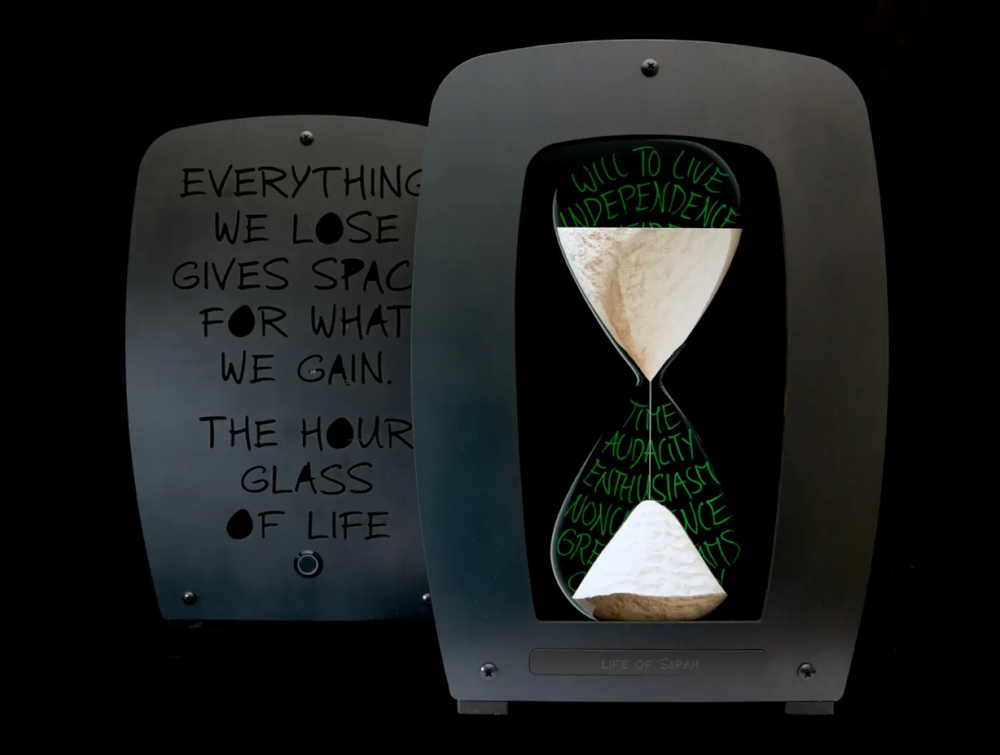
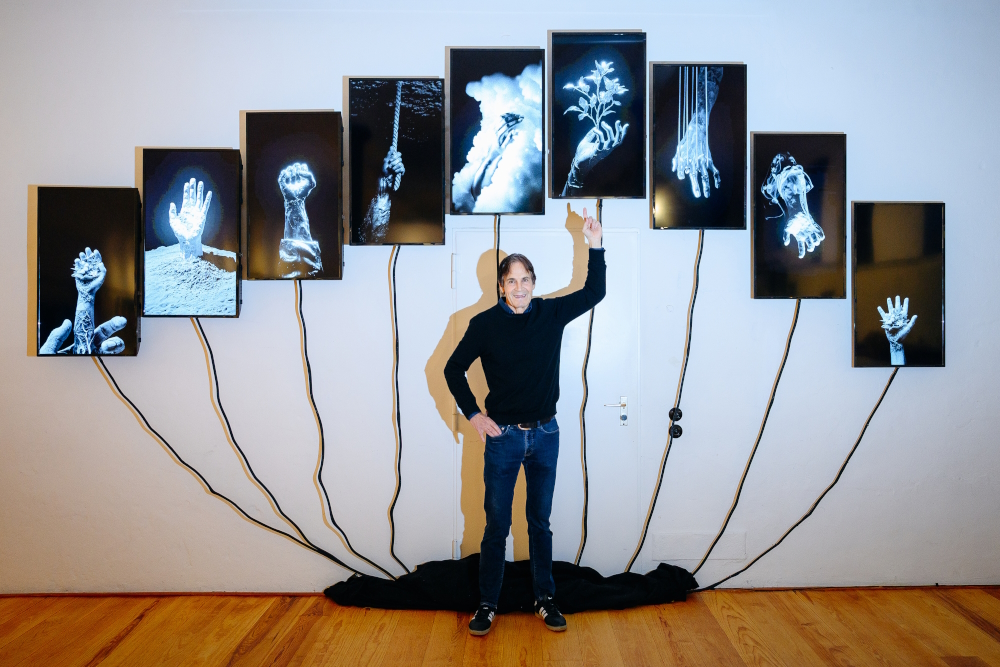
In 2022 Jean-Remy von Matt presented his first lifetime sculpture Carpe Vitam Clock showing the remaining service life as a digital display. Three years later the driver of a Mercedes Cabrio from the 1980s exhibited photographic tableaux exploring transience and transformation. „His latest series of works“, berlin.de wrote, „draws on motifs from the Vanitas tradition whilst simultaneously subverting them: the focus is not on the end, but on the moment of change. Temporary arrangements of candles, texts and figures form the basis of these photographic installations. As wax melts and flames shift, light, shadow and pictorial planes shift too. This gives rise to images in which transience itself becomes productive: as forms disappear, new meanings and new pictorial spaces emerge. The works thus explore the idea that nothing passes away without making room for something new.“
Jean-Remy von Matt‘s 260 pages strong autobiography Am Ende features „77 anecdotes about the importance of creativity, his childhood, his life in advertising and as an artist“ (horizont.net).
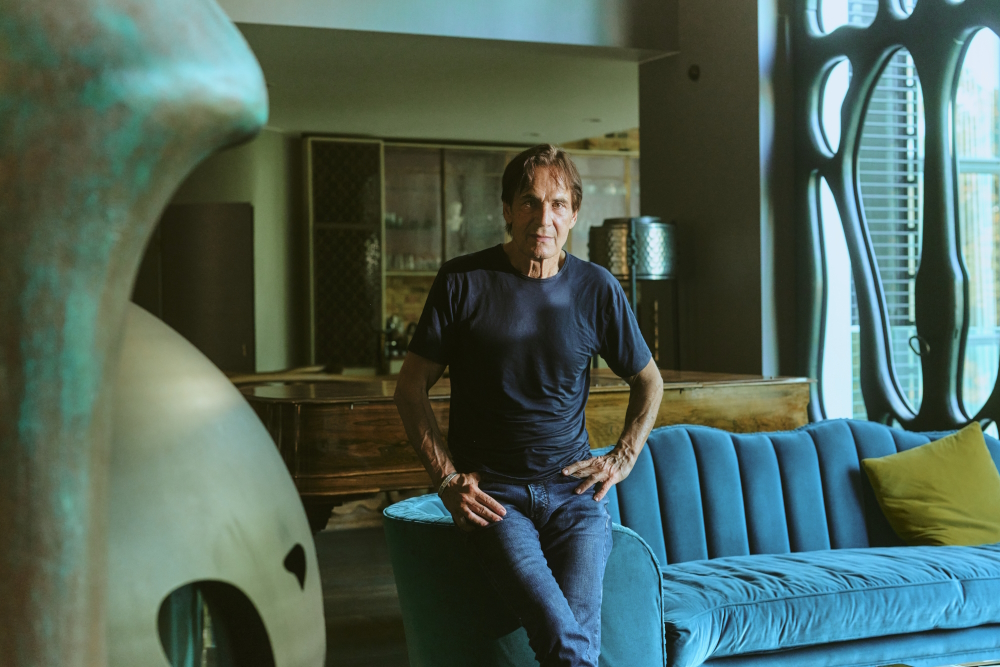
The father of two sons lives in Berlin. Together with his wife the „would-be architect“ has furnished a large two-story penthouse in an extravagant style including a roof called Smoking Boob. It is composed of hundreds of copper plates in the shape of a female breast and symbolizes what was written about him in Frankfurter Allgemeine Zeitung: „He is obsessed with leaving a lasting impression.“
Interview May 2026
Creating something unique: this relentless pursuit of better solutions
INTUITION/IMAGINATION
?: How does intuition present itself to you – in form of a suspicious impression, a spontaneous visualisation or whatever - maybe in dreams?
The former.
?: Will any ideas be written down immediately and archived?
Absolutely.
?: How do you come up with good or extraordinary ideas?
I won't go to them; they'll come to me.
?: Do you feel that new creative ideas come as a whole or do you get like a little seed of inspiration that evolves into something else and has to be realized by endless trials and errors in form of constant developments until the final result?
They always come as kits in separate parts, never ready-made.
?: What if there is a deadline, but no intuition? Does the first fuel the latter maybe?
The deadline is my end-of-day bell, and it never rings without an idea being in place. The best one so far, and because there is no such thing as the absolutely best idea, every idea is the best one so far.
INSPIRATION
?: What inspires you and how do you stimulate this special form of imaginativeness?
Solitude, peace and quiet, no distractions, and something to write.
?: How do you filter between ideas that are worthwhile pursuing and bad ones that you just let go of?
By sieving.
?: Does an idea need to appeal to you primarily or is its commercial potential an essential factor?
Most of the time, it's the commercial potential that matters; on rare occaisons, I don't care.
?: Do you revisit old ideas or check what colleagues or competitors are up to at times?
I often revisit old ideas; I’m interested in other people’s ideas.
CREATIVITY
?: What time or environment best suits your creative work process — for example, a time and place of tranquility or of pressure?
The most important thing is simply to get started. For a creative person, improvement comes naturally.
?: What’s better in the realization process — for example, speed and forcing creativity by grasping the magic of the moment or a slow, ripening process for implementation and elaboration?
A slow pace helps me.
?: How important are self-doubt and criticism by others during such a process?
Self-criticism is everything. Without it, you stagnate.
?: Is it better to be creative on your own, to trust only your own instincts, or to work in a team?
I can do things only on my own. Teams drive me crazy.
?: In case of a creative block or, worse, a real failure, how do you get out of such a hole?
Thanks to years of experience, creativity always manages to find its way back.
?: Should a creative person always stay true to him- or herself, including taking risks and going against the flow, or must the person, for reasons of commercial survival, make concessions to the demands of the market, the wishes of clients and the audience’s expectations?
That's something everyone has to decide for themselves. Personally, I can't be bothered to be beating a horse.
?: How are innovation and improvement possible if you’ve established a distinctive style? Is it good to be ahead of your time, even if you hazard not being understood?
Not being understood is frustrating.
?: When does the time come to end the creative process, to be content and set the final result free? Or is it always a work-in-progress, with an endless possibility of improvement?
No idea is every finished. That's why deadlines are so liberating for creative people.
?: How does artificial intelligence change human creativity? Do you use AI, or would you use it at all?
It really helps me getting started. But you have to be careful that it doesn't make you crazy.
SUCCESS
“Success is the ability to go from one failure to another with no loss of enthusiasm.” Do you agree with Winston Churchill‘s quote?
No. Success means taking a step back and making a change after no more than two failures.
?: Should or can you resist the temptation to recycle a ‘formula’ you're successful with?
That's a good question.
?: Is it desirable to create an ultimate or timeless work? Doesn’t “top of the ladder” bring up the question, “What’s next?” — that is, isn’t such a personal peak “the end”?
No, it is certainly possible to create several timeless works.
MY FAVOURITE WORK:
I'm still finding my feet as a conceptual artist.