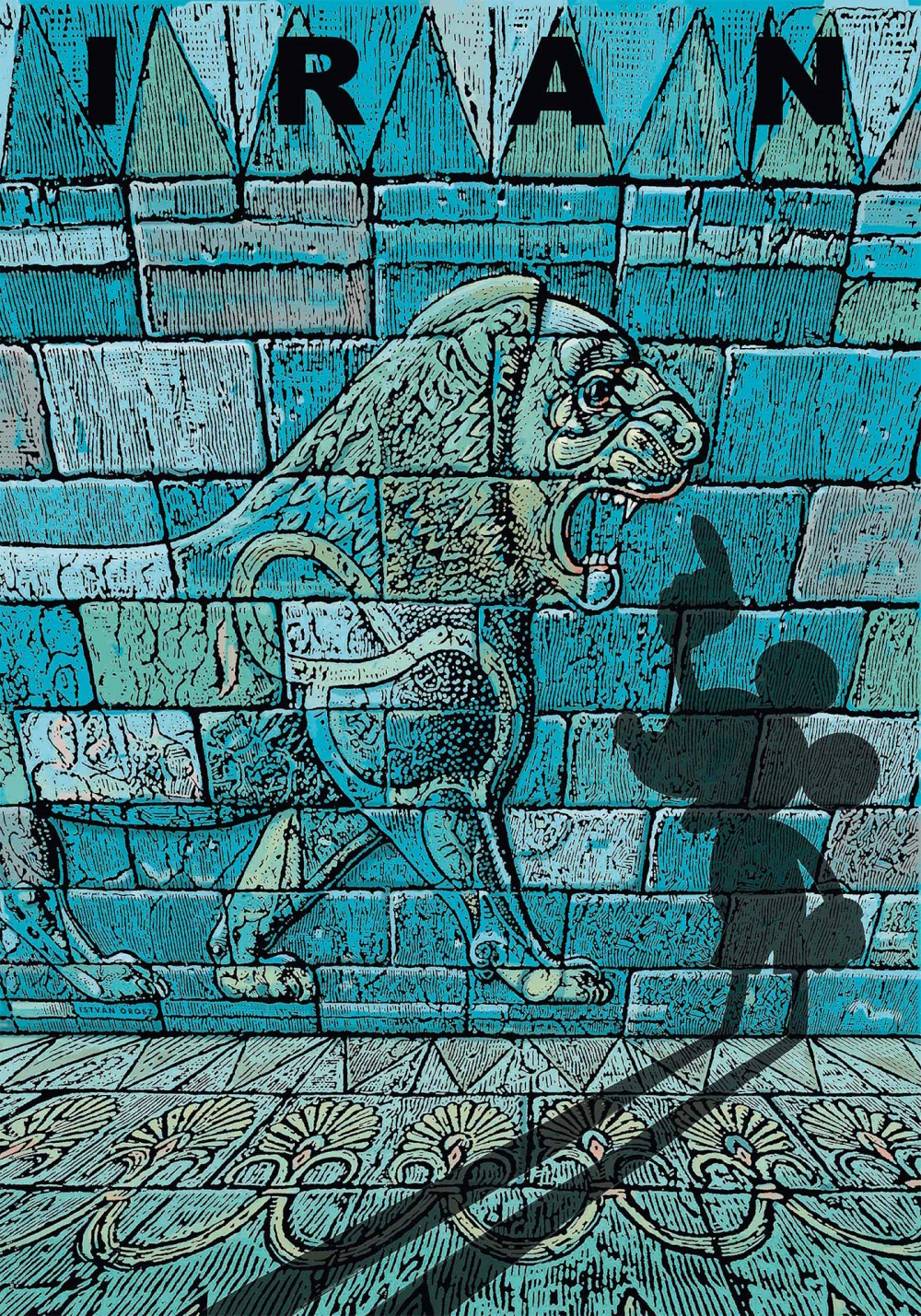
István Orosz
graphic designer / painter / printmaker / animated film director
Hungary
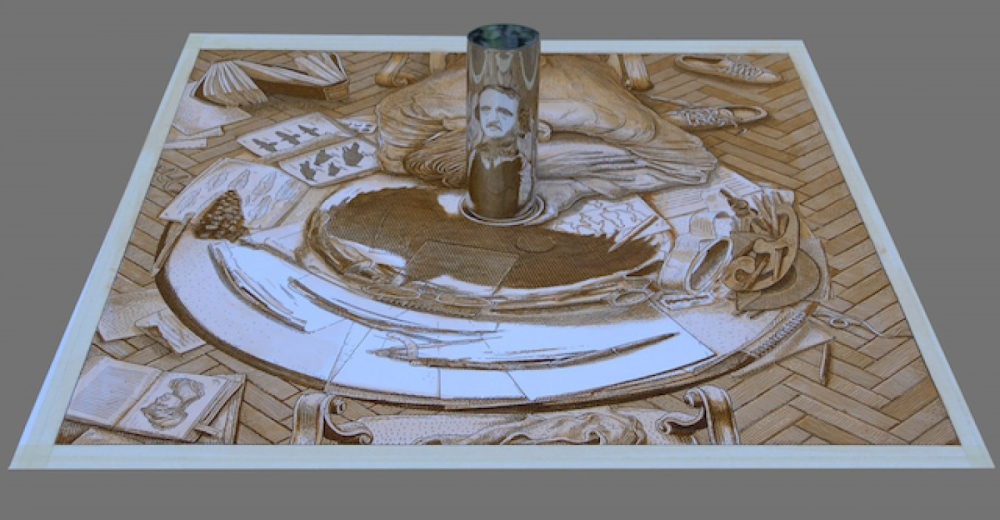
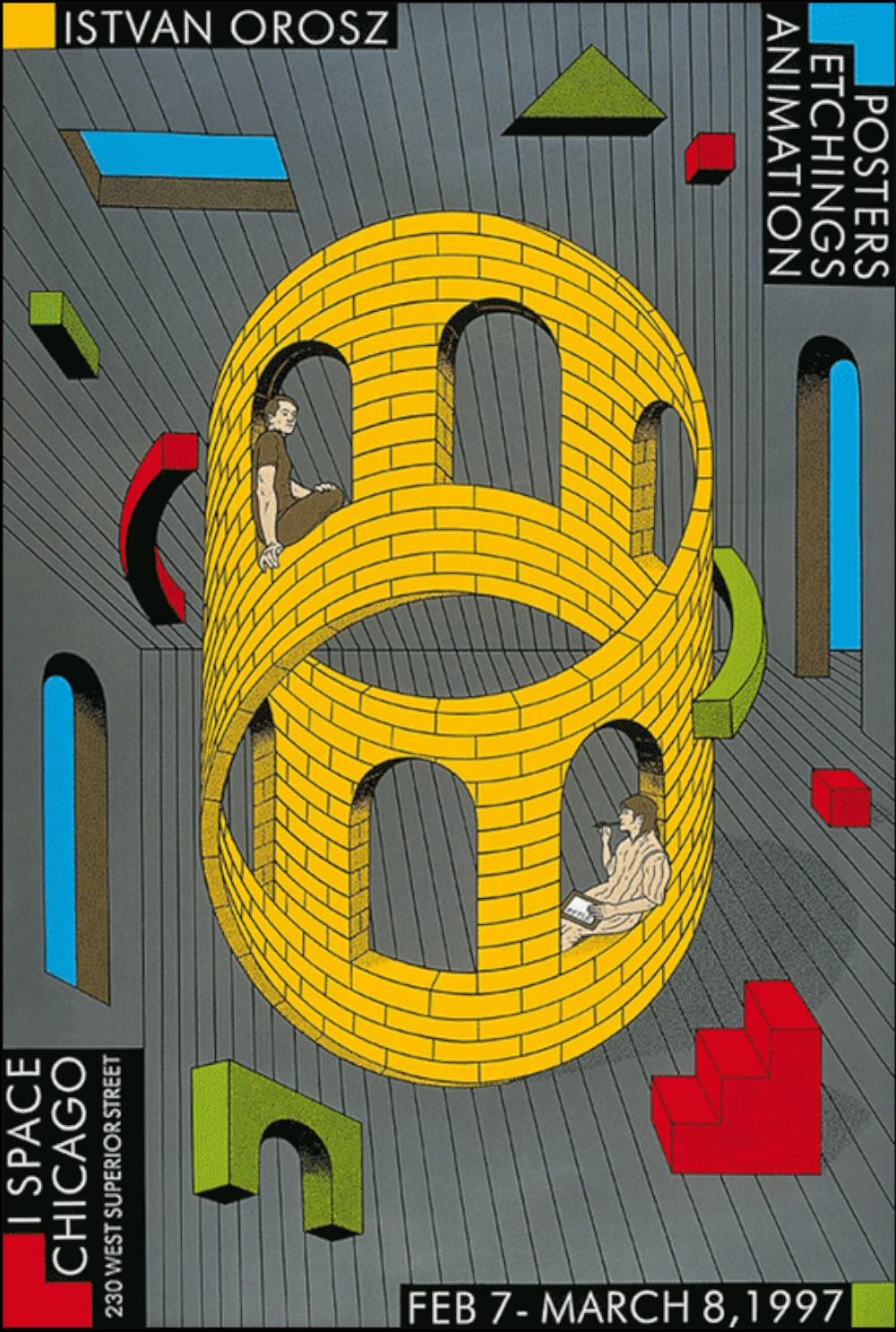
His oeuvre has been compared to the works of M.C. Escher (1898-1972). The Dutch graphic artist’s output „features mathematical objects and operations including impossible objects, explorations of infinity, reflection, symmetry, perspective, truncated and stallated polyhedra, hyperbolic geometry, and tessellations“ (Wikipedia). „One of the most versatile Hungarian graphic designers“ (hungarianreview.com), whose „ambiguous images“ (neshanmagazine.com) are published as part of editorial pieces by U.S. newspapers like The Washington Post and exhibited internationally, set out for a challenging task as Wikipedia notes: trying „to renew the technique of anamorphosis and to develop it as well when he gives a meaning to the distorted image, too. It is not an amorph picture any more, but a meaningful depiction that is independent from the result that appears in the mirror or viewed from a special point of view“. According to kutztown.edu „he mastered two-dimensional design and strove to bring his work in to the next dimension through film and catoptric anamorphosis drawings.“
István Orosz
graphic designer / painter / printmaker / animated film director
Hungary
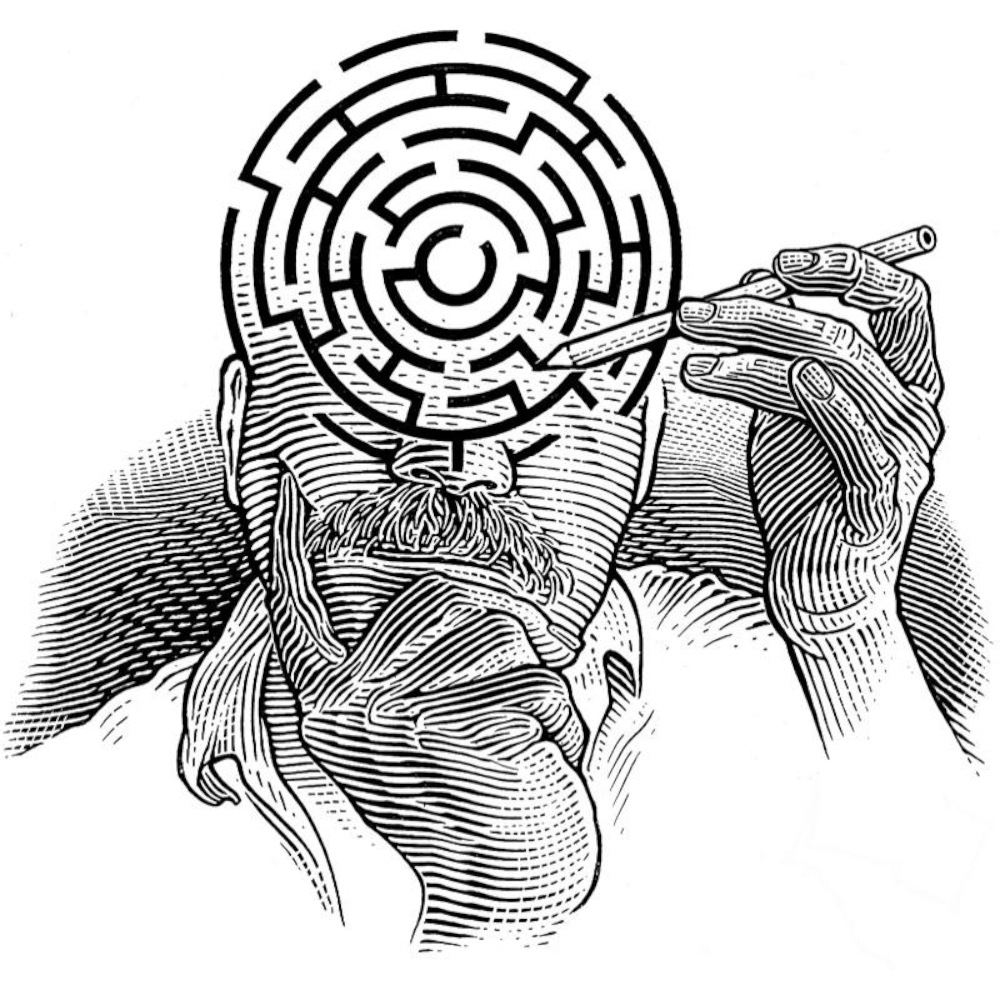
„My mother wanted me to be an architect“, István Orosz told retrofuturists.com. „So to get into university, she made me take extra maths lessons with a teacher who was a chess competitor and his wife was a painter. Most of the lessons were spent playing chess and looking at pictures, and I think that these two activities had a great influence on me, even if I didn’t feel it at the time.“ Another factor that proved decisive for him was that, as a teenager, the son of a professor of literature studied books featuring 16th- and 17th-century emblems, with the interpretation of the symbols and images left to the viewer – this individual judgement would later also apply to his own artistic work.
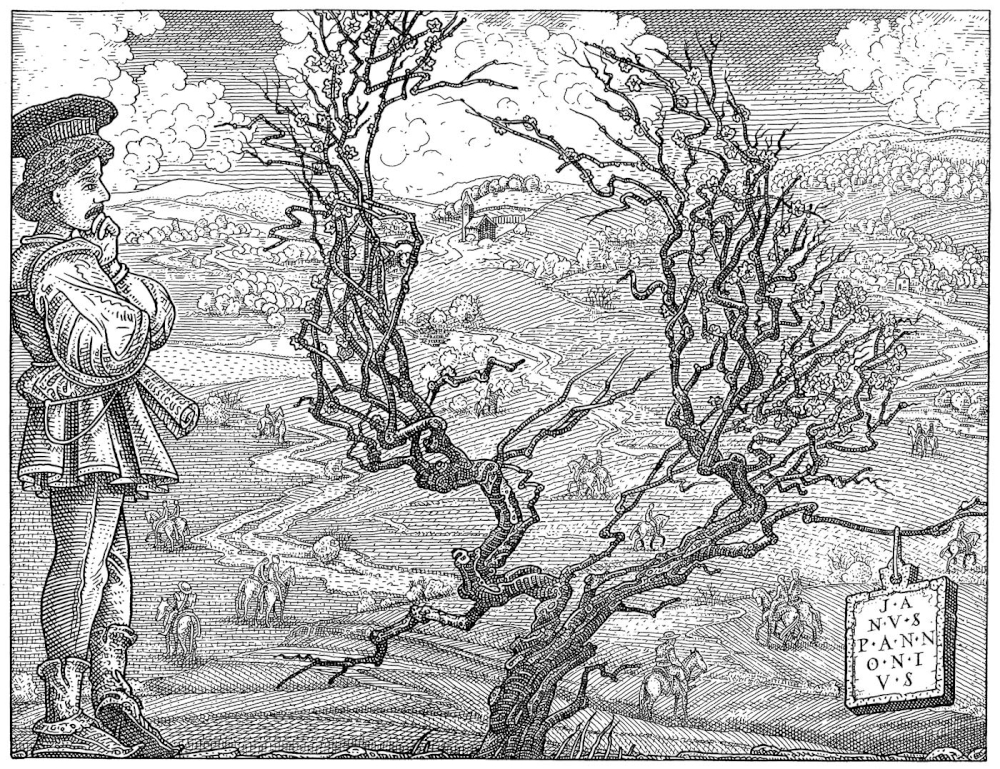
István Orosz (* October 24, 1951 in Kecskemét) loved mathematics, expecially geometry, enrolled at The Hungarian University of Arts and Design in Budapest. One of his teachers was Ernő Rubik, who was working on the famous cube at the time. Artistically his scholar was greatly influenced by the technical mastery of painters of the Renaissance – especially the mathematical drawings of Leonardo DaVinci and Jan van Eyck as well as the ones by Giuseppe Arcimboldo whose portraits and fantastic landscapes were composed of fruit and vegetables. In addition to study the painters of that era in particular, the young student took an elective animation course staffed by the state-run Pannónia Film Studio. Side income was earned by working for a monthly museum journal as an illustrator, becoming familiar with traditional printing methods such as wood cutting, engraving and etching.
After graduating in 1975 the mid-twen began to freelance for theatres as a stage designer and as an animator/director of animated films for the Pannónia Film Studio. Already in 1977 the young man received his first award (one of many to come) for the best movie. That honor was the start for him to direct animation films on a regular basis for Hungaria’s largest animation studio.
In the late 1970s the artisan drew his first anamorphoses. „My interest was not only in resurrecting anamorphosis but to improve and develop this old-fashioned genre“, the graphic designer told utwente.nl. „Instead of having a confused image, I intend to bring sense to the basic anamorphic picture, giving it meaning in itself as well, while its second reading is only revealed when viewing it from a different viewpoint such as looking at it through a special mirror (cylindrical mirror). The ambiguous layers coming up by this approach make use of the connection or contrast of the two images within the same picture that are independent of each other. This approach also gives a philosophical touch to these anamorphoses.“
When asked which colleagues he admires, these are the persons of his choice:
· Victor Vasarely (Hungarian-French artist widely accepted as a "grandfather" and leader of the Optical Art movement),
· Oscar Reutersvärd (Swedish pioneer of 3D-art),
· Shigeo Fukuda (well-known poster designer on social issues),
· https://divine-spark.net/creatives/patrick-hughes,
· William Kentridge (South African artist of hand-drawn animated films),
· Felice Varini (Swiss artist known for his geometric perspective-localized paintings in rooms and other spaces)
· and the aforementioned M.C. Escher.
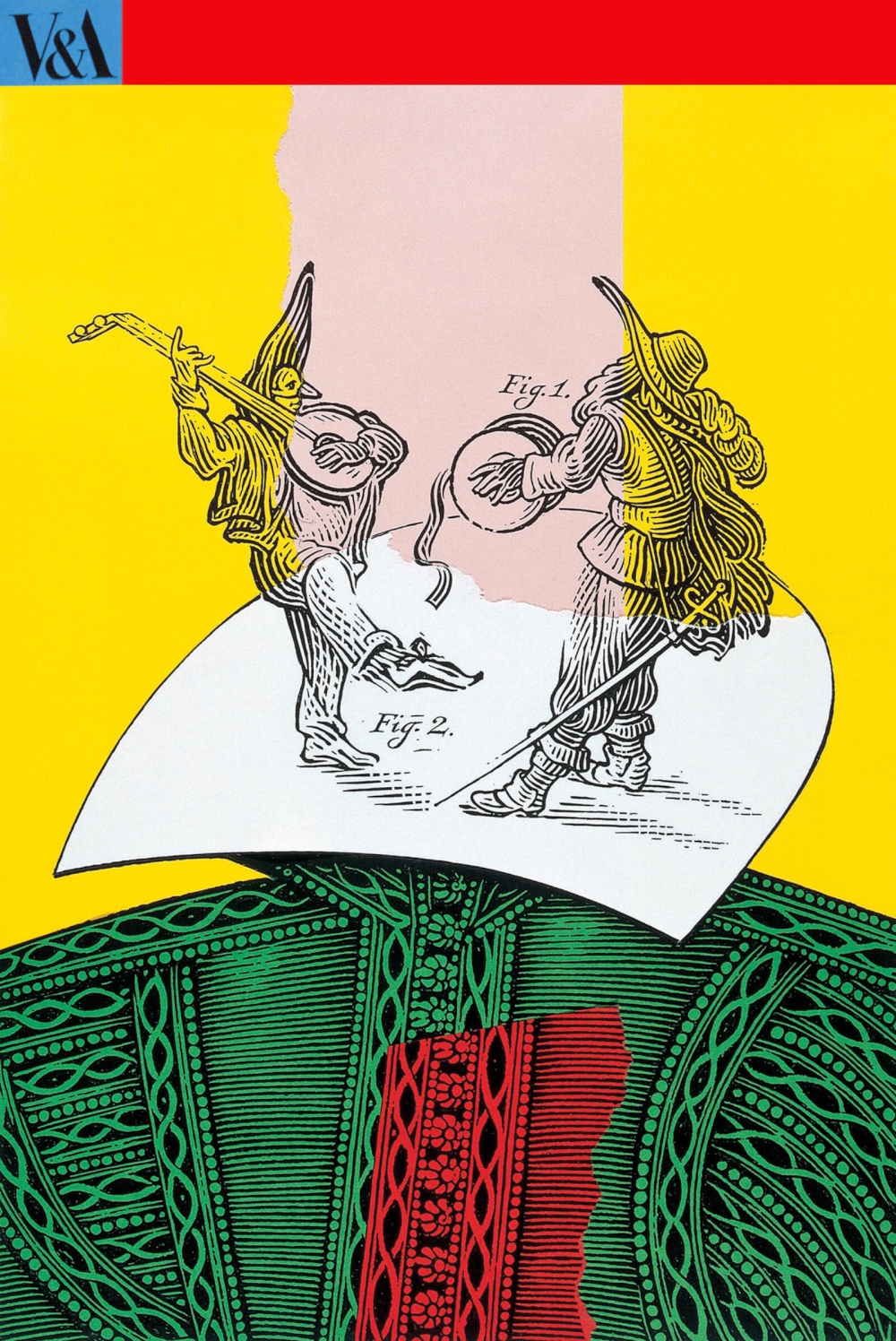
Later when posters came to the center of his interest István Orosz mainly made commissions for theatres, movies, books and exhibitions. The following statement illustrates just how clearly defined the guidelines are „the simple draftsman“ (self-description) sets himself for the creative process: “If you want to create a poster try to explain your idea in a sentence. Then try to reduce it, leave out phrases, attributes until you just have the bare essentials. When you do not need any letter at all you are ready with the poster!“
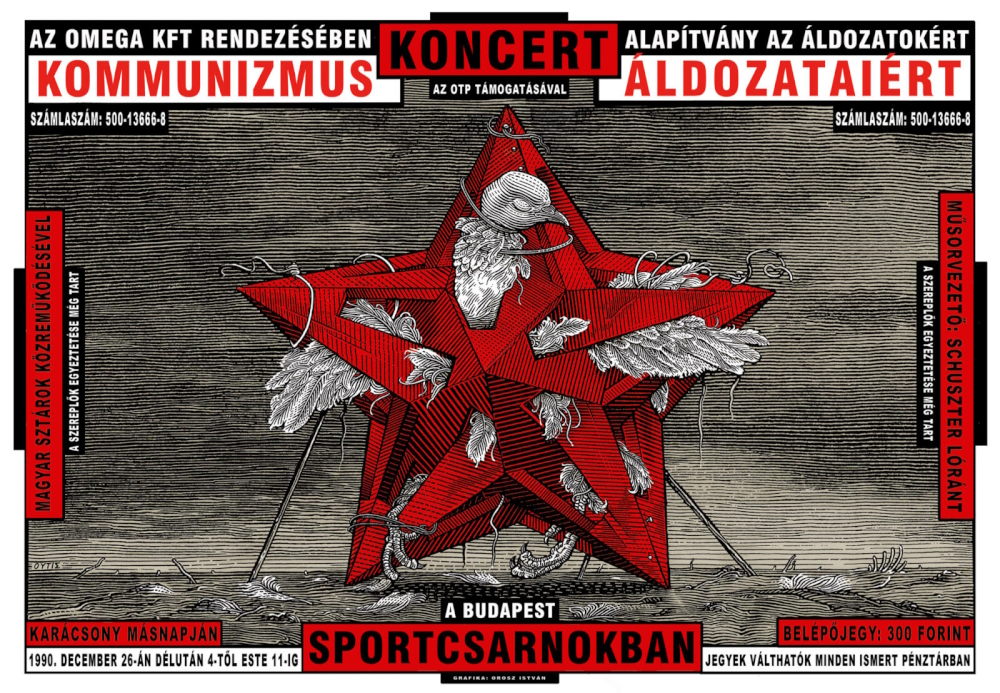
In the early 1980s Orosz co-founded the Hungarian Poster Association. The group collaborated in making posters to promote freedom of personal expression and freedom of political expression. Under the influence of Eastern-European pro-democratic movement István Orosz drew some political posters too. Because several colleagues in Hungarian cultural life had the same surname, from 1984 onwards István Orosz began using the alias ‘Utisz’ - that‘s Hungarian for the Greek word ‘Outis’ which means ‘no one.’
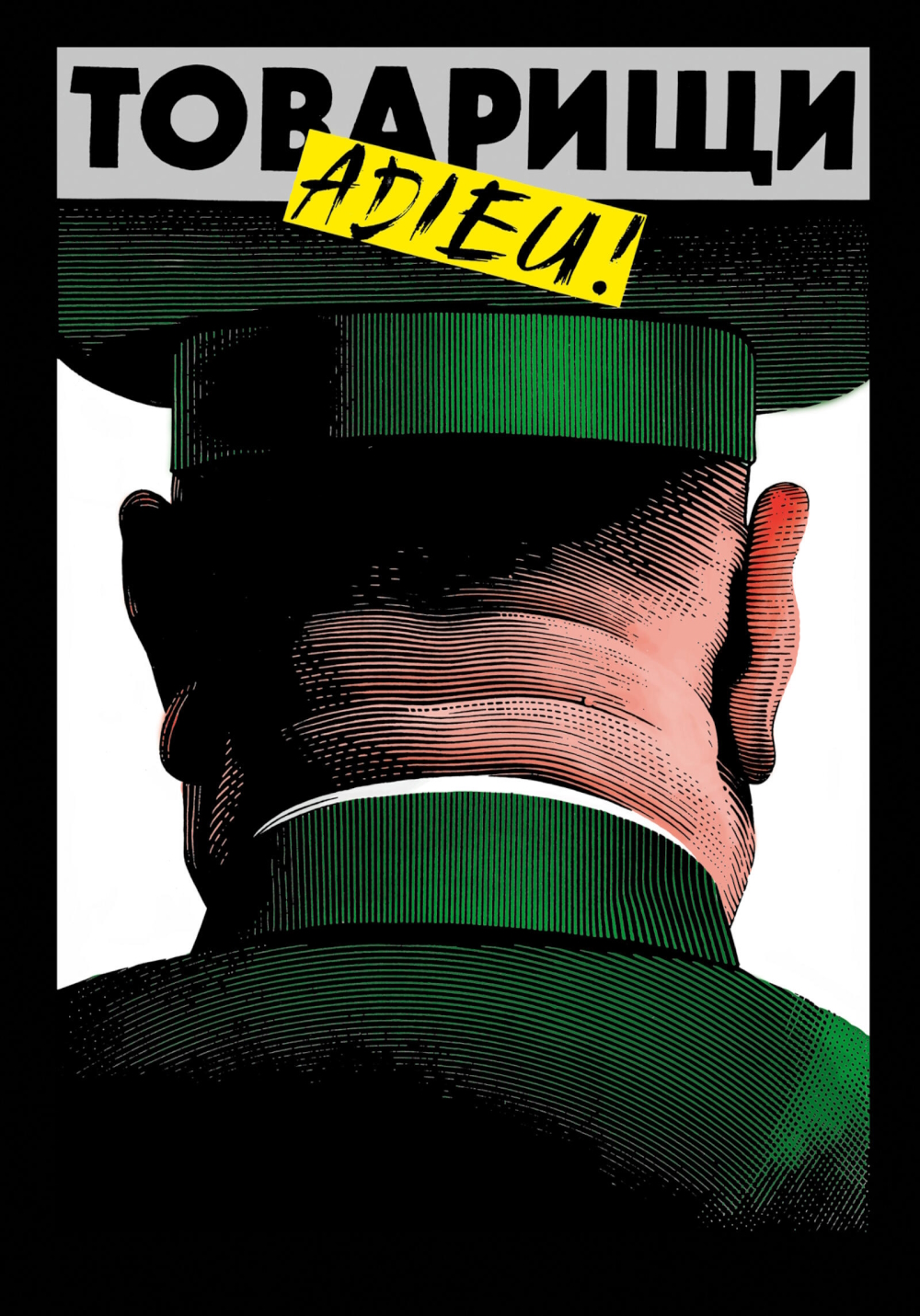
„He became famous from one day to another with his emblematic poster, the Tovarishi koneic („Comrades, adieu!) in 1989, that symbolized the political transformation of Hungary“, knows budapestposter.com. „The poster is a powerful representation of everything that Hungary wanted to get rid of at the time: it displays the nape of of a fat Soviet officer. The poster was reused and cited many times. It is one of the most emblematic political poster designs in Hungary.“
„Despite his success with political posters and films, the multiple award winner was not particularly interested in politics“, states kutztown.edu. „According to his blog post ‘Raven-Morph,’ he started to notice, “the strange duality of posters, that is, they mean different things if seen from a distance and from close and the miracle of the moving image led me to experiment with illusion in fine arts.” Working under Communist rule had instilled within him an excitement for dual meanings.“
Geoff Gehman of the daily newspaper The Morning Call in Bethlehem (Pennsylvania) classified Orosz‘ graphics (often line drawings) that bridge art and science as follows: „It is a wonderful union of Escher's illusion and Dalí's delusion.” This evaluation was carried out by Erin Williams of Kutztown University of Pennsylvania in her research commons of „Communication Design: Design Pioneers“: „Orosz, like Escher, is capable of creating the perfect illusion. A feat of mathematical expression and strict rules of perspective, so good that it practically lifts off the page. Like Dalí, he is adept at making us question the illustrations before our eyes. Orosz and Dali use symbols to communicate visually in a way that they cannot with words.“ That observation links almost directly to one by István Orosz himself. He said: "There are things I can imagine and I can draw. There are things I can imagine but I cannot draw. But, could I draw something that I cannot imagine? That interests me greatly."
The longtime professor habil. at the University of West Hungary in Sopron has been a guest teacher at the University of the Art and Craft in Budapest and continues to be a guest lecturer at many universities across Europe. The member of both Hungarian art academies and Alliance Graphique International has written over two dozen books (often focusing on artwork), essays (in English, to be read on his website) and poems (in Hungarian only).
István Orosz, who’s married, lives and works in a small town near Budapest called Budakeszi.
Interview May 2026
Experiments with illusion in fine arts: when fantasy becomes reality
INTUITION/IMAGINATION
?: How does intuition present itself to you – in form of a suspicious impression, a spontaneous visualisation or whatever - maybe in dreams?
There are no rules, all three forms have occurred.
?: Will any ideas be written down immediately and archived?
Unfortunately, no, although it would be important. I think that really good ideas cannot be forgotten, but they probably can. (Sometimes I console myself with the fact that there were no good ideas that slipped my mind.)
?: How do you come up with good or extraordinary ideas?
Almost always in the morning after waking up (which is why I think the dream has something to do with it).
?: Do you feel that new creative ideas come as a whole or do you get like a little seed of inspiration that evolves into something else and has to be realized by endless trials and errors in form of constant developments until the final result?
It is rare when you have a “divine inspiration” or a “muse kiss” and a good idea pops up right away, but there have been examples of this. Long-term development, lots of sketching, is more common. Mistakes are also sometimes beneficial. And misunderstandings can open up new, unknown areas.
?: What if there is a deadline, but no intuition? Does the first fuel the latter maybe?
When there is a deadline, I put other work aside, because it is rare that I am only working on one thing. Concentrating on many things, which colleagues do not usually recommend, usually has a beneficial effect on me.
INSPIRATION
?: What inspires you and how do you stimulate this special form of imaginativeness?
My interests and activities are quite broad. I deal with literature a lot, I write and publish not only essays related to fine arts, but also "real" fiction (novels, short stories, poems) and these have an impact on my drawing activities. Of course, the inspiration process also works in the opposite direction as well.
?: How do you filter between ideas that are worthwhile pursuing and bad ones that you just let go of?
It often happens to me that a good idea comes to mind for a specific task, but it is not related to the current task, so I can’t use it. I usually make a quick sketch so that this idea doesn’t go to waste. I collect such unused ideas in a box, and there have been cases where I was able to use them a few months or a few years later. To answer the question briefly: what I think is a bad idea may turn out to be a good idea, it just came to me at the wrong time. :-)
?: Does an idea need to appeal to you primarily or is its commercial potential an essential factor?
I like it when it appeals to me.
?: Do you revisit old ideas or check what colleagues or competitors are up to at times?
I have already written about using old ideas. Of course, I follow the work of my colleagues, but not as intensively as I did 20-30 years ago. I’m happy when I see someone who is different from the norm. They do something different.
CREATIVITY
?: What time or environment best suits your creative work process — for example, a time and place of tranquility or of pressure?
Of course, I prefer calm, but I’ve found that I’m much more effective under pressure. Stress is often a useful thing.
?: What’s better in the realization process — for example, speed and forcing creativity by grasping the magic of the moment or a slow, ripening process for implementation and elaboration?
The creative process needs to be divided into two parts. Coming up with the idea—the message hidden in the image—often happens quickly, but the execution, the final design—especially in my case with autonomous graphics—is usually a slow process during which the plan, even one initially deemed good, is sometimes modified or even completely transformed.
?: How important are self-doubt and criticism by others during such a process? And is it better to be creative on your own, to trust only your own instincts, or to work in a team?"
My answer to the first part of the question also applies to the second half, that I prefer to work alone and criticism doesn’t particularly affect me.
?: In case of a creative block or, worse, a real failure, how do you get out of such a hole?
There is no formula that works every time. It’s not worth trying to fix a bad idea. It’s best to go back to square one and rebuild the entire work from the ground up. Or accept failure. Art isn’t like sports or politics, where you always have to win.
?: Should a creative person always stay true to him- or herself, including taking risks and going against the flow, or must the person, for reasons of commercial survival, make concessions to the demands of the market, the wishes of clients and the audience’s expectations?
When I was young and inexperienced, I made more compromises and tried to listen to criticism and meet expectations. Today, I can afford to back out of a job if I had to compromise too much.
?: How are innovation and improvement possible if you’ve established a distinctive style? Is it good to be ahead of your time, even if you hazard not being understood?
It is not easy. Unfortunately, it has happened to me many times that when I try to innovate, that is, solve a task in a different style, the client starts to protest. He says he expects me to stick to my old, familiar style. I get annoyed, I argue, I try to convince him. Sometimes I succeed, sometimes he convinces me, but I usually don't feel good about this confrontation.
?: When does the time come to end the creative process, to be content and set the final result free? Or is it always a work-in-progress, with an endless possibility of improvement?
I am more interested in the process than the final result. Sometimes, when I am theoretically ready and could even submit the result, the finished picture, I still come back to it, change it, try to improve it, or reinterpret it. I experiment with the possibilities that remain in it.
?: How does artificial intelligence change human creativity? Do you use AI, or would you use it at all?
At first I was averse to it, I was afraid of creativity, but I had to realize that it can be helpful in many situations, it frees me from a lot of mechanical things and liberates creativity. Of course, there is also a side to it that discourages me. I had creative solutions that I was proud of, I thought they could not be imitated by a computer, then Artificial Intelligence came along, and I had to realize that it is almost as smart as I am. :-)
SUCCESS
“Success is the ability to go from one failure to another with no loss of enthusiasm.” Do you agree with Winston Churchill‘s quote?
A very witty paradox. It may not be true, but it sounds good. Paradoxes are apt to help us understand more about the world than we can understand through conventional logic. If you allow me, I might as well quote Churchill’s saying.
?: Should or can you resist the temptation to recycle a ‘formula’ you're successful with?
I try, but unfortunately, it has happened to me several times that I have returned to a successful solution. Most of the time, of course, it was not of my own free will, but the client’s wish tree.
?: Is it desirable to create an ultimate or timeless work? Doesn’t “top of the ladder” bring up the question, “What’s next?” — that is, isn’t such a personal peak “the end”?
There are things I can imagine and draw. There are things I can imagine but can't draw. Can I draw something I can't imagine? That's what I'm really interested.
MY FAVOURITE WORK:
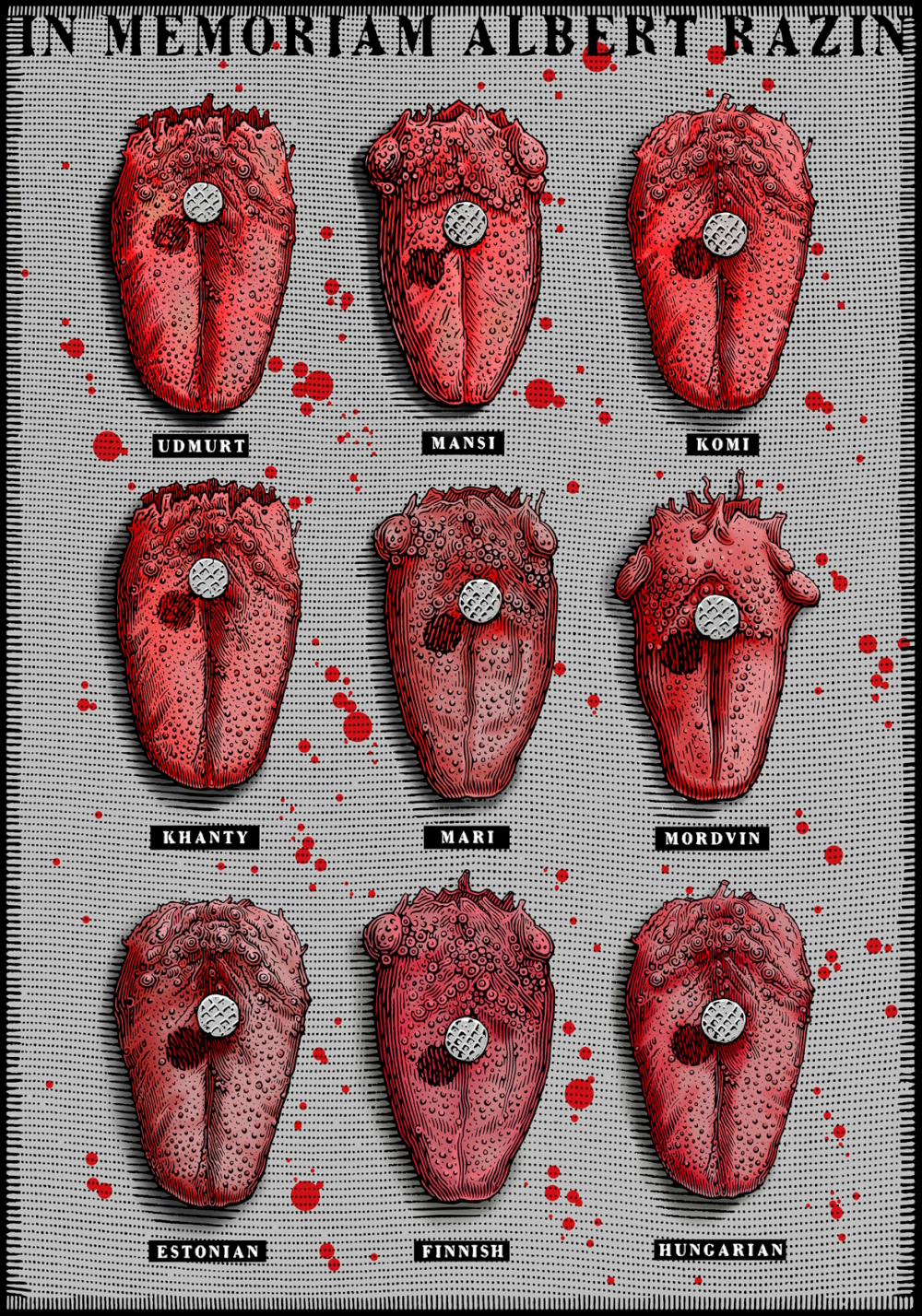
It may not be my best work, or the one that best represents me, but I’ll highlight this one anyway: my poster titled In Memoriam Albert Razin. I want to commemorate Razin, the Udmurt philosopher who, in protest against the Russian language law that banned the mandatory teaching of local minority languages—including Udmurt—doused himself with gasoline and set himself on fire in front of the Izhevsk parliament in 2019. I would admire his heroic act even if I had no connection to it, but I do, since the Udmurts belong to the Finno-Ugric language family, of which Hungarian is also a member. Nine torn-out tongues are pinned to my poster—the nine languages belonging to the language family. I didn’t enter my poster in the Red Dot Award competition to become famous, but so that more people would know Razin’s name and to draw attention to the small languages facing extinction and the small literatures associated with them.