Martin Firrell
public artist / activist
UK
“Martin Firrell is a contemporary artist known for public artworks on billboards around the world. He uses the poster form to campaign for greater social equality” (Dr Robert Shelton, Kessler). The works of this “internationally renowned cultural activist, campaigner and benign propagandist” (artichoke.uk.com) “challenge unjust power systems of all kinds, including patriarchal power, the oppression of women and non-heterosexuals, and the heteronormative status quo“, writes thegallery.org. The artist’s reported aim is “to make the world more humane”.
Martin Firrell
public artist / activist
UK
“If you can raise debate, eventually change will follow,” Martin Firrell explained to cultural commentators Thomas Lang and Barbara Ulbrist. “What is hidden or unspoken will never be understood or embraced. Visibility and debate are the engines of social progress.”
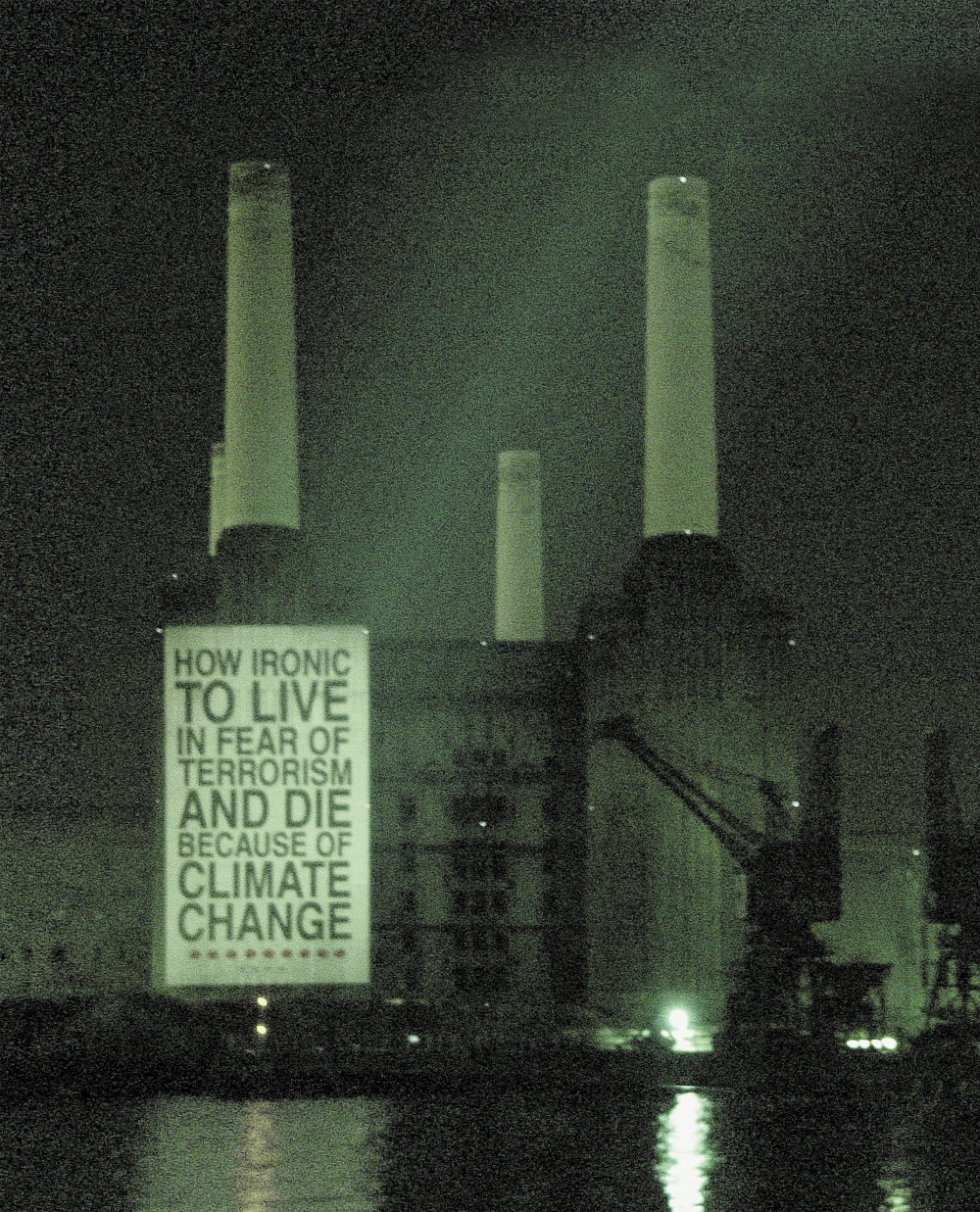
According to Dr Robert Shelton, longtime professor for Film & Art History at Birmingham-Southern College, in the catalogue raisonné of the artist’s work, “Firrell has made more artworks expressly for the billboard medium than any other living artist. This wholesale colonisation of advertising’s largest and boldest format - the billboard - makes him one of the most apposite and significant artists of the 21st Century.”
Martin Firrell (born 1963) "left school unofficially at the age of 14" (Creative Review: One To Watch) for the often quoted reason “I had no more use for it". Instead, the youngster educated himself, spending time reading early 20th-century literature. He was particularly influenced by Virginia Woolf (The Waves), Gertrude Stein (The Making of Americans) and Marguerite Duras (The Lover).
“A passage in Anaïs Nin‘s novel The Four Chambered Heart set Firrell on the path of socially engaged public works”, according to Wikipedia. “The novel's protagonist concedes that literature fails to prepare us for, or guide us through, the calamities or challenges of life, and is therefore worthless.” Firrell, himself, had considerably higher expectations of what language might achieve. Talking to The Independent on Sunday he said: "My purpose is to campaign in some way for change, using my works as a medium for catalysing debate.”
Firrell deploys one of the oldest of all advertising mediums: the billboard. Having trained as an advertising copywriter in the early 1980s, the artist saw the billboard as an obvious choice of canvas. He draws on his advertising experience and expertise to shape and place slogans effectively in public space. Early examples of his advertising work for Nike demonstrate the artist’s concerted efforts to reduce and simplify his creative approach.
Inspired by the spectacle of 1970s Cinemascope at his local cinema, Firrell has long been interested in making art at scale but his first works for public display were, in fact, modest in means and small in size: a series of 14 collectible postcards, 13 of which displayed text where a picture would more usually appear on a conventional postcard. “I wanted to ask if it were possible to operate at a level deeper than friendship alone, to find interactions that challenged the conventions of mere sociability and offered new depths of value and meaning” (Martin Firrell Catalogue Raisonné, Kessler). At the beginning of the 21st Century, Firrell experimented with fly-posting in London's Soho district. These early fly-posters were essentially descriptions of love and its subsequent loss.
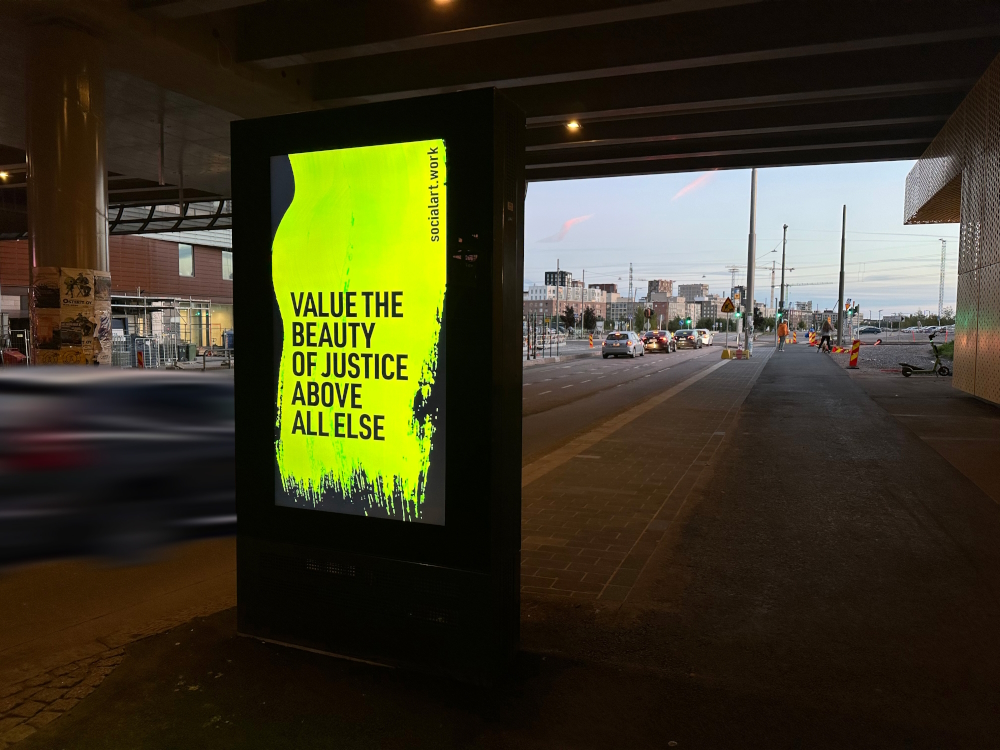
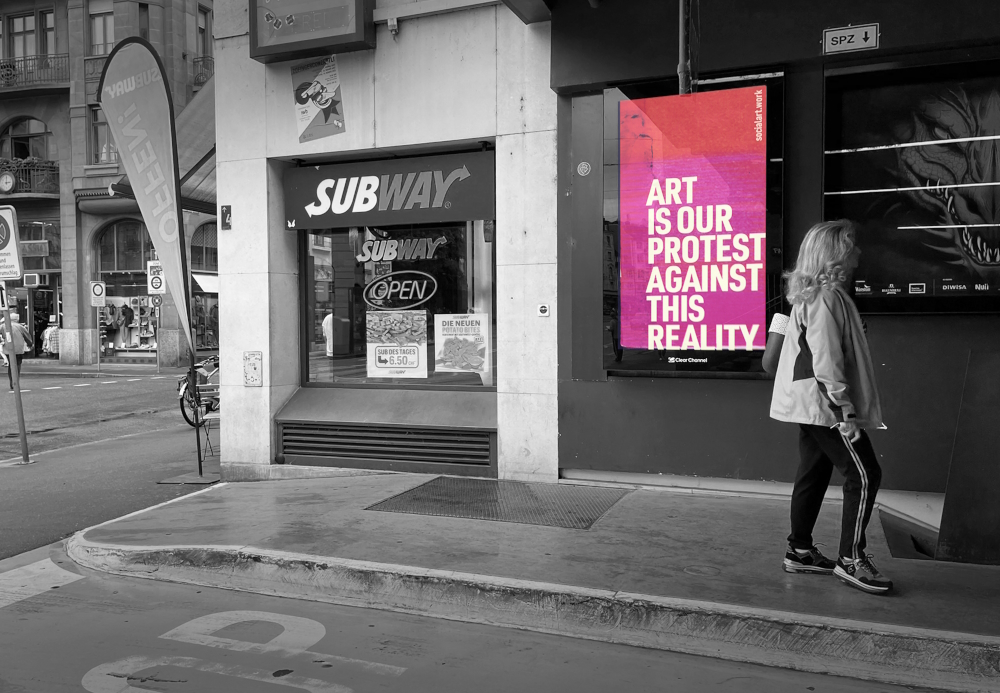
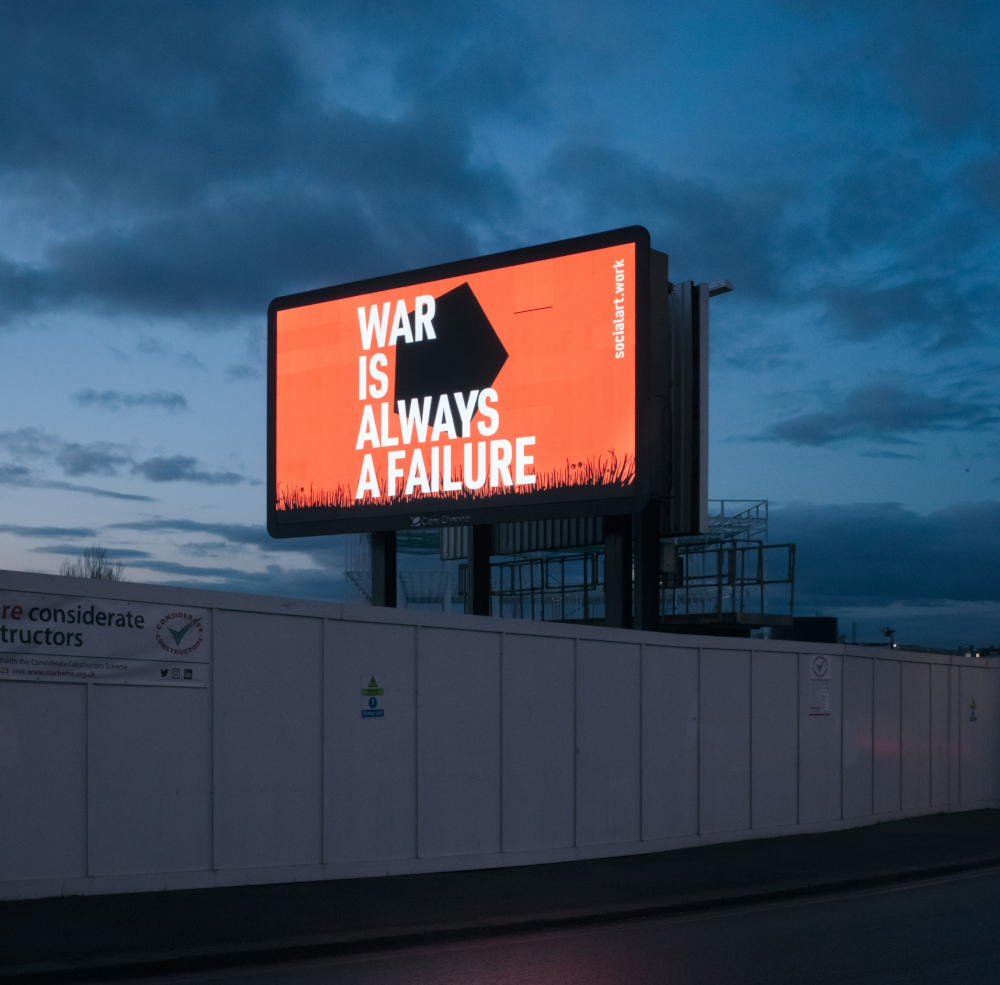
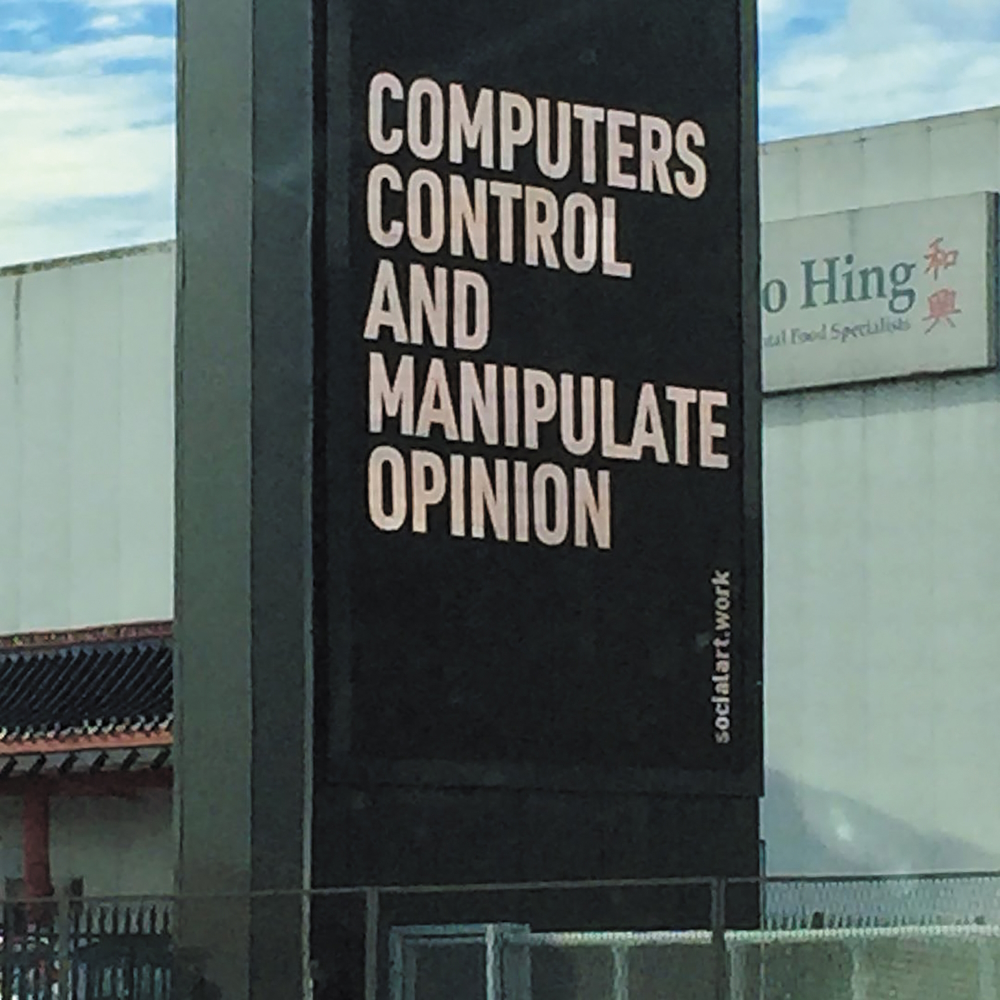
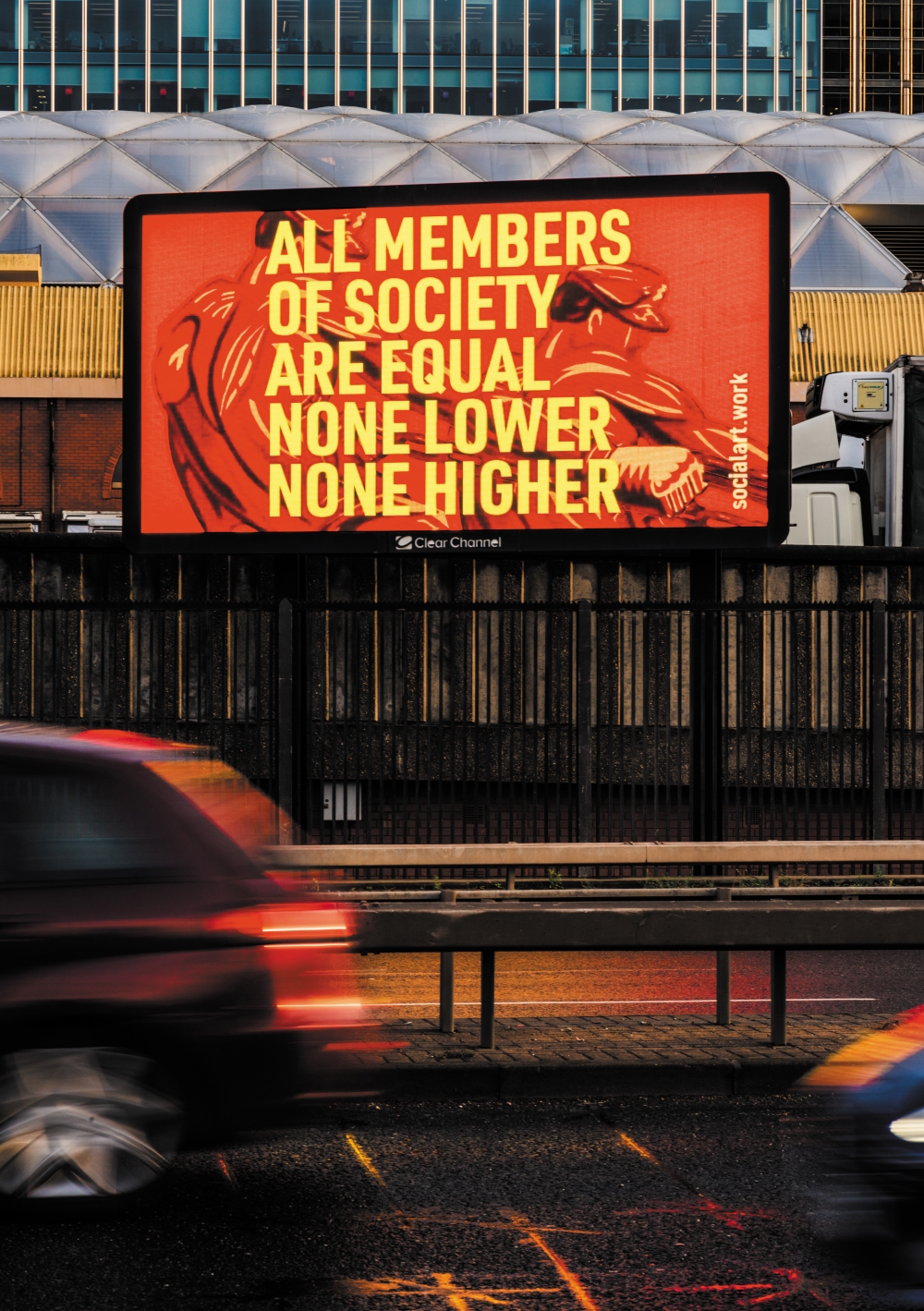
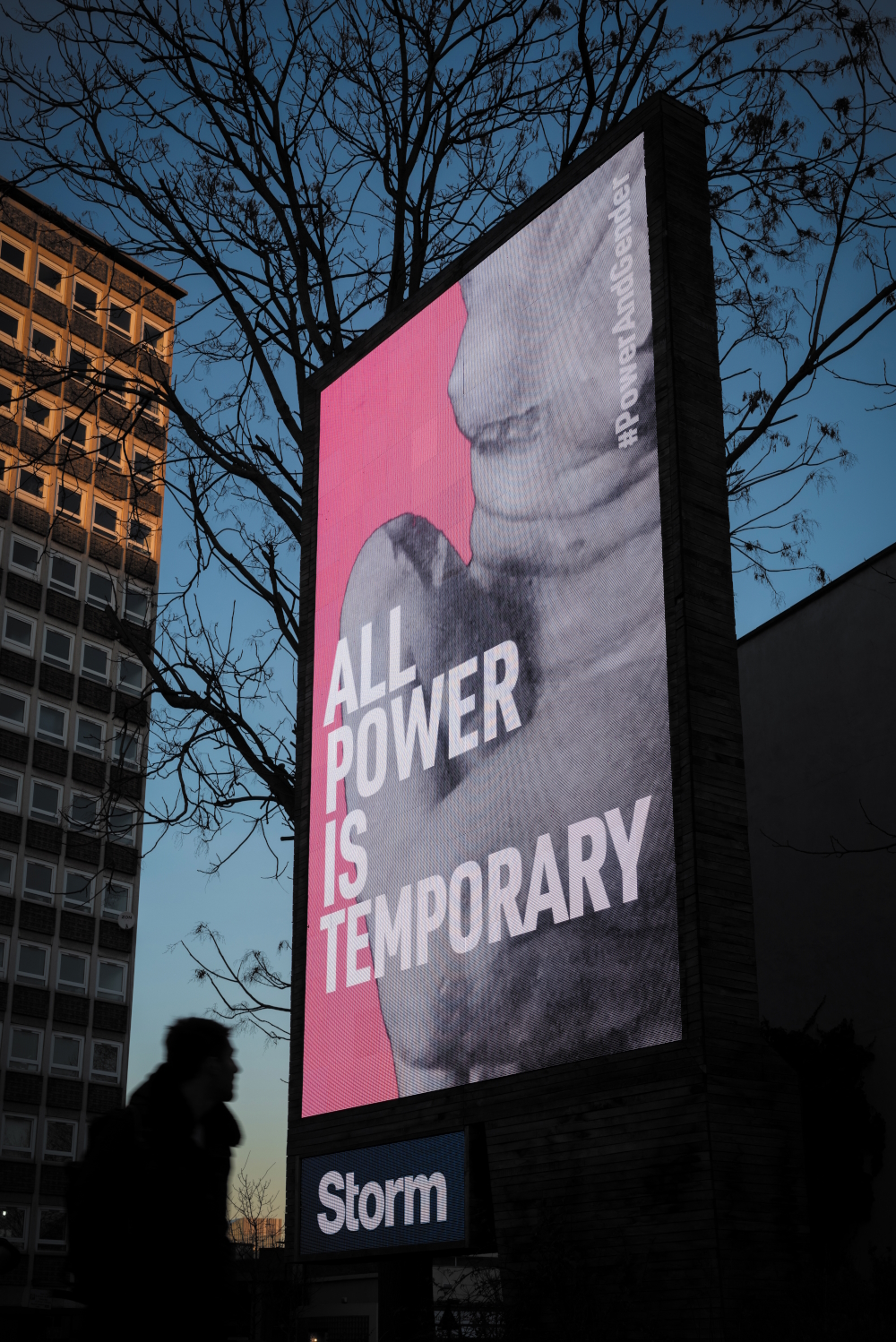
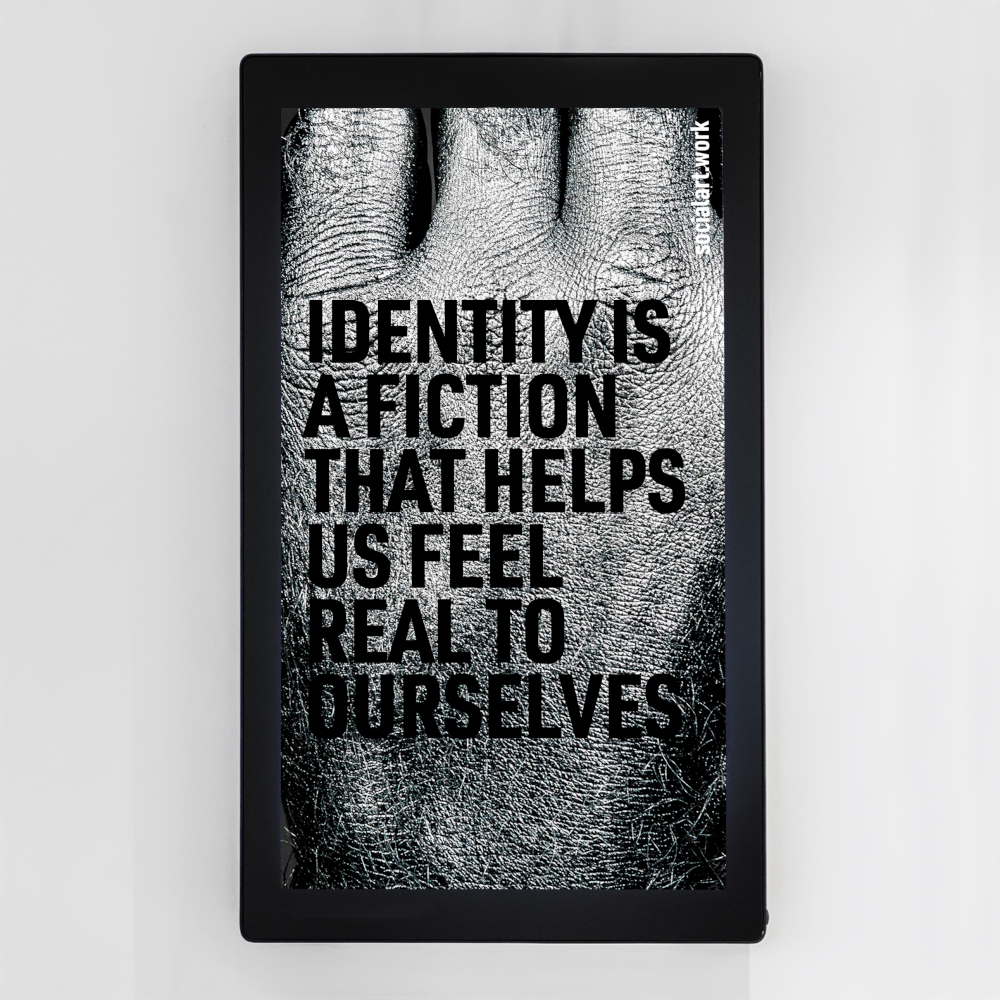
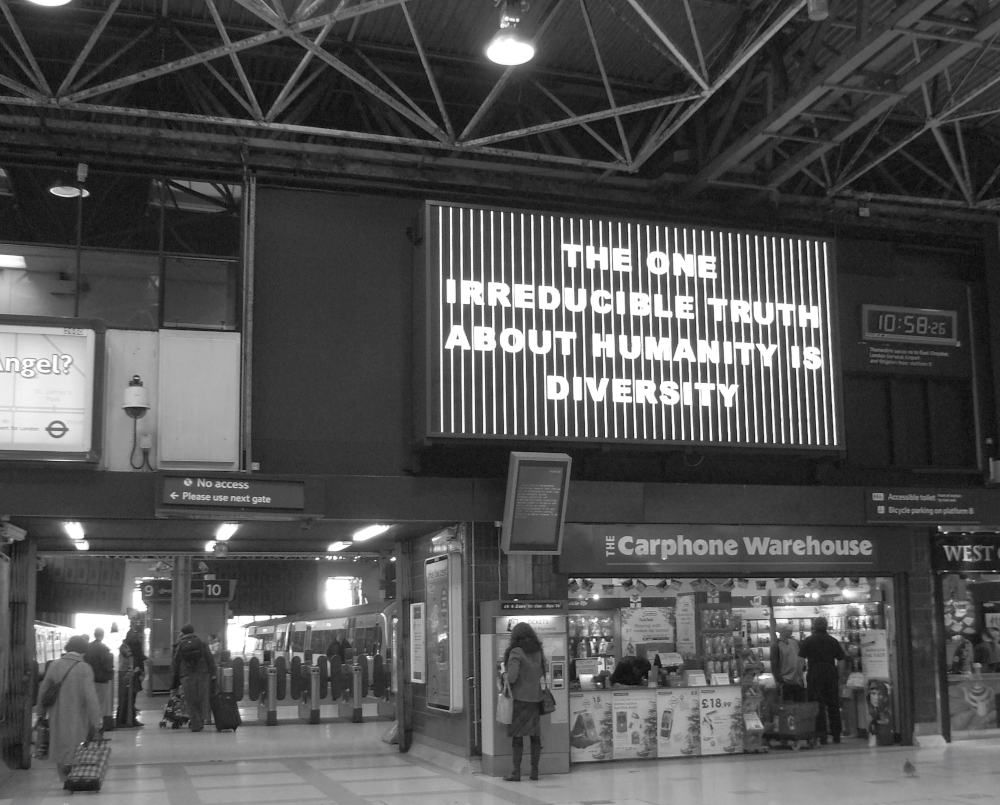
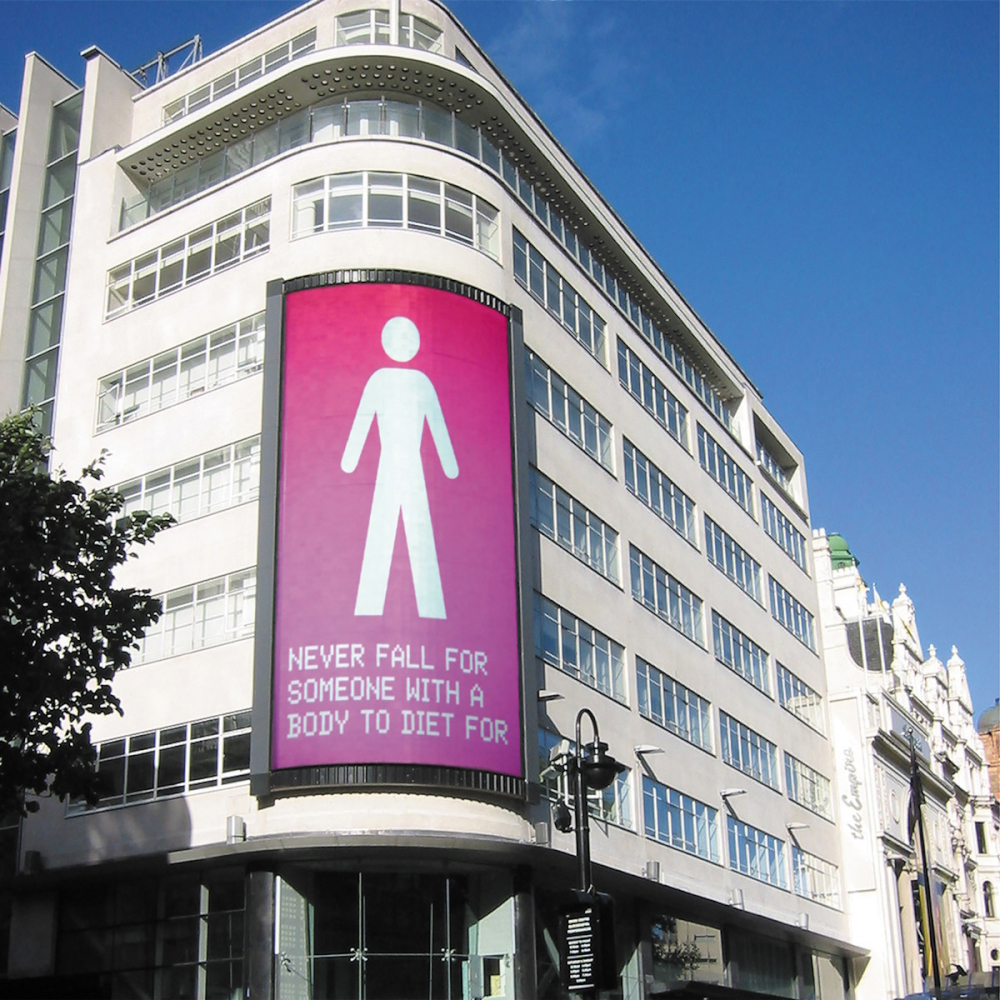
By 2001, the artist’s work had appeared on one of the UK’s first commercial digital billboards. A daily audience of 250,000 people in London’s Leicester Square saw the digital animation Celebrate Difference. Text panels called for acceptance of, and engagement with, what might be described as ‘other’. Images, in black & white, included portraiture of the artist, two drag queens embracing, and a huge disco glitter ball. Celebrate Difference also marked the beginning of the artist’s longstanding relationship with commercial billboard company Clear Channel (now Bauer Media Outdoor), one of the world’s largest. The support of Clear Channel /Bauer Media Outdoor has enabled Firrell to hijack advertising’s means for more than 25 years, displaying a plethora of aphorisms in public space: Never Fall For Someone with a Body To Diet For, The One Irreducible Truth About Humanity Is Diversity, All Identity Is Constructed, Living Peacefully Is a Radical Political Position, Security is not Liberty, Wealth is not Freedom, Control is not Strength.“
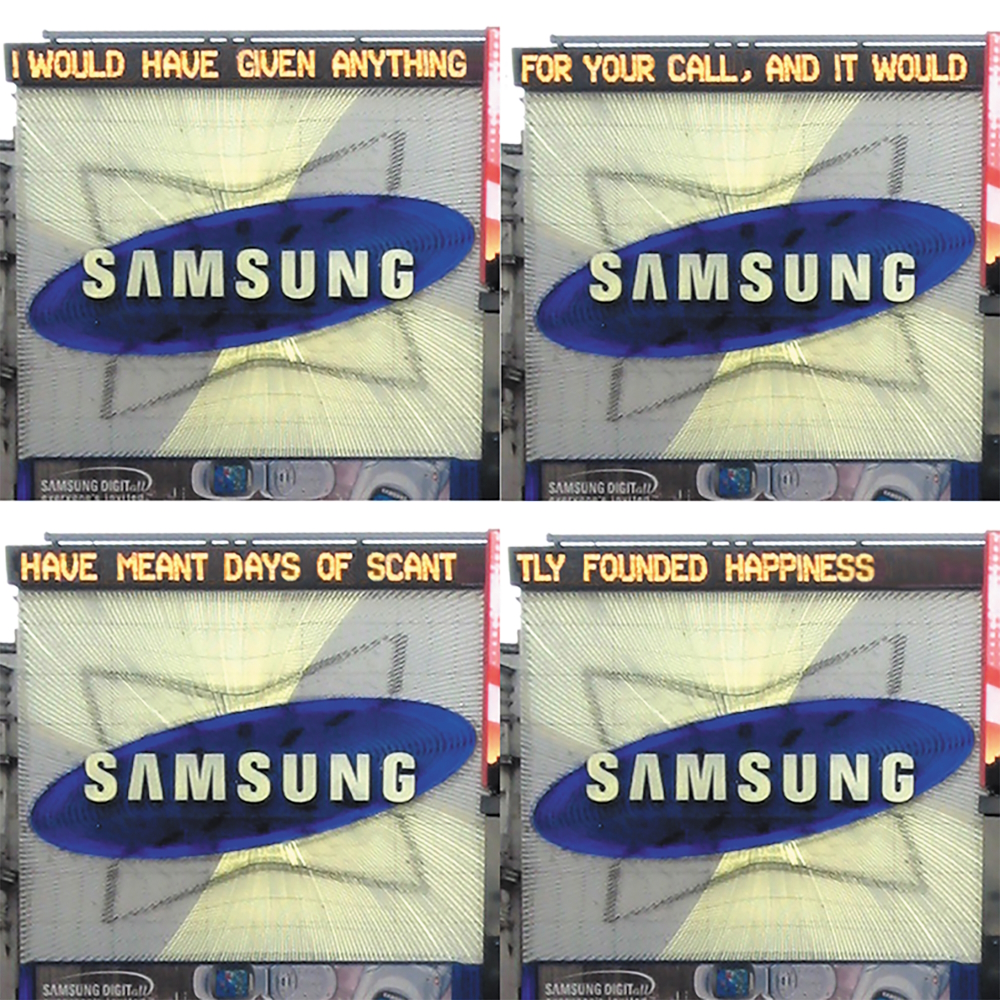
Concurrently, Firrell explored repurposing other mediums for public art discourse. Recently installed plasma screens in the London department store, Selfridge’s, displayed eleven short video sequences for six weeks under the umbrella title, A Stronger Self. Texts explored the principles of self-possession, self-knowledge, and the relationship between the self and other. I Would Have Given Anything for Your Call was devised for the large Samsung neon at London’s Piccadilly Circus. The standard security message at Liverpool Street Station in London was accompanied by an additional Sartre-esque existential security message about the burden of loneliness. Receipts at Border’s Books were repurposed to carry public art messages about the societal importance of contemporary writing: Writing Questions our Suppositions about the Concreteness of Reality, Writing Adds Up to the Conscience of our Times.
The Question Mark Inside (2008) was a large-scale projection of text and colour to the Dome, West Front and Whispering Gallery of St Paul’s Cathedral in London. The work was commissioned by Dean and Chapter of St Paul’s to mark the 300th anniversary of the topping out of the cathedral. The Question Mark Inside asked Londoners, “What makes your life meaningful and purposeful?” Their answers, from the mundane to the sexual to the sublime, formed the basis of the projected text. For Curzon Cinemas, Firrell created a public art ‘trailer’ commenting on the nature of power, identity and consumerism: A Loud Voice Is Not Charisma, Shopping Is Not Happiness and Different Is Not Wrong.
Firrell’s mature works appear almost exclusively on commercial billboards. Recent works have supported the LGBTQIA+ community around the world as rights are restricted or rolled back: Trans Inclusive Feminism Loves You, We Can Be Every Thing, Dyke Power Is Real, and the satiric comment on book bans, Reading Books Is Dangerous. Don’t Do It.
“Firrell offers up uncanny, socially engaged texts that mimic traditional advertising language and imagery,” Penny Rafferty writes in The Art of Protest (Gestalten, 2021). “His work provides public-space poetics that stay with the viewer as they walk down the street or get off the bus. These moments of interruption are both surreal and multilayered. Firrell does not offer a solution to these political problems but, instead, he opens up an inner dialogue with the viewer for them to muse over their own understanding and their own solution.”
Martin Firrell lives and works in London.
Interview May 2026
Using language to raise questions about society: Art as debate
INTUITION/IMAGINATION
?: How does intuition present itself to you – in form of a suspicious impression, a spontaneous visualisation or whatever - maybe in dreams?
Working steadily at something, for an extended period of time, produces inspiration.
?: Will any ideas be written down immediately and archived?
I prototype everything. And I archive everything I prototype.
?: How do you come up with good or extraordinary ideas?
Extraordinary ideas find you. Not the other way round.
?: Do you feel that new creative ideas come as a whole or do you get like a little seed of inspiration that evolves into something else and has to be realized by endless trials and errors in form of constant developments until the final result?
Sometimes, ideas arrive with surprising immediacy and I am unsure how, when or why they occurred. Other times, it is like chipping away at something until the final form appears.
?: What if there is a deadline, but no intuition? Does the first fuel the latter maybe?
I like deadlines because they create focus. But I like them to be a very long way off.
INSPIRATION
?: What inspires you and how do you stimulate this special form of imaginativeness?
Inspiration comes from research. I like finding things out.
I like talking to people who know more than I do about a particular subject. Then I share their knowledge – the facts -– but I also share in how they feel about those facts. Fact and feeling together are far more powerful than either one on its own.
?: How do you filter between ideas that are worthwhile pursuing and bad ones that you just let go of?
I keep all ideas. I try not to judge them. Then I look back at them when enough time has passed. Time allows me to see them for what they really are.
?: Does an idea need to appeal to you primarily or is its commercial potential an essential factor?
Any old fool can make money.
?: Do you revisit old ideas or check what colleagues or competitors are up to at times?
I sometimes look at archived prototypes for inspiration but rarely re-use anything.
CREATIVITY
?: What time or environment best suits your creative work process — for example, a time and place of tranquility or of pressure?
I like to work with language in the mornings and images in the afternoons. I like to work peacefully with plenty of time and silence.
Because I prototype all the time, all ideas are put down as finished artworks right from the start.
?: What’s better in the realization process — for example, speed and forcing creativity by grasping the magic of the moment or a slow, ripening process for implementation and elaboration?
I usually say to a commissioner, “I would like at least one year to make something for you – two years would be twice as good.”
?: How important are self-doubt and criticism by others during such a process?
I do not care what anyone else thinks about my work – good or bad. If you care that people like what you do, you must also care when people don’t like what you do. Then you will become confused at best or start to chase other people’s approval at worst. I try to ignore all opinions but my own. I try to push self-doubt out of the way because it is not helpful. I don’t have time for distractions.
?: Is it better to be creative on your own, to trust only your own instincts, or to work in a team?
I make everything myself but my studio team create and protect the wider conditions that make my work possible.
?: In case of a creative block or, worse, a real failure, how do you get out of such a hole?
I always have another prototype to turn to if needed.
?: Should a creative person always stay true to him- or herself, including taking risks and going against the flow, or must the person, for reasons of commercial survival, make concessions to the demands of the market, the wishes of clients and the audience’s expectations?
Do you want to be a businessman or an artist? For me, the point of making work is to explore my own interests and potential. I think money is a foolish thing. It is also very dull, and an exceptionally poor indicator of value. It is always best to downgrade its importance. Never do anything for money. Any fool can end up with money. The really hard part is to make money in an interesting, creative and benevolent way.
?: How are innovation and improvement possible if you’ve established a distinctive style? Is it good to be ahead of your time, even if you hazard not being understood?
I make all of my work to be understood. I am not interested in enigmas.
?: When does the time come to end the creative process, to be content and set the final result free? Or is it always a work-in-progress, with an endless possibility of improvement?
There comes a point when I have to choose one prototype above all the others. This is for me to decide, and no one else. It is, perhaps, the most important part of my job.
?: How does artificial intelligence change human creativity? And do you? Would will you use it at all?
Artificial Intelligence is a fad and, like money, best ignored. It will also probably end the world if climate change doesn’t get us all first.
SUCCESS
“Success is the ability to go from one failure to another with no loss of enthusiasm.” Do you agree with Winston Churchill‘s quote?
Many things once thought successful have been later dismissed. Many things dismissed early on are now acknowledged as immensely important. No one actually knows what is success or a failure. People pretend to know but they do not know. So ignore everyone and do things that please you, for your own reasons.
?: Should or can you resist the temptation to recycle a ‘formula’ you're successful with?
‘Formulas’ are boring. Trying new things is interesting. I try to remain interesting to myself.
?: Is it desirable to create an ultimate or timeless work? Doesn’t “top of the ladder” bring up the question, “What’s next?” — that is, isn’t such a personal peak “the end”?
Who’s to decide what is a timeless work? You would need to exist out of time in order to know what was timeless. Ideas of ‘good’ and ‘bad' work are equally nonsensical because no one knows. Many ‘timeless’ works have been forgotten or dismissed later on. Many ‘complete failures’ are now recognised as seminal works. The only truth is that a thing can be created and then it exists and then it can do its work. If it is not made, it does not exist and cannot do any work. Sometimes ‘failure’ turns out to be the new success. There is so much muddled thinking about creativity, it is best not to think about it.
MY FAVOURITE WORK:
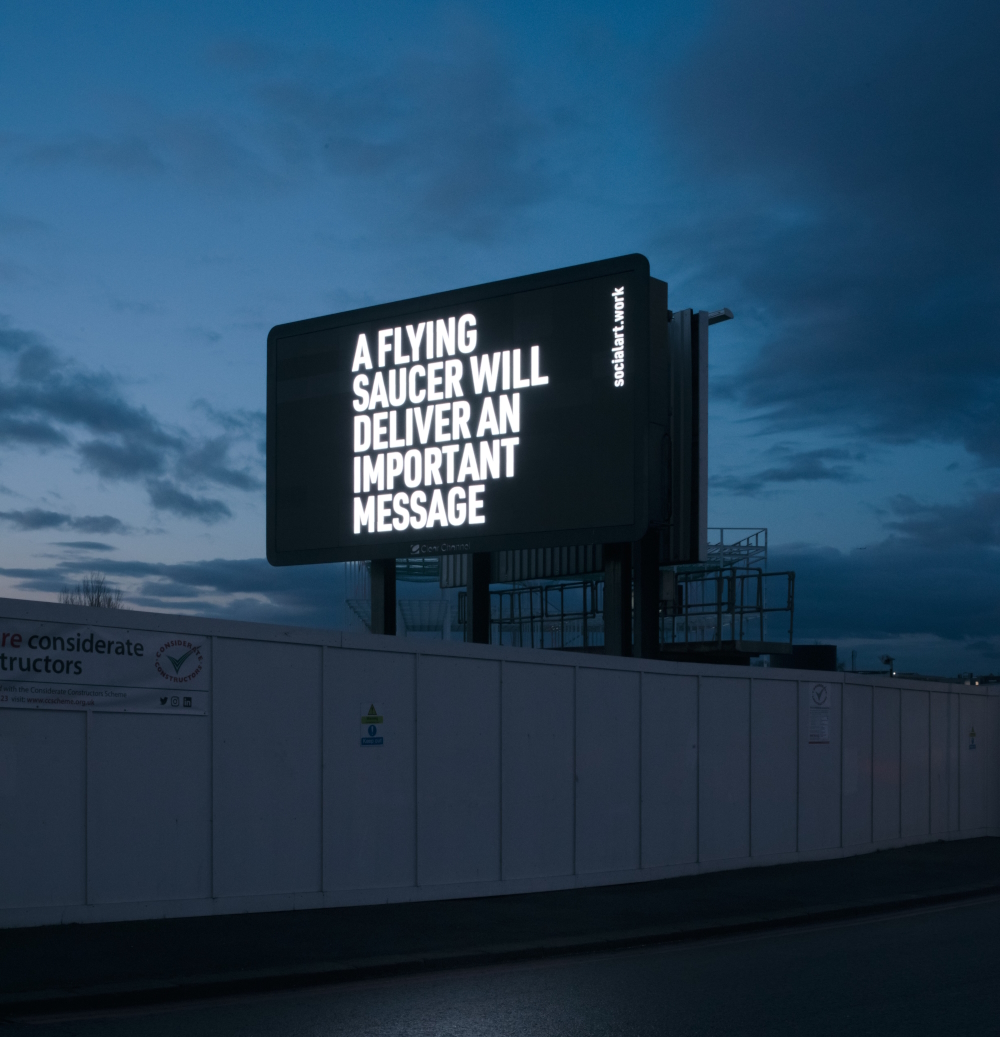
A favourite work of my own is the poster: A FLYING SAUCER WILL DELIVER AN IMPORTANT MESSAGE. I am not sure that it best represents me but I like it and I hope it is true. But we will have to wait and see.