Jérémy Gobé
environmental artist
France
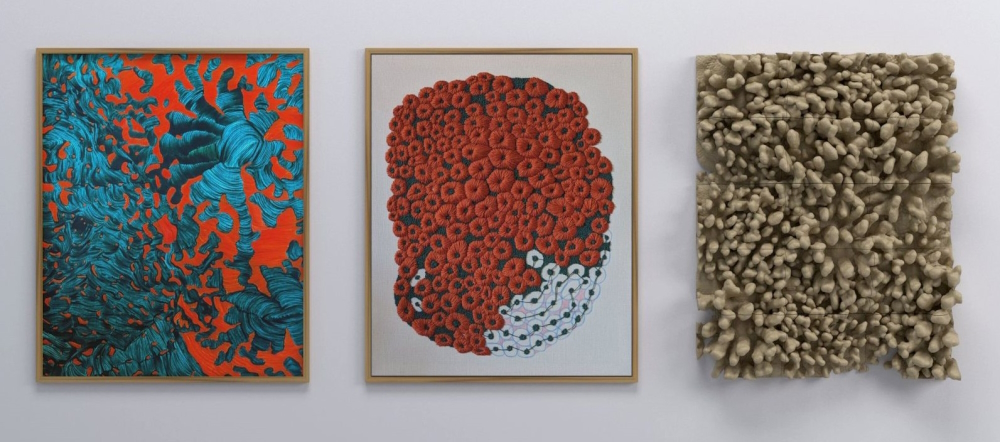
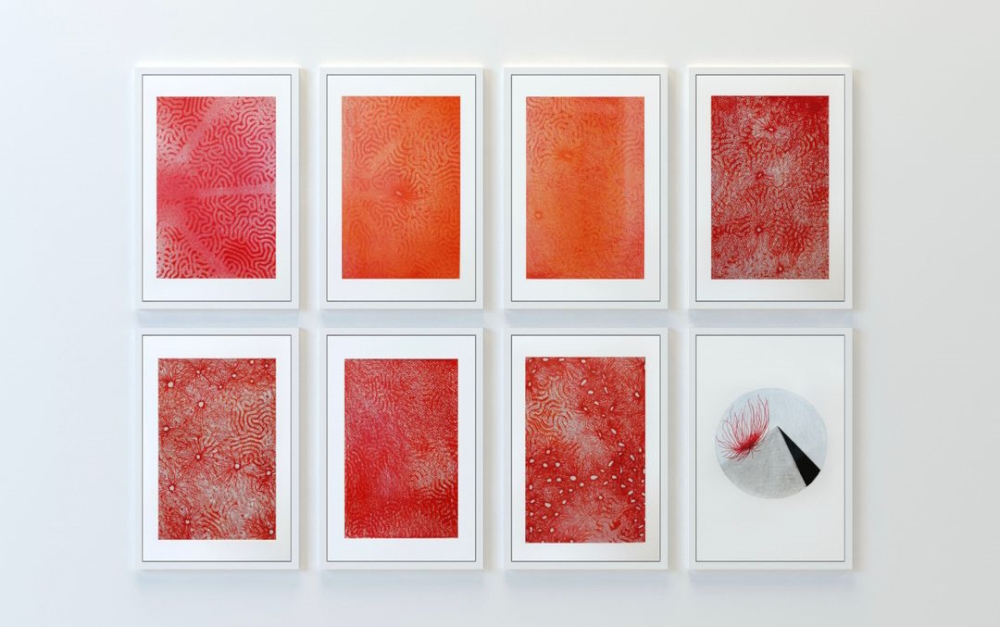
„One of the most internationally renowned representatives of Environmental Art“. A Frenchman can claim this designation by the Museum of Textile Art in Hannover/Germany for himself. His highly poetic hybrid output combines visual art (drawings, sculptures, textile works, installations), science and technology to protect coral reefs around the world. It imposes a reconnection with life, drawing on ancient craftmanship that he adapts, projects and transforms. By doing so the much awarded creative who exhibits internationally, made a surprising discovery coincidentally that would change his life and eventually becomes a lifeline for a part of nature that is constantly dying out!
Jérémy Gobé
environmental artist
France
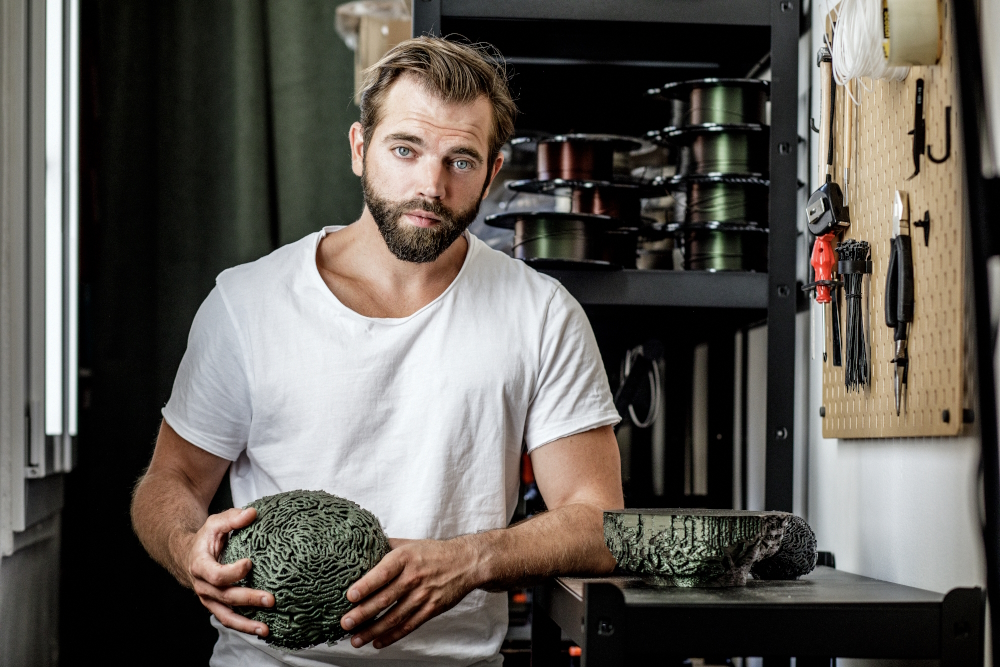
„The best things in life are due to chance,“ as Giacomo Girolamo Casanova (1725–1798) once said. The famous Italian adventurer‘s and author's insight can only be confirmed by Jérémy Gobé (* June 2, 1986 in Cambrai, France).
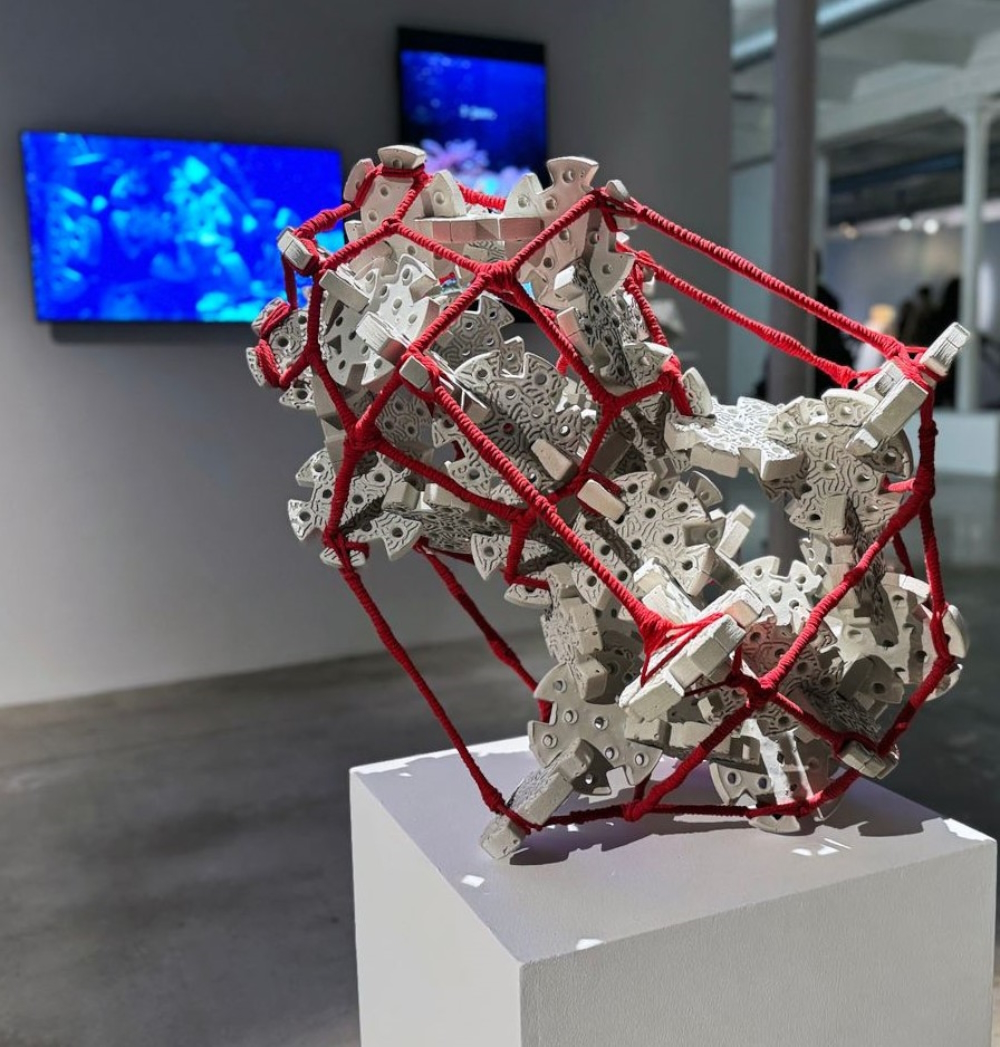
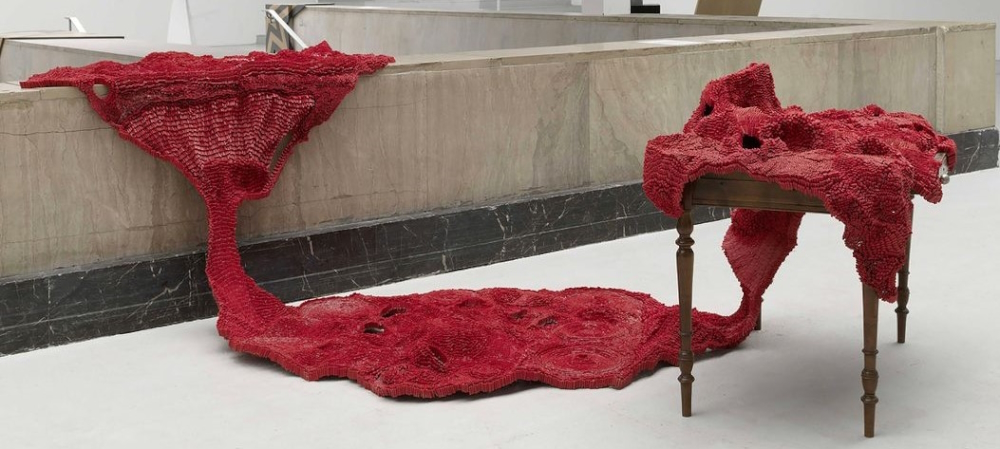
The year is 2017: Up until then the graduate from the prestigious École Nationale Supérieure des Arts Décoratifs/National School of Art in Nancy (2009) and the École Nationale Supérieure des Arts Décoratifs/National School of Decorative Art in Paris (2011) had „drawn inspiration from chance encounters with whatever he finds in his path, such as objects from nature, building materials or abandoned pieces of fabric, that he then imbues with new purpose“ (thebass.org). Interestingly that already back then one of his works had included the „now well-known series ‘Coral, Restoration’, an installation of red coral and pegs retrieved from a building site, that created the appearance of an organic invasive entity threatening to spread throughout the building.“
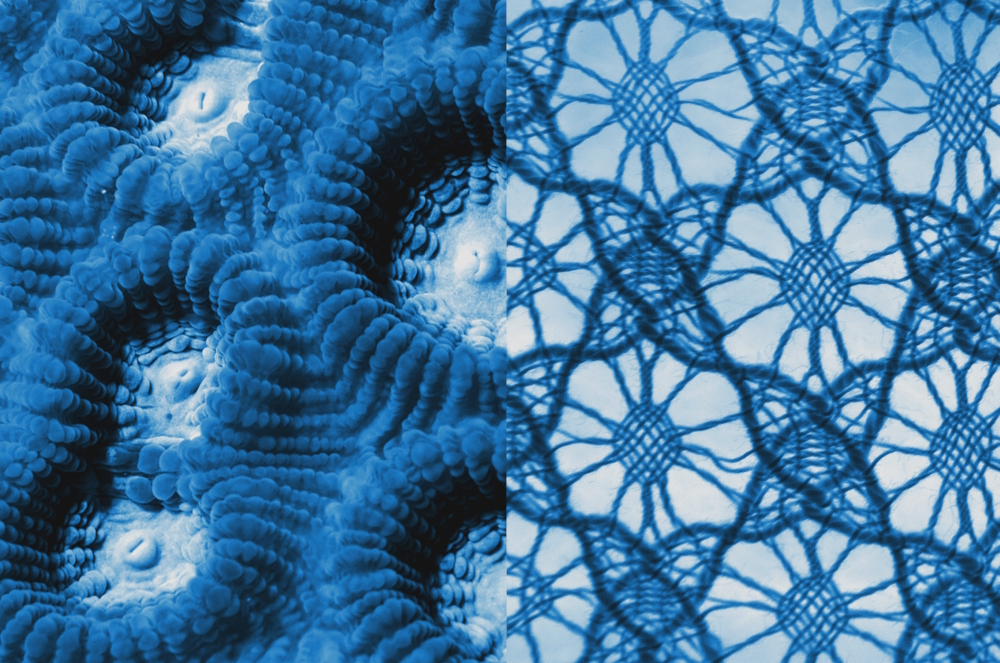
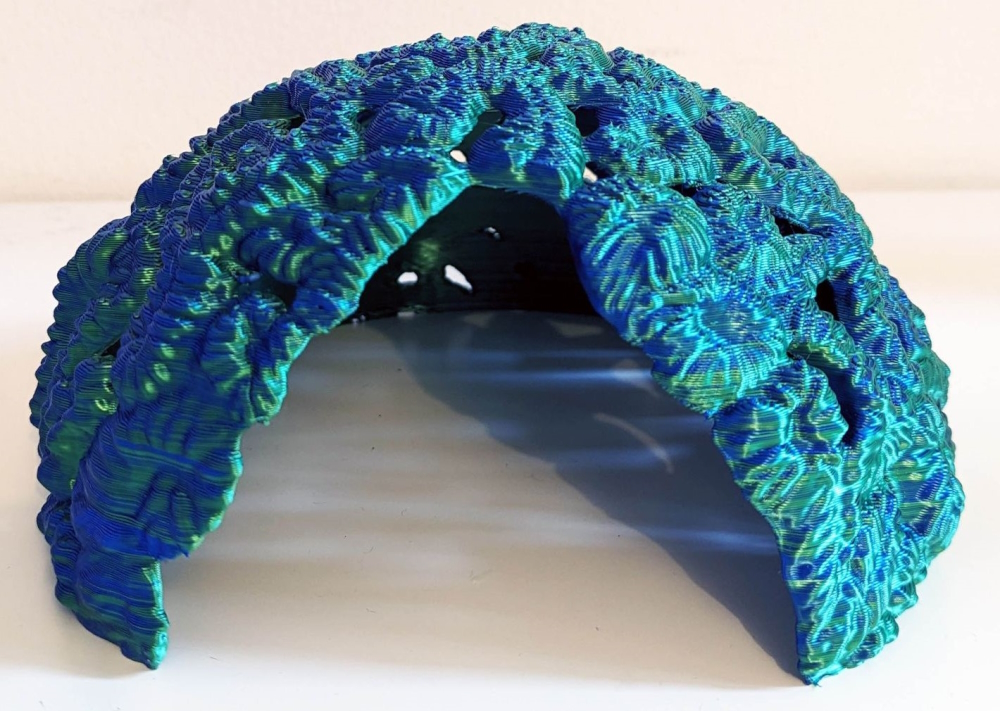
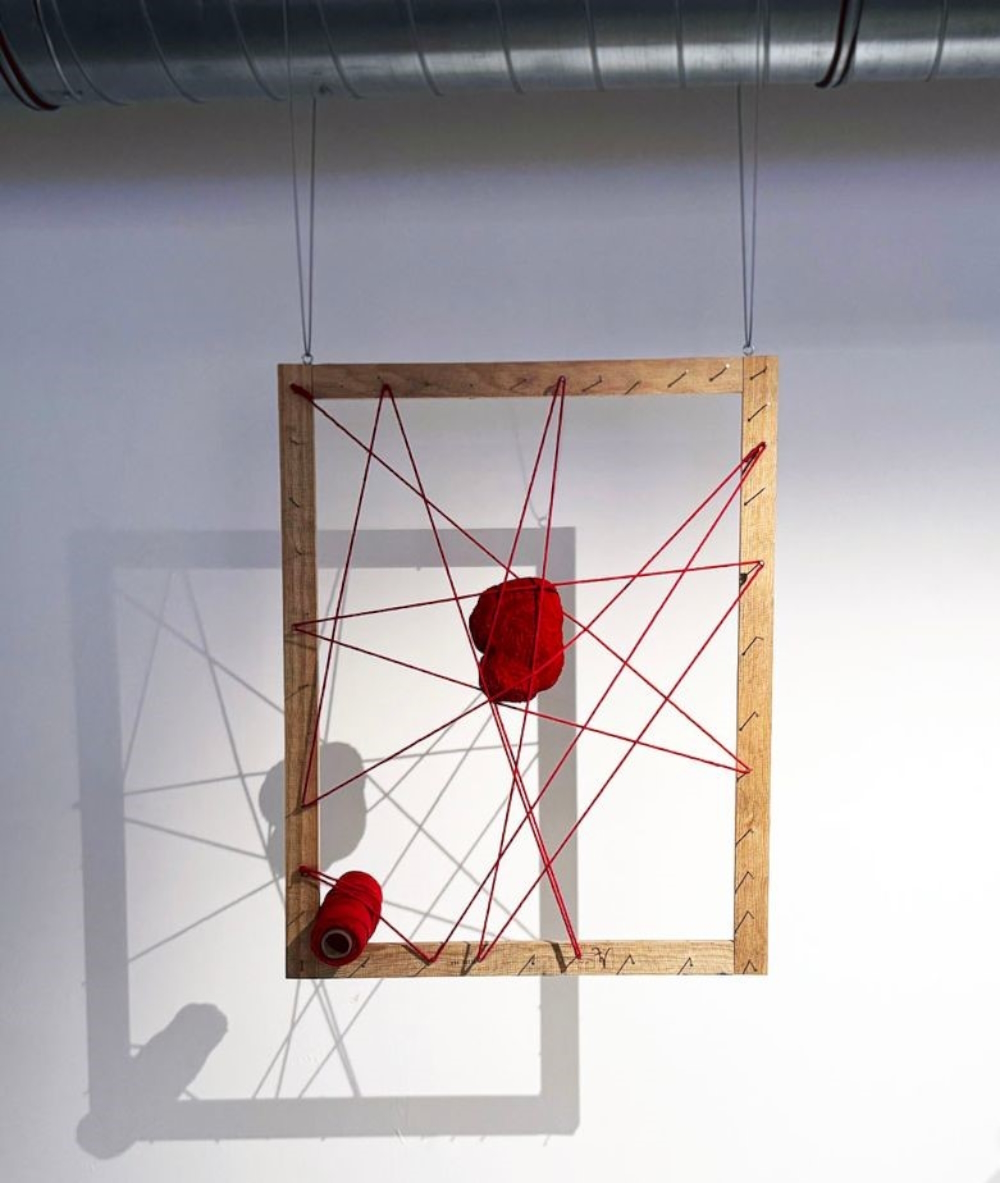
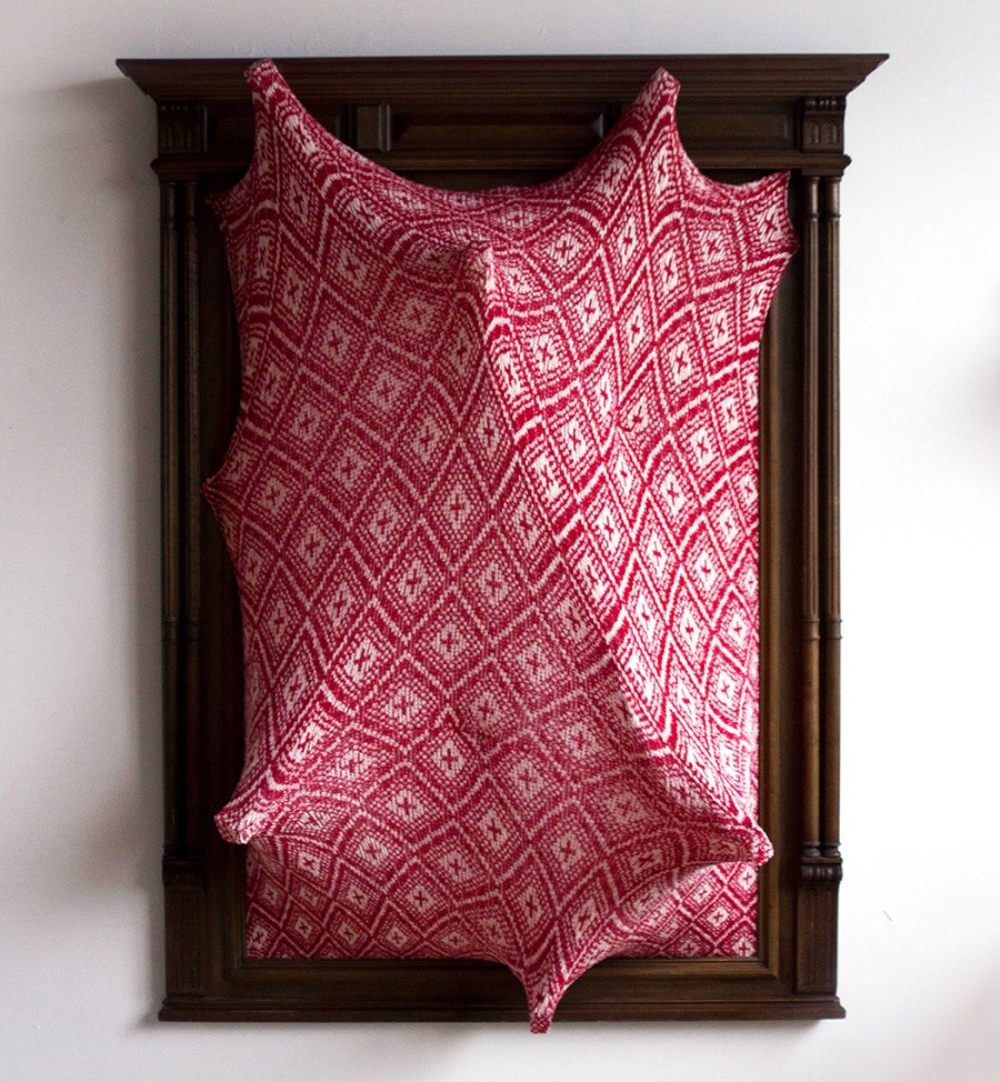
This time Jérémy Gobé is invited by the Saint-Gobain Weber company at the occasion of The International Festival of Extraordinary Textiles for an „artistic collaboration in order to create an original dynamic turned to co-creativity and the unexpected meeting of two worlds: one industrial, the other artistic“ (bullukian.com). On site he gets to know the ancient craft of lace-making from the Auvergne Rhône-Alpes region. The distinctive bobbin lace pattern that is appropriately called „point d’esprit“ (point of wit) immediately reminds him of the structure of one of the coral skeletons he uses in his experiments. This discovery will not remain without consequences. An idea pops up in his mind: a lace assistance might stimulate coral regeneration. Scientists have long been looking for a support (or substrate) to capture more larvae, a bolster which they believe must have the following three characteristics: roughness, flexibility and transparency. Puy cotton lace meets these criteria; it is also biosourced, biodegradable and biomimetic. Thus Jérémy Gobé launches his first research protocol to test the compatibility between this lace and anemones, then cuttings and finally coral larvae. The work in cooperation with a biologist at the Museum of Natural History is a success!
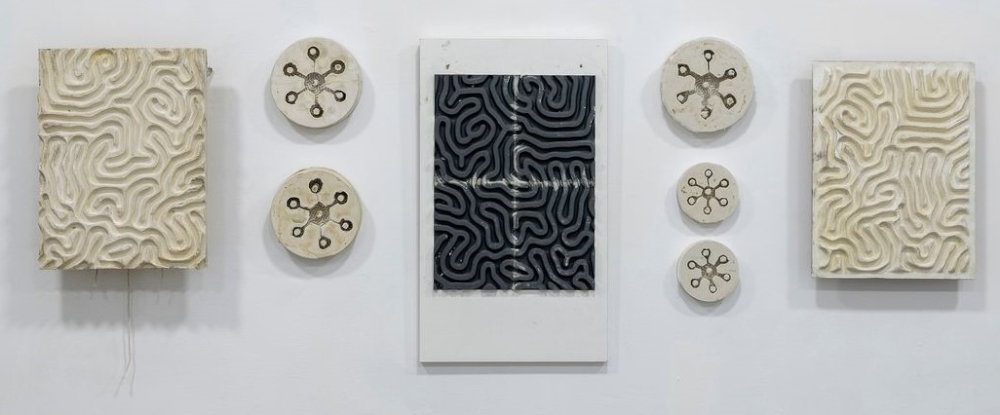
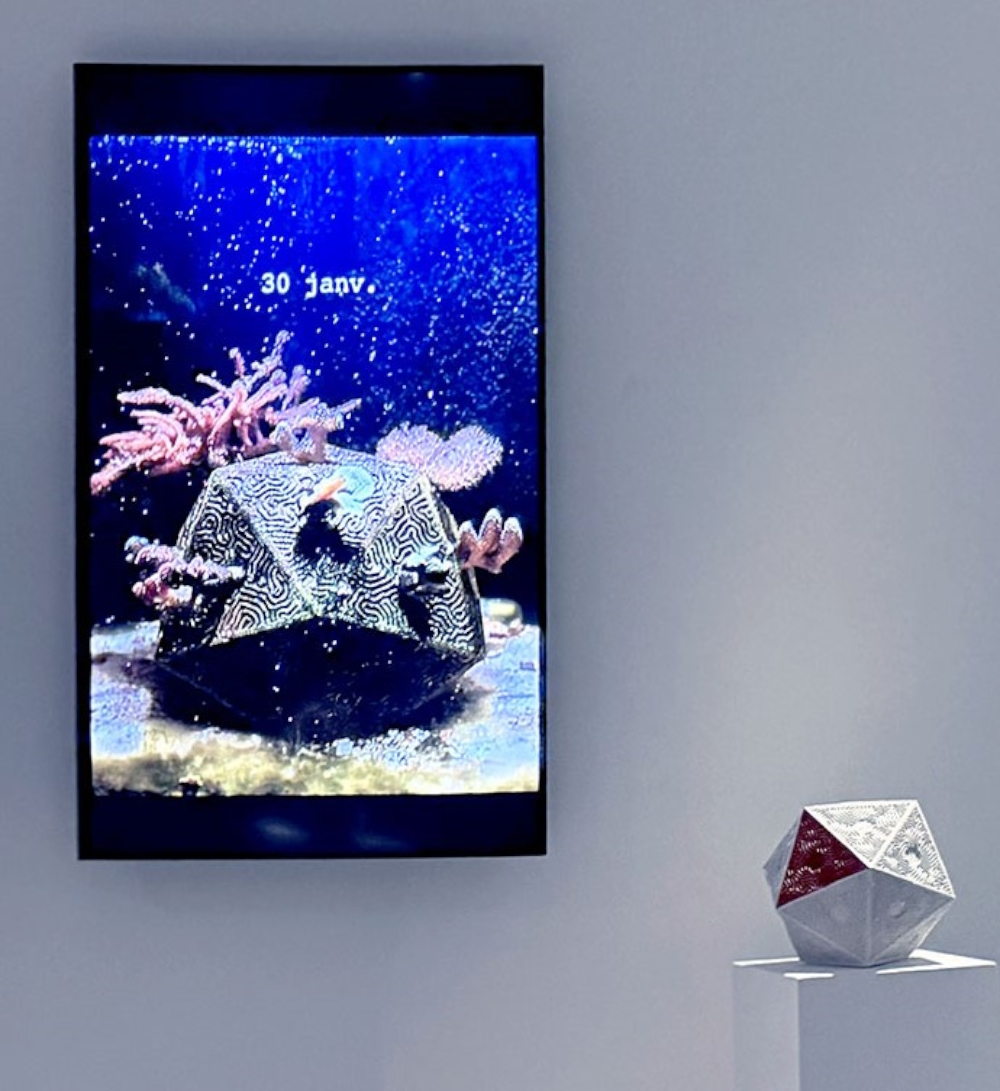
The experiments in an aquarium were the prelude to the founding of The Corail Artefact in 2018 „to show that artists don’t just come up with ideas, but that they can also put them into practice“ (Jérémy Gobé on theinstantwhen.taittinger.fr). The art science industry project „is supported by an endowment fund. It brings together many stakeholders, scientists, industrialists“ (artofchange21.com). It was developed step by step over the years and rests on three pillars nowadays:
1. Invention: development of new ecological materials like carbon-free concrete and patented, bio-based biodegradable biopolymer for artificial reefs (instead of the usual mixture of seabed’s sand plus common cement, the world’s biggest CO2 producer).
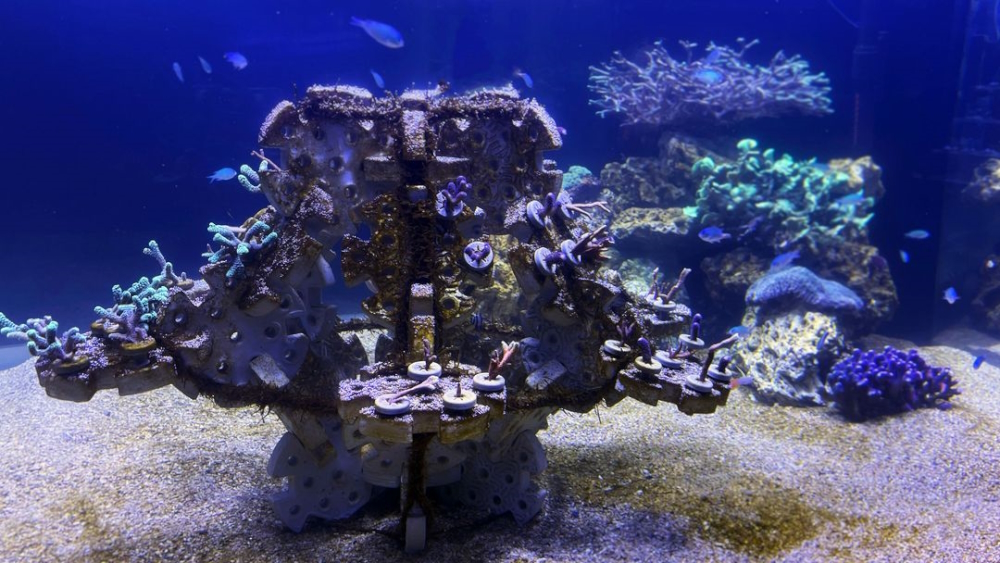
2. Regeneration: offering concrete solutions derived from materials, both for cuttings and the reconstruction of disappeared reefs or even the capture and regeneration of larvae and gametes.
3. Awareness: attention-raising actions among schools and the general public in form of exhibitions, educational kits, creative workshops et al. Also there are departments that develop and market art and design solutions as well as some for the regeneration of coral reefs by lace support, ecological concrete structure, aquariology tools...
Jérémy Gobé’s oeuvre reflects an „altruistic and commited vision of contemporary art in which works are conceived both as warnings and suggestions for serious environmental problems“ (homofaber.com). His concept of „art in life“ is built around a central idea, as the famous founder of modern sculptor François Auguste René Rodin (1840-1917) said: „Art that has life does not reproduce the past, it continues it.“ What that means in concrete terms in this case, is stated on normandie-impressionniste.fr: „By combining form and function, the artist’s creations – both visual and practical – respond to several current ecologial challenges.“ By doing so he imagines global solutions to contemporary problems. „I think that to face the ecological crisis, we need artists“, Monsieur Gobé told eesc.europa.eu. „Why? To inspire us, to be creative and to inspire the different areas of society: art, science, industry, education - to find innovative solutions, because we will need them in the face of the challenges that await us.“
Jérémy Gobé, who appears as an author too (f.e. "Double Nature = doppia natura" 2009 -2017), lives and works in Paris, France.
Interview February 2026
Art in life: reconnecting with nature by solving current ecological problems
INTUITION/IMAGINATION
?: How does intuition present itself to you – in form of a suspicious impression, a spontaneous visualisation or whatever - maybe in dreams?
At first, rather suspiciously — as if I don’t understand why no one seems to have thought of this idea before. Then I accept it and take hold of it, or rather, I enter into a kind of contract with the idea.
?: Will any ideas be written down immediately and archived?
Rarely written down right away. I let the idea stay beside me for a while, to be sure we are right for each other.
?: How do you come up with good or extraordinary ideas?
I search, I read, I think a lot — but above all, I observe and connect elements that are usually far apart.
?: Do you feel that new creative ideas come as a whole or do you get like a little seed of inspiration that evolves into something else and has to be realized by endless trials and errors in form of constant developments until the final result?
In general, good ideas are ahead of me. I approach them gradually and discover their full scope along the way.
?: What if there is a deadline, but no intuition? Does the first fuel the latter maybe?
This is rare. It usually happens only when there are too many constraints — budgetary, conceptual, and so on. When there is no real carte blanche and I have to convince more than create. In those cases, I struggle either with the feeling that I should not have accepted the project — even if I didn’t have all the keys at the beginning — or with blaming myself for wanting to push beyond limits, to go outside the frame when the context does not allow it, and for having overinvested myself.
INSPIRATION
?: What inspires you and how do you stimulate this special form of imaginativeness?
If I truly have no idea or desire, I try as much as possible to do nothing at all and leave room for boredom. This often leads me back to an essential impulse.
?: How do you filter between ideas that are worthwhile pursuing and bad ones that you just let go of?
It usually happens naturally. Otherwise, I try and stop if it leads nowhere. It’s hard in the moment, having invested time and money, but that feeling passes — and it always teaches something. It is never truly for nothing. Along the path of making, there are often small side roads that turn out to be the right way forward, but you only see them by walking and moving ahead.
?: Does an idea need to appeal to you primarily or is its commercial potential an essential factor?
I don’t know what can sell — I don’t have that ability, quite the opposite, and I wish I had a bit more of that instinct. Some people are very good at it; I’m not at all. So I am always guided by my desires and my values.
?: Do you revisit old ideas or check what colleagues or competitors are up to at times?
Yes, very often — and I enjoy it a lot, even if it’s difficult. I want to build a body of work in a broad sense, not a collection of gestures. So returning to the past and connecting it to the present is essential for me. I love discovering other artists’ works and techniques, but I don’t consider anyone a competitor, because I try to trace a unique and personal path.
CREATIVITY
?: What time or environment best suits your creative work process — for example, a time and place of tranquility or of pressure?
A moment when my habits and rhythm are not disrupted. I don’t need pressure — on the contrary, life as an artist is already difficult and unstable enough. There’s no need to create additional chaos. I work quite quickly because I try to do as much as possible myself, which allows me to test an idea very fast.
?: What’s better in the realization process — for example, speed and forcing creativity by grasping the magic of the moment or a slow, ripening process for implementation and elaboration?
Above all, a long period of thinking and preparation. The more mature the idea is in my mind, the less I risk deviating during execution or rushing things.
?: How important are self-doubt and criticism by others during such a process?
For me, they are important but also a trap. Finding balance is very difficult. You must listen to yourself, of course, but sometimes those close to us — who know us well — help prevent us from being polluted by voices and thoughts that are not really our true selves.
?: Is it better to be creative on your own, to trust only your own instincts, or to work in a team?
The best thing is to try both adventures. Once again, I believe in balance — taking the best from each experience. Unless it is incompatible with one’s well-being or mental or physical health, one should try, then analyze, and above all not remain stuck in a trench that cannot widen.
?: In case of a creative block or, worse, a real failure, how do you get out of such a hole?
Aside from time, giving oneself mental space and slowly, step by step, rebuilding — there is no miracle recipe, I think. Trusting in one’s vocation, even in the worst moments, is part of an artist’s life.
?: Should a creative person always stay true to him- or herself, including taking risks and going against the flow, or must the person, for reasons of commercial survival, make concessions to the demands of the market, the wishes of clients and the audience’s expectations?
I believe that the market and history remember only those who stayed true to themselves — at least, I want to believe that. Everything else seems less like art and more like commerce.
?: How are innovation and improvement possible if you’ve established a distinctive style? Is it good to be ahead of your time, even if you hazard not being understood?
As the saying goes, victory without risk brings no glory. I’m not sure what “establishing a style” really means, but once again, life as an artist is too difficult not to listen to oneself.
?: When does the time come to end the creative process, to be content and set the final result free? Or is it always a work-in-progress, with an endless possibility of improvement?
It depends on the project. There are series, and there are works that are pursued or reinterpreted over an entire lifetime. Only the artist knows, through intuition and freedom.
?: How does artificial intelligence change human creativity? And do you? Would will you use it at all?
Yes, I use it to assist with innovation, such as coding, or to obtain information on research topics. I also create image simulations for works in progress. Like many other innovations — with common sense.
SUCCESS
“Success is the ability to go from one failure to another with no loss of enthusiasm.” Do you agree with Winston Churchill‘s quote?
I would rather move away from the idea that suffering is necessary to create, but I do share the idea of persistence. No one is waiting for us when we leave art school, especially when you come from a working-class background. You have to fight with yourself and with society to exist — but I would prefer to think of success as moving from experiences to encounters.
?: Should or can you resist the temptation to recycle a ‘formula’ you're successful with?
Only if there is still pleasure and meaning.
?: Is it desirable to create an ultimate or timeless work? Doesn’t “top of the ladder” bring up the question, “What’s next?” — that is, isn’t such a personal peak “the end”?
I think that when you reach the top of a mountain, you often realize there is an even higher one behind it — or that the depths of the sea are ten times more vertiginous. The idea, then, is to find another form of creativity, perhaps greater, more universal.
MY FAVOURITE WORK:
I think I’ve said enough about existing works, so I’ll speak about a work that does not yet exist. It will be my most beautiful work, I believe. I cannot say anything else about it, because it is not even in my mind yet. It exists somewhere, but what I know is that it will be collective — and that it will inspire everyone to find within themselves the strength to change their own world, and perhaps the world.