Thomas Medicus
visual (anamorphic) artist / master glazier
Austria
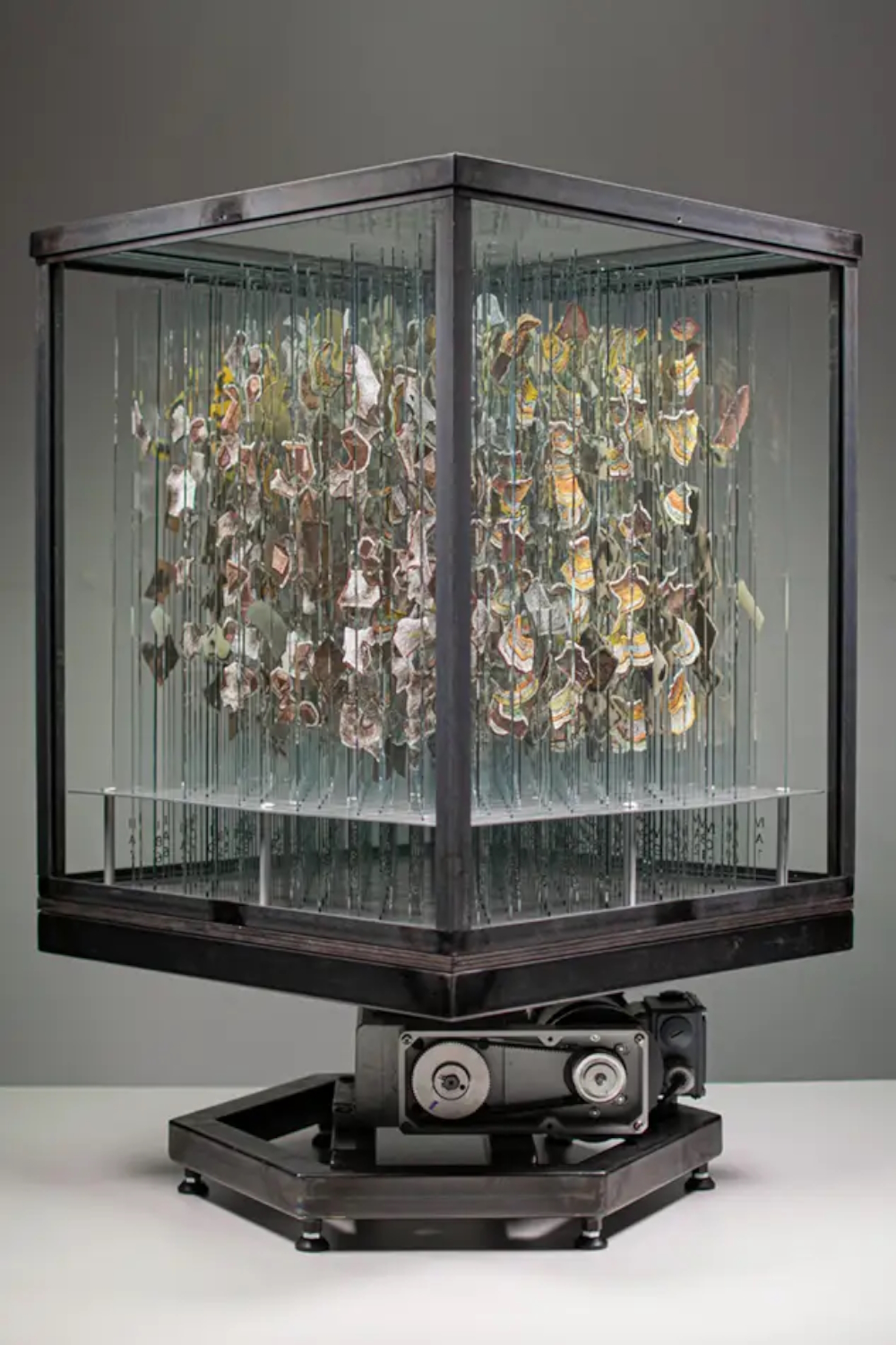
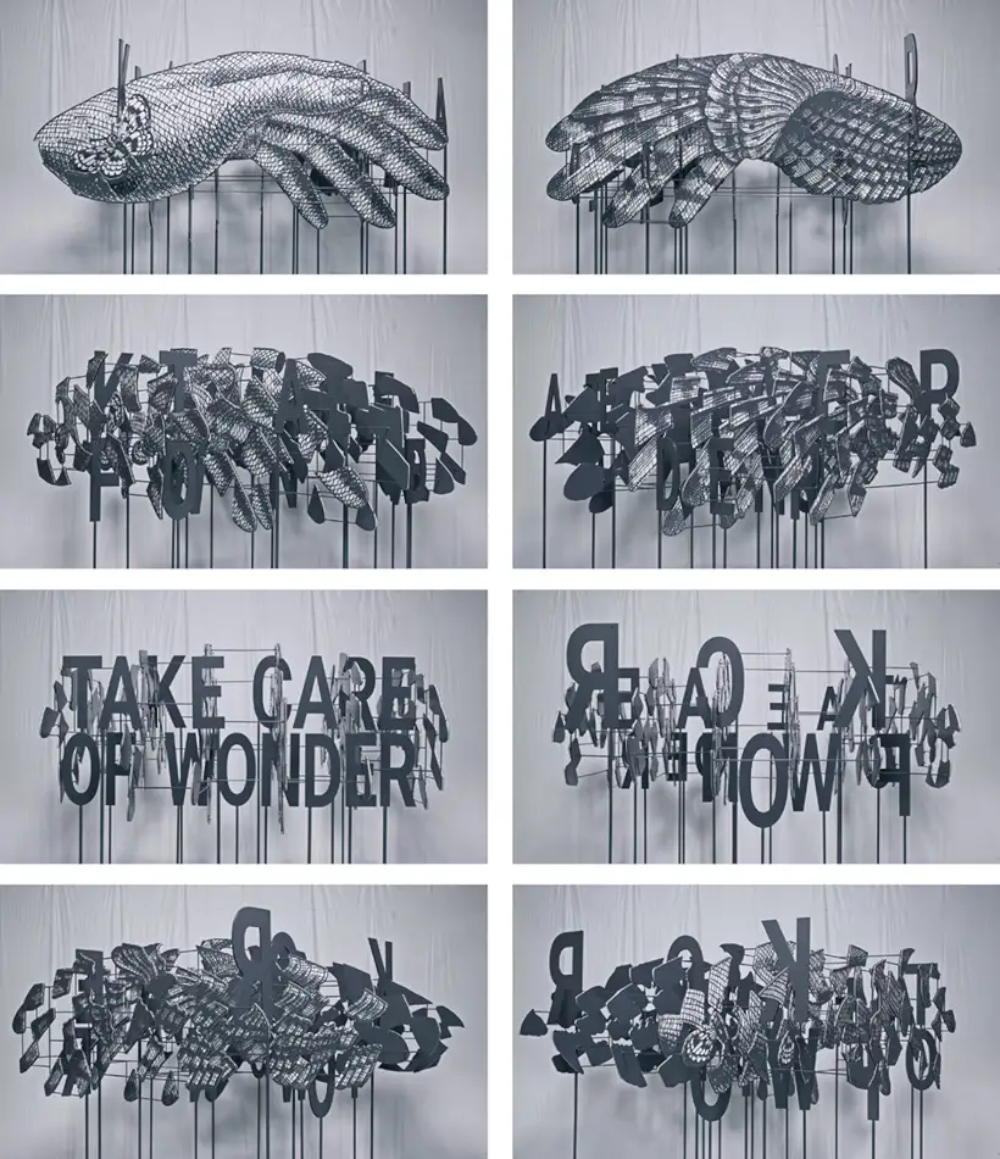
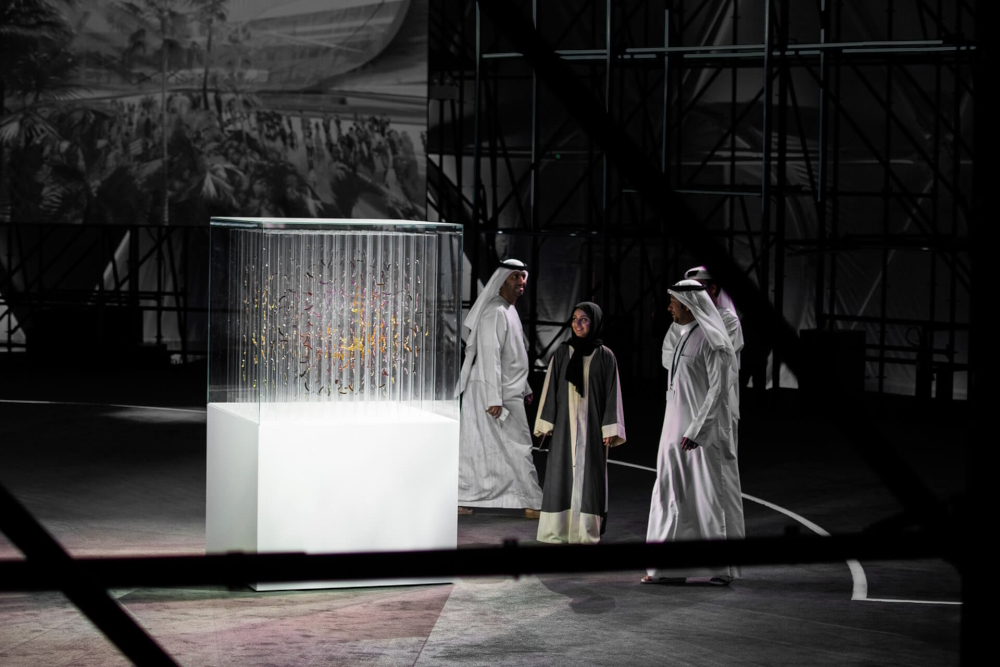
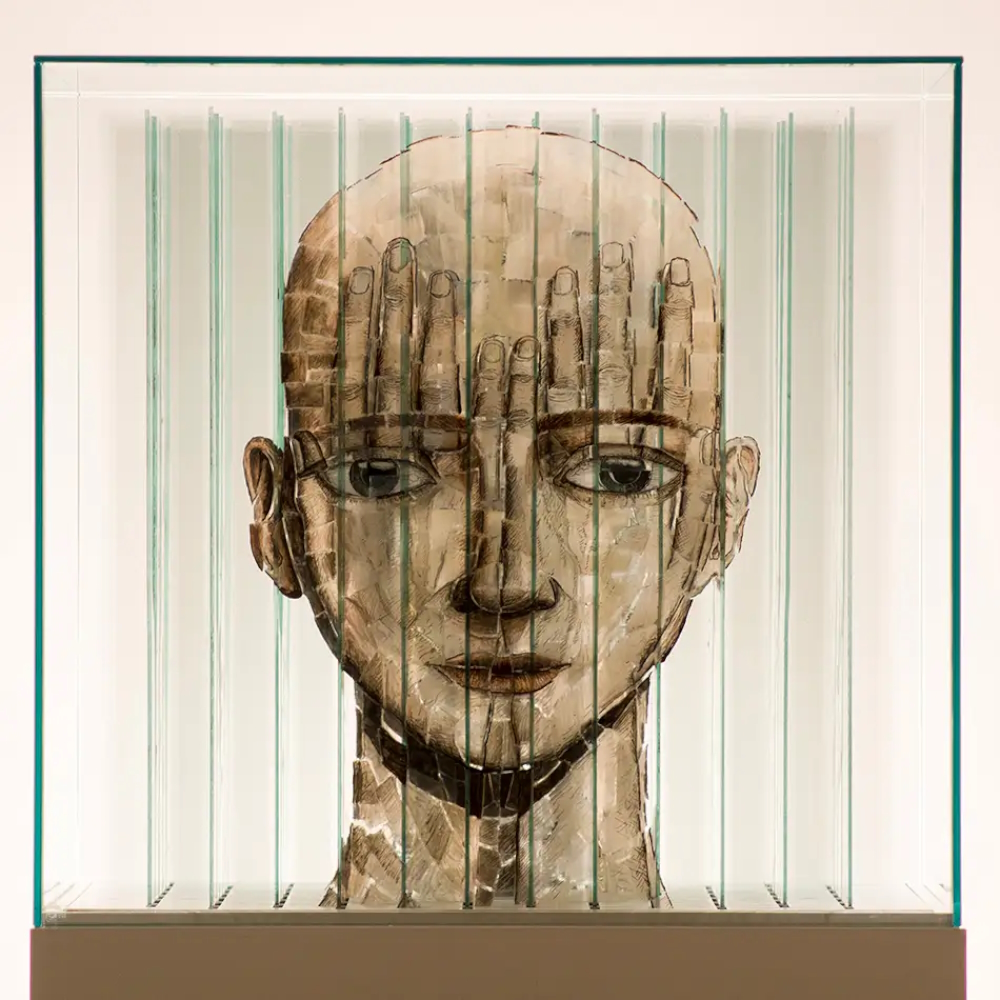
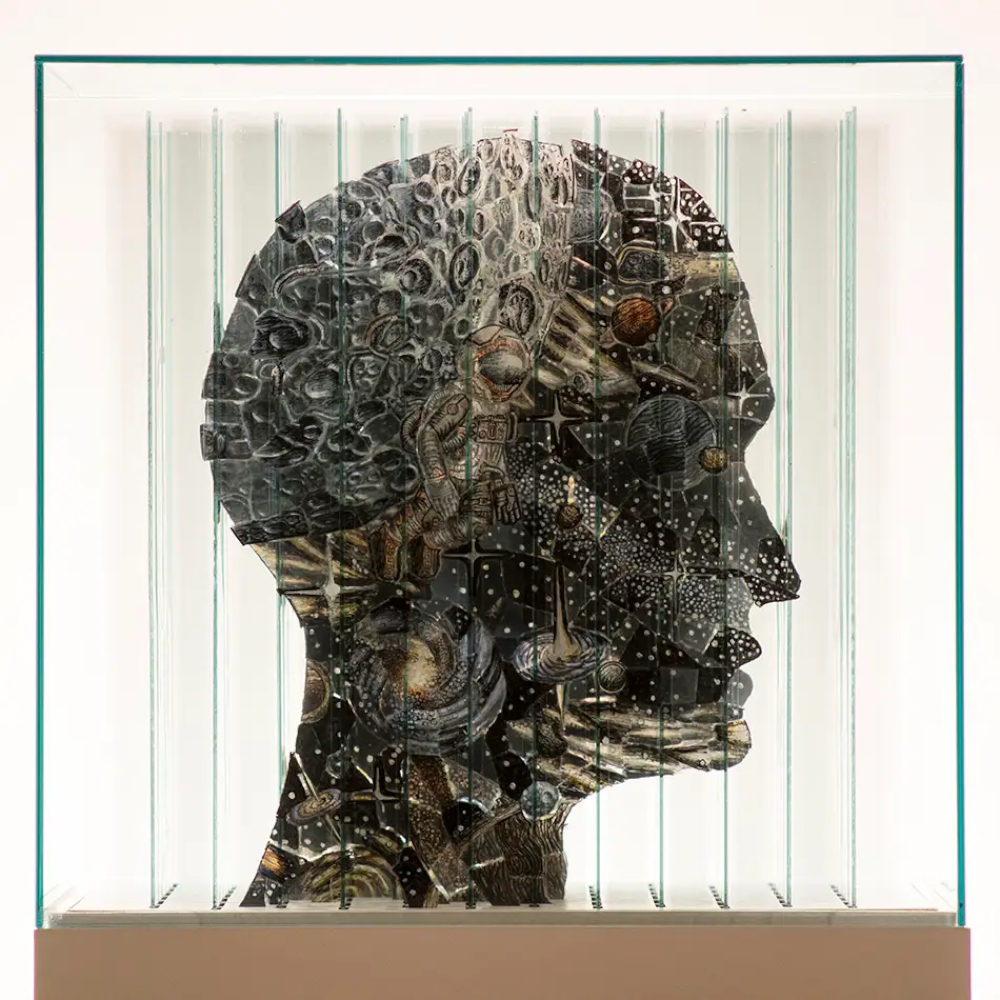
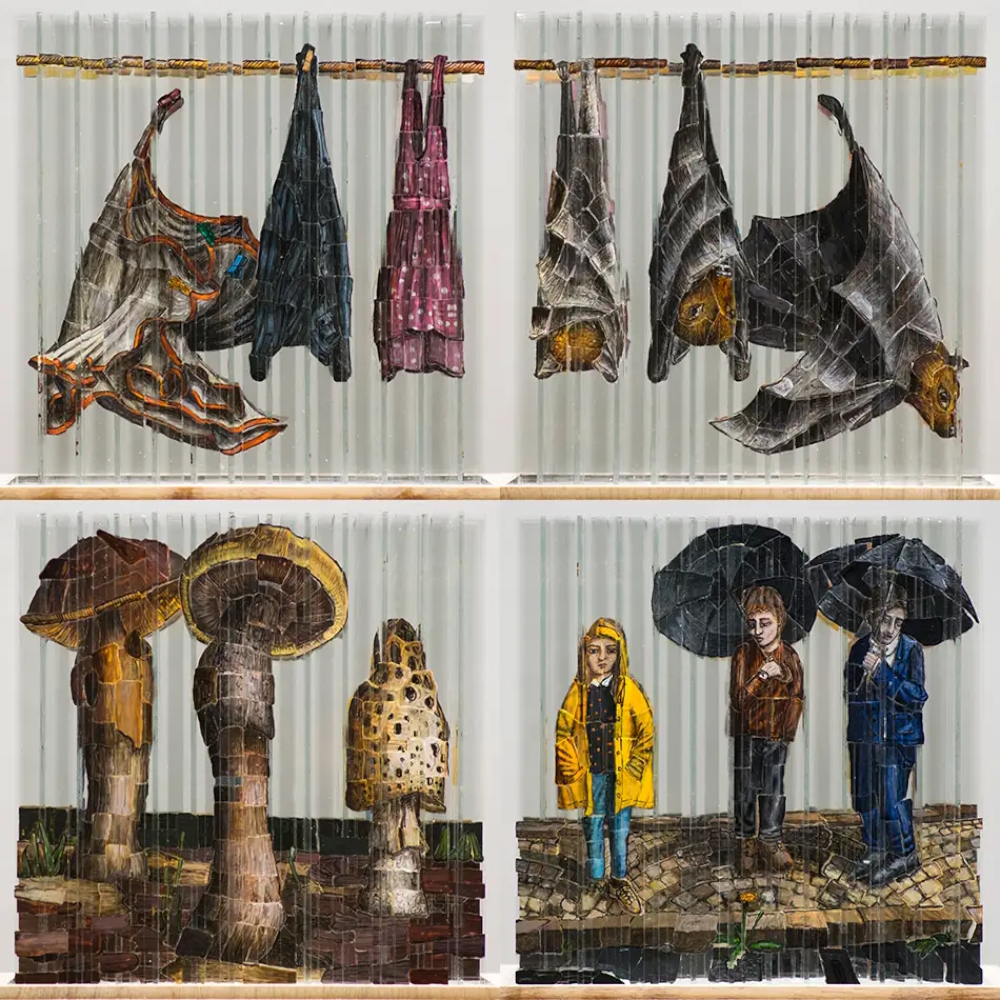
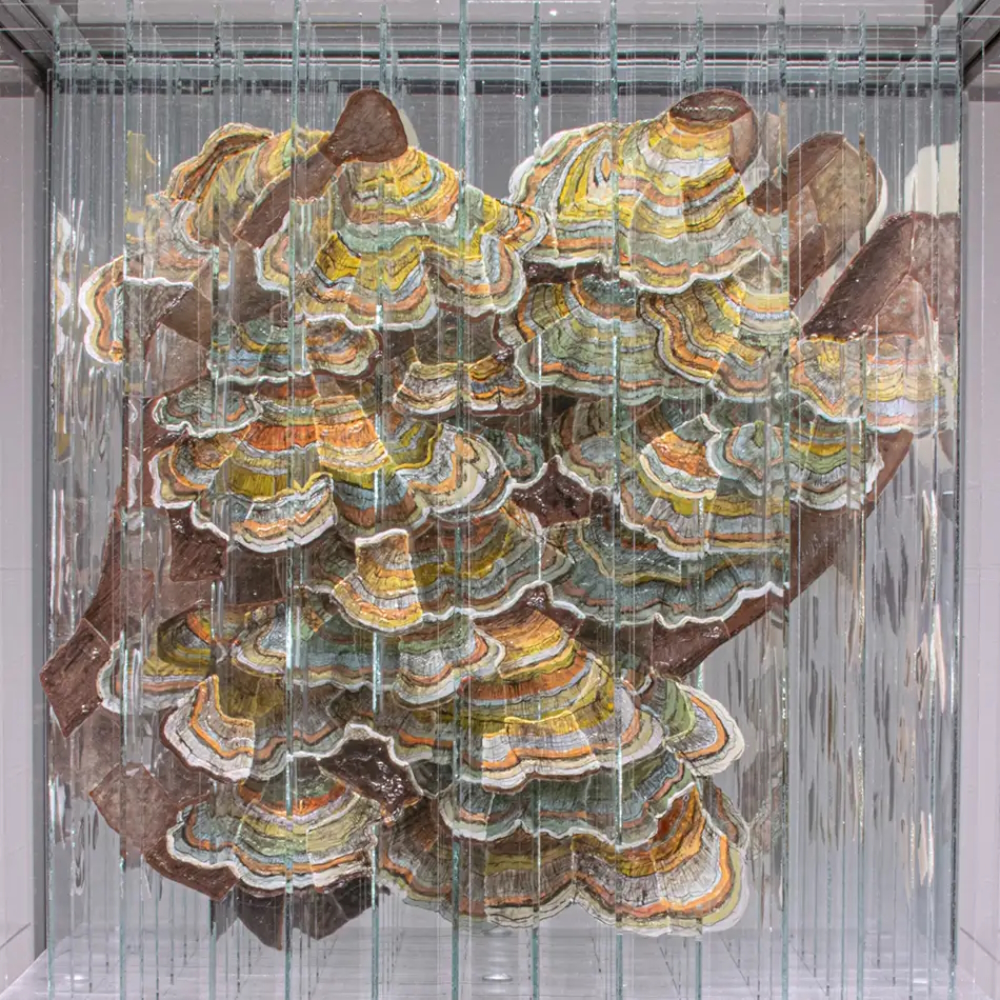
Anamorphic works are something special and one-offs in the world of art. They „can only be seen from a specific viewpoint, requiring a mirror, prism, or similar distorting device for perception“, knows kunstplaza.de/en. In case of rotating sculptures „their fragments of images dissolve and reassemble“ (klimakultur.tirol). It’s an Austrian artisan, who‘s famous for such impressive masterpieces. He created the anamorphic steel sculpture „Take Care of Wonder“ for the Monaco Pavilion at Expo 2025 in Osaka. His anamorphic glass installation (consisting of 1,000 individually handpainted pieces) was unveiled by Dubai’s Crown Prince Hamdan as part of a ground-breaking ceremony for the Expo 2020 metro station. Recurring themes in this artist’s handmade creations that have received international attention are perception, ecology and the public space. It is a strange coincidence that it was, of all things, the master glazier’s favourite material that was once at the heart of his serious accident.
Thomas Medicus
visual (anamorphic) artist / master glazier
Austria
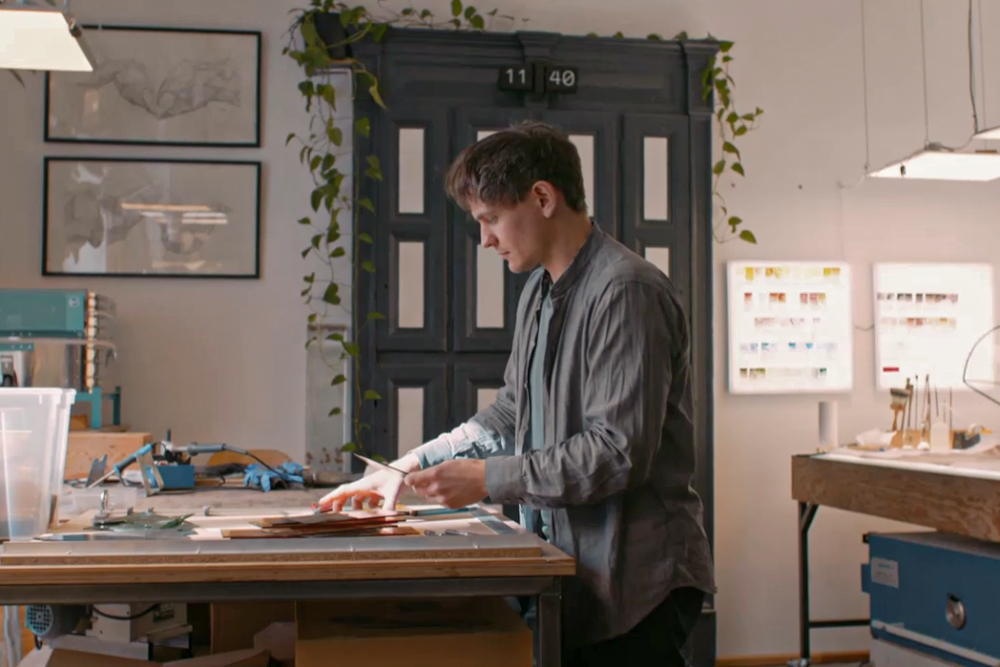
September 10, 2021, 9.20 pm: „Thomas Medicus is on the roof of a block of flats in the Austrian city of Innsbruck’s centre with his girlfriend that evening." As he steps onto a wire-reinforced glass panel coated the same color as the roof, it shatters. The uniform coating had deceived him, making neither the wire glass nor the danger recognizable. "The 32-year-old falls 14 metres into a shaft below. The seriously injured man had to be rescued by the fire brigade after a major operation. He was taken to Innsbruck Hospital“ (tirol.orf.at). This tragedy, from which he has long since recovered, did nothing to dampen his love for glass, his preferred medium.
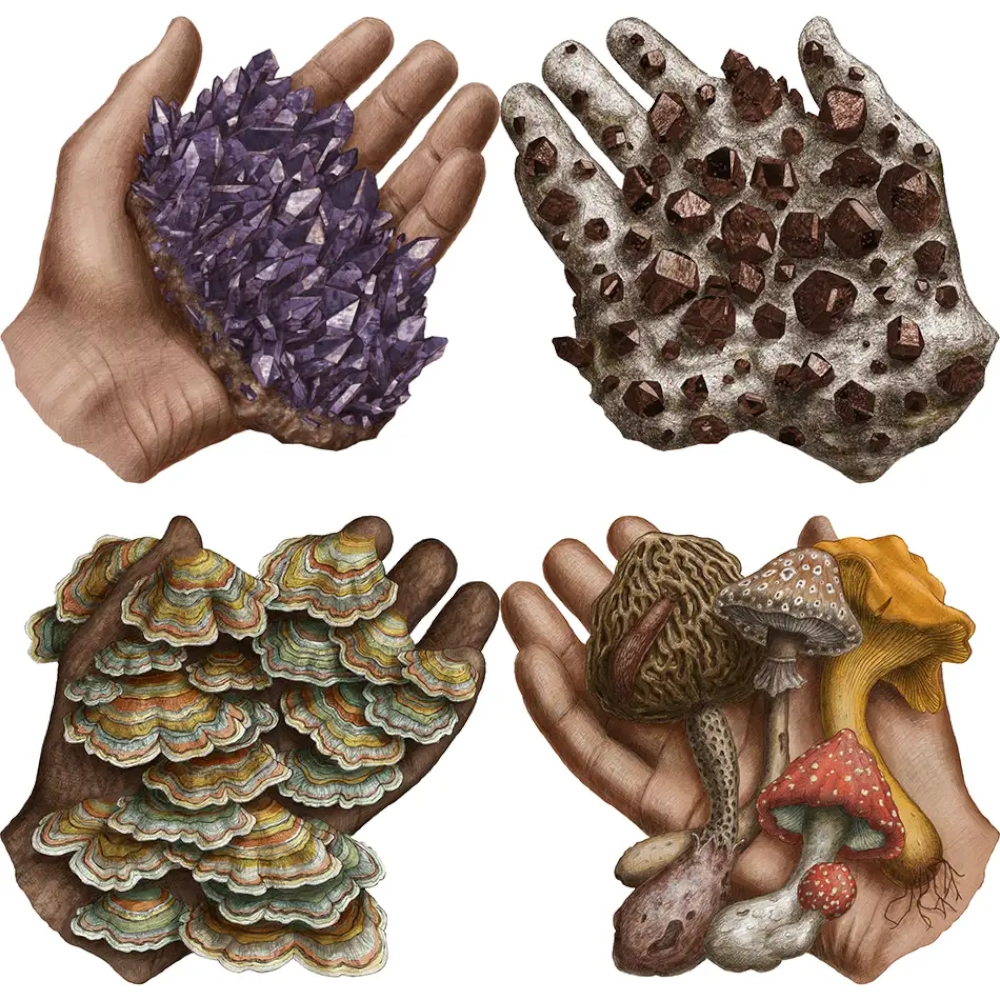
The origin of the major topic of his artistic creations, being the relationship between humans and the environment as well as the biodiversity crisis in particular, stems from his childhood. Together with his father, a human ethologist, Thomas Medicus (* December 6, 1988 in Innsbruck, Austria) went on many nature trips.
As a kid the son of a palliative care doctor loved to draw. For this reason he focused on painting and illustration in the early stage of his career, intensifying it from 2010 onwards. At first Thomas Medicus studied social work at MCI Innsbruck. Roughly around the age of 23 the talented young artisan attended Glasfachschule Kramsach/Austria, a school for glass art, for two years. There he earned a master glazier degree specialising in the restoration/conservation of old leaded-glass windows and the creation of new ones. Then the graduate was employed at Tiroler Glasmalerei, a well-known name in the stained glass windows industry, for seven years and worked as highly specialized freelancer after that.
Thomas Medicus „went on to build a steady foundation on the varied methods and techniques of creating and conceptualising through the onerous medium of glass“, notes stirworld.com. „As he continued on what were his glass-based experiments, he began to little-by-little incorporate the medium in his art practice, his creative processes, and his ideation. “I think this (the education in glass art) is probably where the initial concept of the anamorphic cubes comes from, since they are a combination of two-dimensional paintings and three-dimensional glass art. I have always been fascinated with perception in the context of the readings of an artwork, with optical illusions and also to some extent with epistemology. Therefore, for me, art has always had a strong visual and experiential focus,” says Medicus on the evolution of his art practice“.
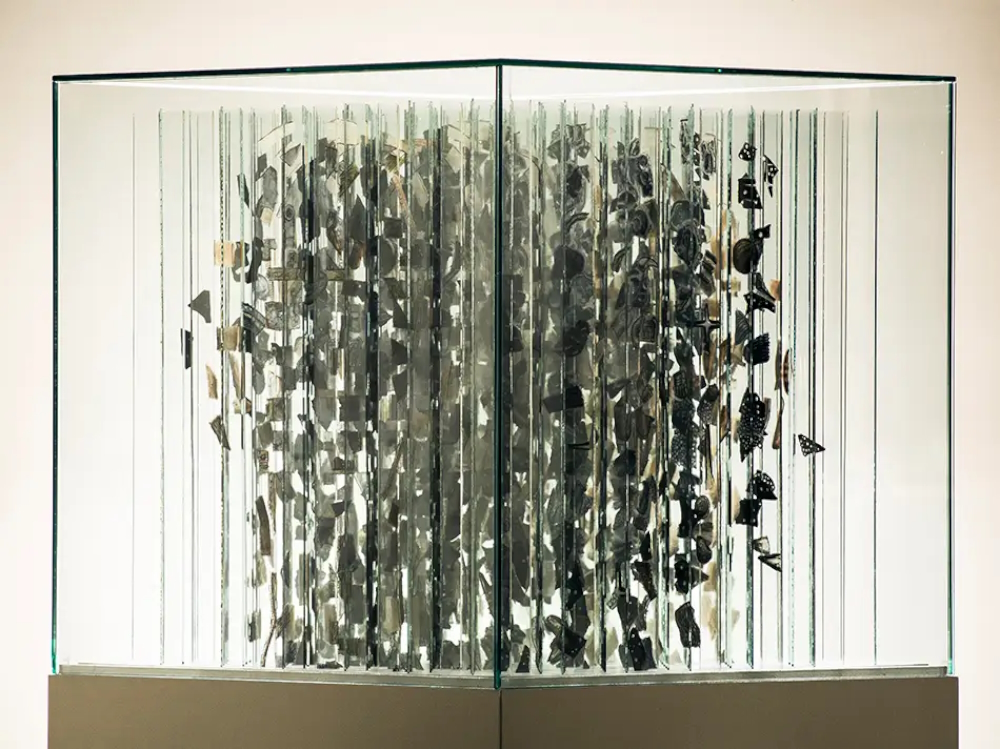
In 2014, he staged his first exhibition of anamorphic, „illusionistic sculptures. The mostly cube-shaped works contain several fragmented and interlocking images that only come together when viewed from certain angles“ (Wikipedia).
A story about „the master of illusion“ in the American online-mag Colossal on January 15, 2019 brought Thomas Medicus his breakthrough, as it attracted international attention for commissioned work and exhibitions.
It was at the beginning of 2021 he became completely independent and established his own company Studio Medicus, „a workshop for artistic glasswork, conservation and cultural projects.“
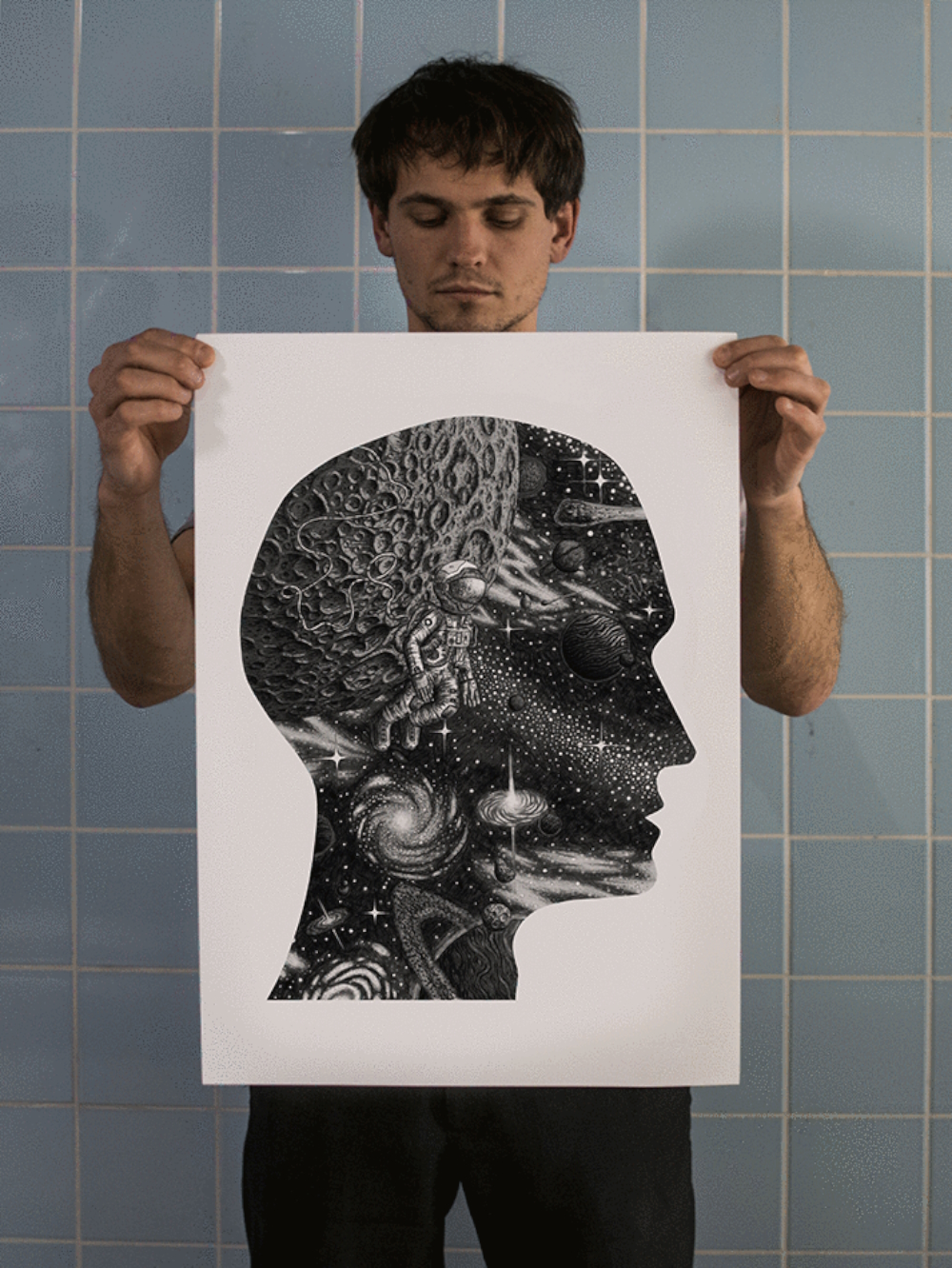
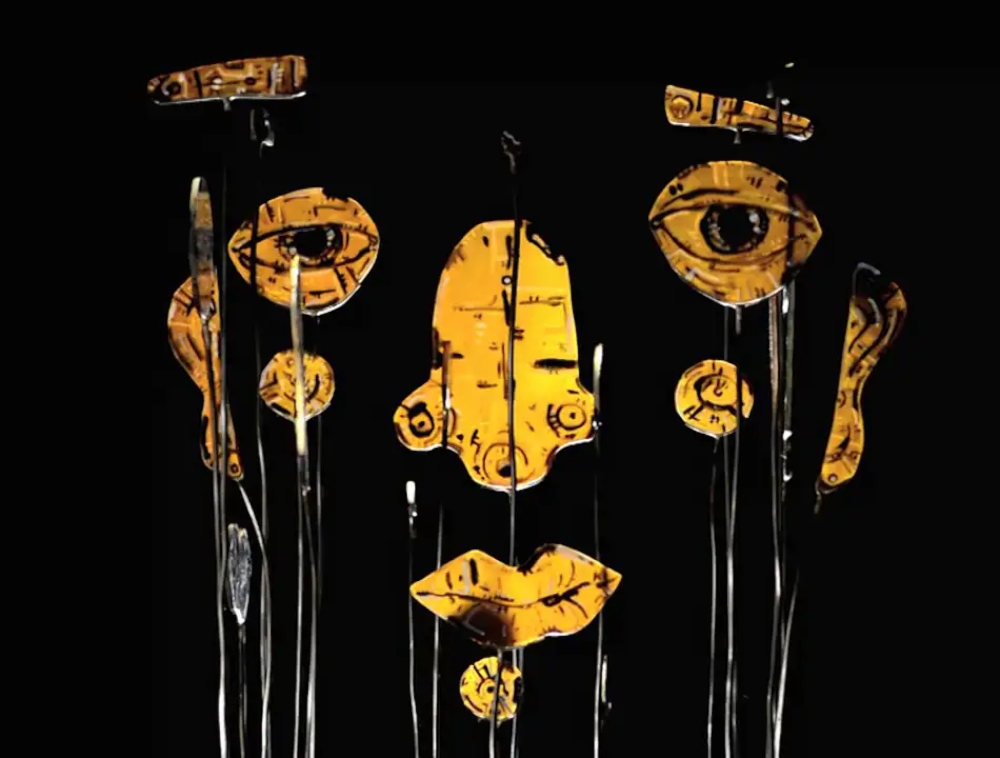
The „visual trickster“ (vice.com) describes his style on page-online.de as „sometimes monochrome, sometimes very colorful“ with the favourite motifs being „fish, birds, twisting knots, sailing ships, faces, people“. Every work always starts with sketches. These are then developed using the 3D programme SketchUp, and the dimensions are precisely defined. Beside his sculptural oeuvre the creative works on digital art, graphics, books of ideas or even music videos.
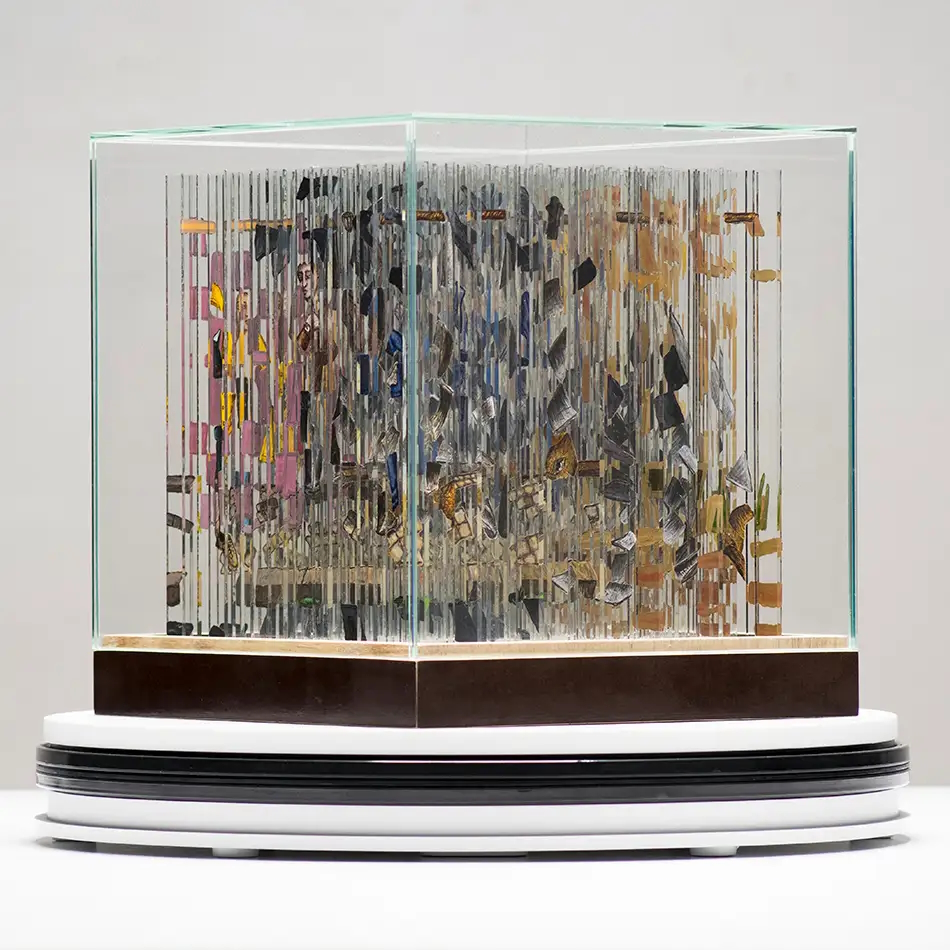
Some of Mr. Medicus‘ anamorphic sculptures are „made of painted strips of glass, revealing new images as they slowly turn in place. Each of the glass strips have been hand-painted and separated from one another, so as to reveal new formations rendering new readings each time they turn at a 90-degree angle. As one formation moves to the next, in what is the interim moment, the audience is left considering the potential of the picture which will unveil before them, as though piecing together a puzzle, bit-by-bit. Speaking on the illusions in his work, Medicus says, “Glass or any transparent material for that matter, only emerges once it is touched by light. They do not have a determined surface. I think I am fascinated by this disembodied state of the material” (stirworld.com).
Thomas Medicus‘ three-dimensional, handcrafted objects made of hand-blown genuine antique glass are inspired by „other artists, the internet, streetart, human beings, life, nature and thoughts“ (page-online.de). As his favourite artists he names the Belgian street/graffiti-artist ROA, the American glass artist Judith Schaechter, the Islandic/Danish sculptural artist Olafur Eliasson and the American painter/street artist Pat Perry.
Thomas Medicus lives and works in Innsbruck/Austria, where his studio is located in the inner courtyard of the city.
Interview April 2026
Illusionistic installations as a materialisation of ideas: Social function via creative output
INTUITION/IMAGINATION
?: How does intuition present itself to you – in form of a suspicious impression, a spontaneous visualisation or whatever - maybe in dreams?
I can’t remember whether any of my ideas came from dreams. Generally, I think ideas are often instantaneous. I also think it is useful to look for the origin of ideas not only within the artist but also in that person’s social and historical context.
?: Will any ideas be written down immediately and archived?
Yes, I have a folder for project ideas on my computer. Some concepts move into production very quickly; others remain in the folder for years before being realized or transformed into something else.
?: How do you come up with good or extraordinary ideas?
There is often quite a long process between the initial idea and the finished artwork. It happens relatively rarely that a work is made exactly according to the initial thought. Most of the time, ideas are like a material that I start working with.
?: Do you feel that new creative ideas come as a whole or do you get like a little seed of inspiration that evolves into something else and has to be realized by endless trials and errors in form of constant developments until the final result?
Most of the time, ideas are more like seeds, though occasionally the whole thing seems to be there from the first moment. One could argue that even this seemingly complete idea is based on my previous artistic practice and embedded in broader historical and social contexts.
?: What if there is a deadline, but no intuition? Does the first fuel the latter maybe?
Artworks can also be designed. Of course, a good idea is very valuable, but in my experience, it is also possible to start with a topic and then develop something around it. Focusing on something helps generate more specific ideas around that particular subject.
INSPIRATION
?: What inspires you and how do you stimulate this special form of imaginativeness?
There is no clear boundary between inspiration and the absence of inspiration. I have to find something interesting in order to be open to inspiration, but inspiration can come from all fields and areas of life. Interest and focus stimulate imagination.
?: How do you filter between ideas that are worthwhile pursuing and bad ones that you just let go of?
There is no clear answer to this question. Some ideas are rejected immediately, while at other times I spend a lot of time working on an idea only to realize later that it does not work. Ideas have a disembodied quality, whereas the finished artwork is materialized. That divide can sometimes be difficult.
?: Does an idea need to appeal to you primarily or is its commercial potential an essential factor?
In my personal work, commercial potential is not a key factor that guides me. I also occasionally create commissioned pieces, where financial considerations naturally become part of the process. I find publicly funded projects particularly interesting: although they involve a budget. That budget serves the idea of the project rather than its commercial potential.
?: Do you revisit old ideas or check what colleagues or competitors are up to at times?
Old and unrealized ideas are usually saved in my “current projects” folder on my computer. Yes, it happens that I return to old ideas after a long break.
Yes, I’m interested in the work being created in my environment.
CREATIVITY
?: What time or environment best suits your creative work process — for example, a time and place of tranquility or of pressure?
I don’t have a clearly structured day; processes vary a lot from project to project. Most of the time, my artworks are planned very precisely before realization. This process probably suits my personality, but it is also necessary because I work a lot with cold glass, which is often not a very intuitive material but rather one that requires planning.
?: What’s better in the realization process — for example, speed and forcing creativity by grasping the magic of the moment or a slow, ripening process for implementation and elaboration?
From my experience, works become better if there is time for development. It can also be valuable to gain some distance before returning to a project with a fresh eye and mind.
?: How important are self-doubt and criticism by others during such a process?
I think self-doubt is not a very productive feeling, whereas self-criticism is almost necessary for any form of development. Criticism by others is legitimate, but not always helpful; there is no “correct” way to make art. Art is often very subjective, and almost every other person would do something differently. Sometimes criticism from others pulls an idea in a different direction from the one I want to take; at other times, it helps.
?: Is it better to be creative on your own, to trust only your own instincts, or to work in a team?
Most of the time I work on my own. Of course, it would be great to always have a team available to work on different tasks, but financially this is out of reach for me at the moment.
?: In case of a creative block or, worse, a real failure, how do you get out of such a hole?
Failure is quite inevitable and often provides an opportunity to learn and improve. I think the most important thing is to keep going. Usually, I work on several things simultaneously, so I can continue elsewhere if one project gets stuck.
?: Should a creative person always stay true to him- or herself, including taking risks and going against the flow, or must the person, for reasons of commercial survival, make concessions to the demands of the market, the wishes of clients and the audience’s expectations?
I think the idea of “staying true to oneself” is more complex than it may seem; identity is not something fixed or stable. I wouldn’t want to define what other people should or must do; I’m not sure art is really the right place for universal statements. In my view, art driven primarily by commercial interests often loses some of its aesthetic and social relevance. Ideally, commercial success accompanies a personal passion for art and makes it possible to live out that passion. Privilege and luck are often necessary; this becomes visible when you look at the predominant social backgrounds of art students.
?: How are innovation and improvement possible if you’ve established a distinctive style? Is it good to be ahead of your time, even if you hazard not being understood?
This depends on what you want; there is no recipe. Personally, the textual complexity varies a lot in my works. I find exploration much more interesting than staying inside an established box. Some of my pieces have an ornamental quality, while others involve theory and research; some works are easily accessible, while others are more demanding. For me, it doesn’t make much sense to be guided primarily by the question of whether people will understand or like the work. I would rather create pieces that I find worth realizing and offer them to people to decide whether they want to engage with them.
?: When does the time come to end the creative process, to be content and set the final result free? Or is it always a work-in-progress, with an endless possibility of improvement?
This is a personal decision. I don’t think it is possible to define “improvement” in art in any general way.
?: How does artificial intelligence change human creativity? Do you use AI, or would you use it at all?
I find AI useful in drafting processes. Personally, I don’t like producing final artworks with AI, because it would further complicate my sense of authorship. We tend to see art production in very individual terms, even though it was deeply embedded in society long before AI: there is an industry for art supplies, materials are sourced from dealers, existing infrastructures and institutions are needed for production and exhibitions, and media channels run by global corporations are used to make art accessible online. Even more relevant, perhaps, is the fact that artists are situated and socialized in specific contexts. Looking at art production only from an individual perspective leaves major blind spots.
AI is a tool that can be used productively in certain contexts. It is difficult to forecast its impact; I think a complex process of differentiation is taking place regarding where and how AI is being integrated into different fields of society.
I expect that artists with a very formalistic approach will have difficulty competing with AI, while art that derives its relevance from the context in which it was made cannot really be replaced by AI.
SUCCESS
“Success is the ability to go from one failure to another with no loss of enthusiasm.” Do you agree with Winston Churchill‘s quote?
Success is also something defined externally, whereas failure and enthusiasm are internal aspects of being an artist. I don’t think these two things necessarily have much to do with each other. Enthusiasm paired with failure does not automatically make someone successful.
?: Should or can you resist the temptation to recycle a ‘formula’ you're successful with?
I find it monotonous to create very similar artworks over and over again; there is no temptation in that for me. There are certainly paths that arise from practice; for instance, the built infrastructure of the studio fosters certain practices while others remain less accessible.
?: Is it desirable to create an ultimate or timeless work? Doesn’t “top of the ladder” bring up the question, “What’s next?” — that is, isn’t such a personal peak “the end”?
I don’t think something like the “ultimate” artwork exists. If someone stops making art, then that is the end of their practice; I don’t think an artwork can inevitably bring about that ending. I find the idea of a “top of the ladder” in art rather questionable, because artistic value cannot really be measured on a single scale. The question is: the top of which ladder?
MY FAVOURITE WORK:
This year (2026) I finished Coopparatus. It is an anamorphic installation, similar to the illusionistic cubes I have created before. Theoretically, I referred to cybernetic ideas and focused more on the question of how these anamorphic pieces work in order to understand how the viewer is integrated into the operations of these installations. It is an artwork that points toward its own operations and is therefore useful for understanding what my anamorphic cubes do.